
BY MARK SCHUMANN
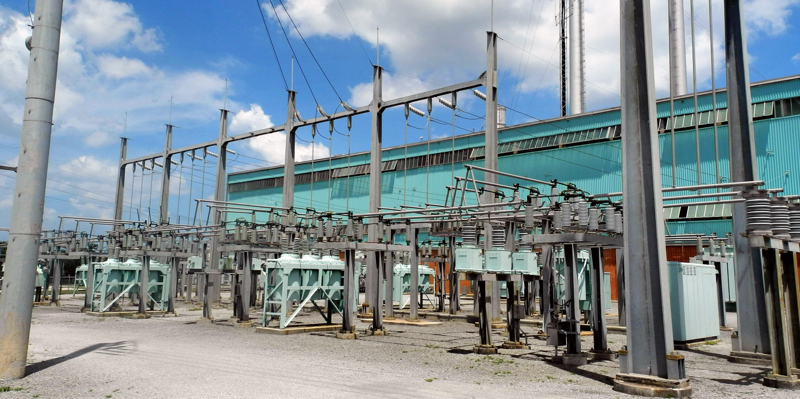
Just who is behind the push to relocate the substation as a part of the sale of Vero Electric, even at a cost of some $8 million or more to city residents and taxpayers?
Listing to public statements made by Council members Tracy Carroll, Craig Fletcher and Pilar Turner, one gets the idea the Council formally decided that the deal to sell the power system mush include clearing off, not only the power plant, but also the substation now located on the western portion of the 17.2 acre site.
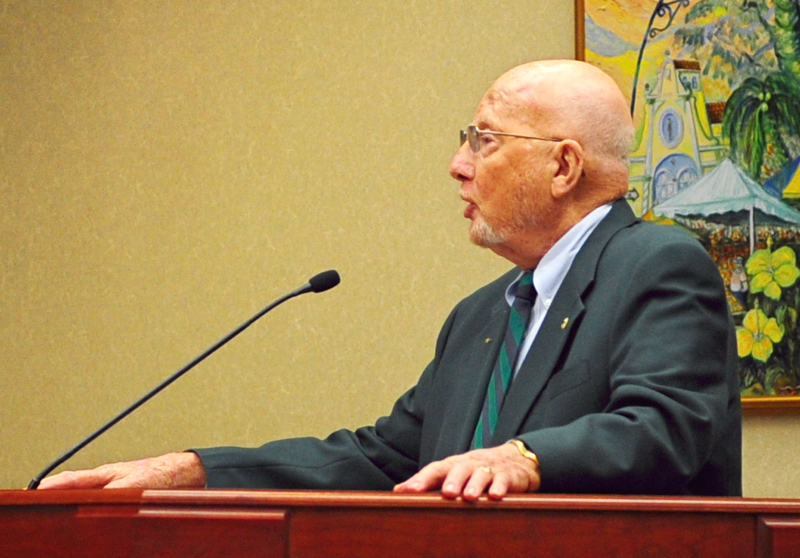
“You’ll find it in Council minutes,” Carroll told former Vero Beach Mayor Warren Winchester, who spoke before the Council yesterday.
According to the City Clerk’s office, however, there is no record of the Council ever having voted on such a measure.
The question of who is determined to have the substation moved and why is important, because the decision to not leave it in its current location is going to cost city residents and taxpayers $7 million is sale proceeds, plus the future development value of the old postal annex site located on the southwest corner of 17th Street and Indian River Boulevard.
Estimates of the value of the 4.6-acre former postal annex site have ranged from $1 million to $4 million. Whatever the land is worth, the current purchase and sales agreement calls for the city to deed the property to FPL for a substation.
Not everyone agrees that putting an electrical substation on the former postal annex site would be the highest and best use of the property.
At the same time, it has been argued that if the long-term plan for the power plant site is to develop a riverfront park, then it might make more sense to deed FPL the westernmost four acres of the property, which is where the substation now sits. Eventually, the remaining 13 acres could be converted to a park or some other public use.
In the long run, would the city be better off netting an additional $7 million in cash from the sale of Vero Electric and retaining ownership of the valuable postal annex property, in exchange for letting FPL have four acres of the current power plant site?
The Council has never formally addressed the issue, and Council members Tracy Carroll, Craig Fletcher and Pilar Turner don’t seem inclined to entertain the question now.
It seems that decision to structure the sale of the electric system in a way that will insure all 17.2 acres of the power plant site might someday be available for commercial development was made somewhere in the recesses of City Hall. It was certainly never a decision made in the sunshine, in the form of an official city policy.
Fletcher insists he will never agree to sell the power plant site. Yet, several months ago he said he would like to see the land put to some use that will make money for the city. What that means, of course, is that the city could turn the land over to commercial developers on a long-term lease.
Just as deeding FPL four acres of the power plant site would require voter approval, the land could not be used for commercial development under a long-term lease without voters giving their assent.
That doesn’t mean the time won’t come when, if the city’s finances are left in desperate shape as a result of the sale of the electric system, voters might feel pressured to surrender any hope of putting the land to some worthy public use.
 Indian River Guardian
Ni one can object to the sale of the substation from an aesthetuc perspective. However, this is clearly a situation that mandates the application of the Woodward and Bernstein caveat to “follow the money.” Therefore, no city official involved in the sale should be able to profit personally from any actions that they take as a public official.
An additional caveat that should be a part of the process is that the revenue from a sale must first go to adequately fund the pensions of former government or soon to be former employees. The second priority should be the retiring of any bonds issues ny the local government. Finally, in light to the Newtown, CT massacre we need to fully fund any infrastructure to augment the security of our childrens, teachers, scbool staff and parents.