
If and when Vero Electric is sold to Florida Power & Light, an estimated $30 million in electric system reserve funds will be available to the city.
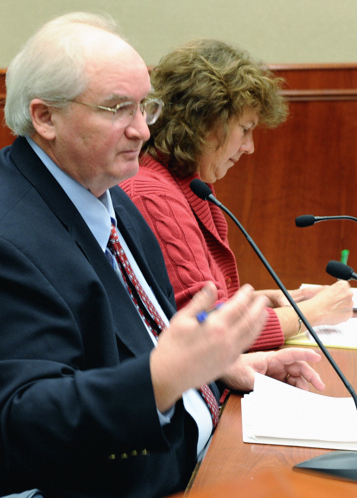
The Finance Commission heard yesterday from pension consultant Rocky Joyner, of The Segal Company, about options for how some of that money could be used to reduce or completely pay off serious underfunding in the city’s pension fund.
In addition to its regular annual pension contribution of approximately $900,000, the city is now making yearly supplemental payments of $3.5 million to catch up for underfunding in the fund, due largely to declines in the plan’s investment portfolio between 2008 and 2009.
For every $8.5 million in Vero Electric reserve used to pay down pension underfunding the city will reduce by $1 million supplemental payments now being made.
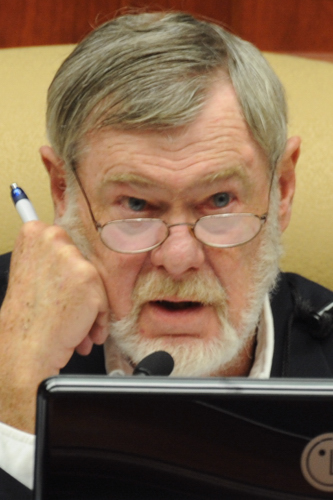
According to Joyner, while the typical municipal pension plan is 80 percent funded, the city’s plan is currently only 60 percent funded. Bringing the pension plan current by using $22.5 million in electric system reserves would reduce by $3.5 million the city’s payments to the fund, a move that would go a long way to closing the projected budget shortfall expected to result from the sale of Vero Electric.
The city’s pension plan is currently underfunded by approximately $32 million. Because FPL has agreed to take on the city’s pension obligations to its 100 electric system employees, the sale of Vero Electric will reduce by $10 million the city’s problem of underfunded pensions.
Putting enough money in the pension fund so that it can afford to meet projected future obligations would also give the city the option to convert from a defined benefit to a defined contribution plan.
The majority of private sector pension plans, where they still exist, now offer employees a specific, “defined” contribution. Most public sector plans, such as the city’s, are still largely offering guaranteed retirement benefits, including cost of living adjustments.
Moving from guaranteed benefits to defined contributions shifts the investment risk from employers to their employees. One criticism of defined benefit plans is that they put future taxpayers, in fact future generations, on the hook to make up for any shortfall caused by poor investment performance or by the use of unrealistically high investment return assumptions.
Many public sector pension plans assume long-term investment earnings of seven percent or higher. Some pension experts have argued these assumptions are unrealistic. The lower the investment assumption, the more must be paid in now in order to meet future obligations.
Employee representatives serving on pension boards tend to resist efforts to bring investment assumptions in line with current market trends, largely because they believe increasing the required contributions to retirement funds would create a public backlash.

The head of finance for New York City recently argued for reducing pension plan investment assumptions to five percent. Union representatives balked at the proposal.
Moving from a defined benefit to a defined contribution plan would render moot the debate over investment assumptions, because the investment risk would rest with the city’s employees, not with the taxpayers.
Once concern about defined contribution plans is that because investment decisions are left with employees, their individual retirement accounts (IRAs) tend to underperform pooled investments in traditional pension plans.
However the city might choose to restructure pension benefits for its employees other than its police officers, who are covered under a separate plan regulated by the state, the Council would at least have options.
Finance Director Cindy Lawson told the Commission that of the $3.5 million in annual supplemental payments now being made, $1.5 million is attributable to General Fund employees. The additional $2 million is going pay down the underfunded pensions for employees working in the city’s enterprise funds such as the electric system, the water and sewer department, the airport, the marina and the solid waste department.
“There are a lot of moving parts to the pension equation,” said Finance Commission Chairman Peter Gorry, explaining that the city has several options to consider, including staying with the current plan, converting to a defined contribution plan, or adopting some combination of the two, as was recently done by the state of Rhode Island.
Based on Lawson’s latest estimates, the city will be facing a General Fund shortfall of $3.5 million after the sale of Vero Electric. Paying off the pension underfunding, she said, would save the General Fund $1.5 million a year.

The remaining enterprise funds, such as the water and sewer system, would save an additional $1 million a year on their pension payments. Some or all of those savings could be transferred from the enterprise funds to the General Fund to help close the looming budget gap, and thus largely avoid the need to raise taxes.
Other options would include reducing rates and fees, increase contributions to enterprise reserve funds, or some combination of the two.
Last year alone the water and sewer system contributed $4.5 million to its reserve fund. Some would like to see that account built up so that the city can eventually afford to move the wastewater treatment plant off the lagoon.
In other business, the Finance Commission discussed at length plans to give FPL the 4.6-acre former postal annex site for construction of a new substation. By a 4-1 vote, the Commission moved to advise the Council to consider holding on to the former postal annex site, and instead offering FPL other, less valuable sites that would be suitable for a substation.
The Finance Commission, yesterday, also elected Gorry to serve another one-year term as chairman. Glen Brovont was electec Vice-Charman.
 Indian River Guardian