
BY MILT THOMAS
EDITOR’S NOTE: InsideVero Contributing Editor, Milt Thomas, is traveling in the Middle East, and will be corresponding with our readers as he journeys to Egypt to the United Arib Emirates.

Tahrir Square Cairo – After arriving in Cairo for my annual two week visit I expected a quiet day renewing old acquaintances and relaxing. Unfortunately, it was January 25, the second anniversary of the Arab spring revolution and a national holiday. Nothing much has improved since then for the average Egyptian, and in many ways, life has become more dismal with high unemployment, a stagnant economy and a government that hasn’t figured out yet how to work for its people (wait, are we talking about Egypt or the US?).
Traffic was uncharacteristically light on the morning of January 25 and I felt if we were going to see what was happening at Tahrir Square, epicenter of the revolution and the Arab Spring, this would be a good time to go downtown.
For anyone who has ever visited Egypt, Tahrir square is located next to the world famous Egyptian Museum and across from what used to be the Nile Hilton Hotel, now being remodeled as the Nile Ritz-Carlton.
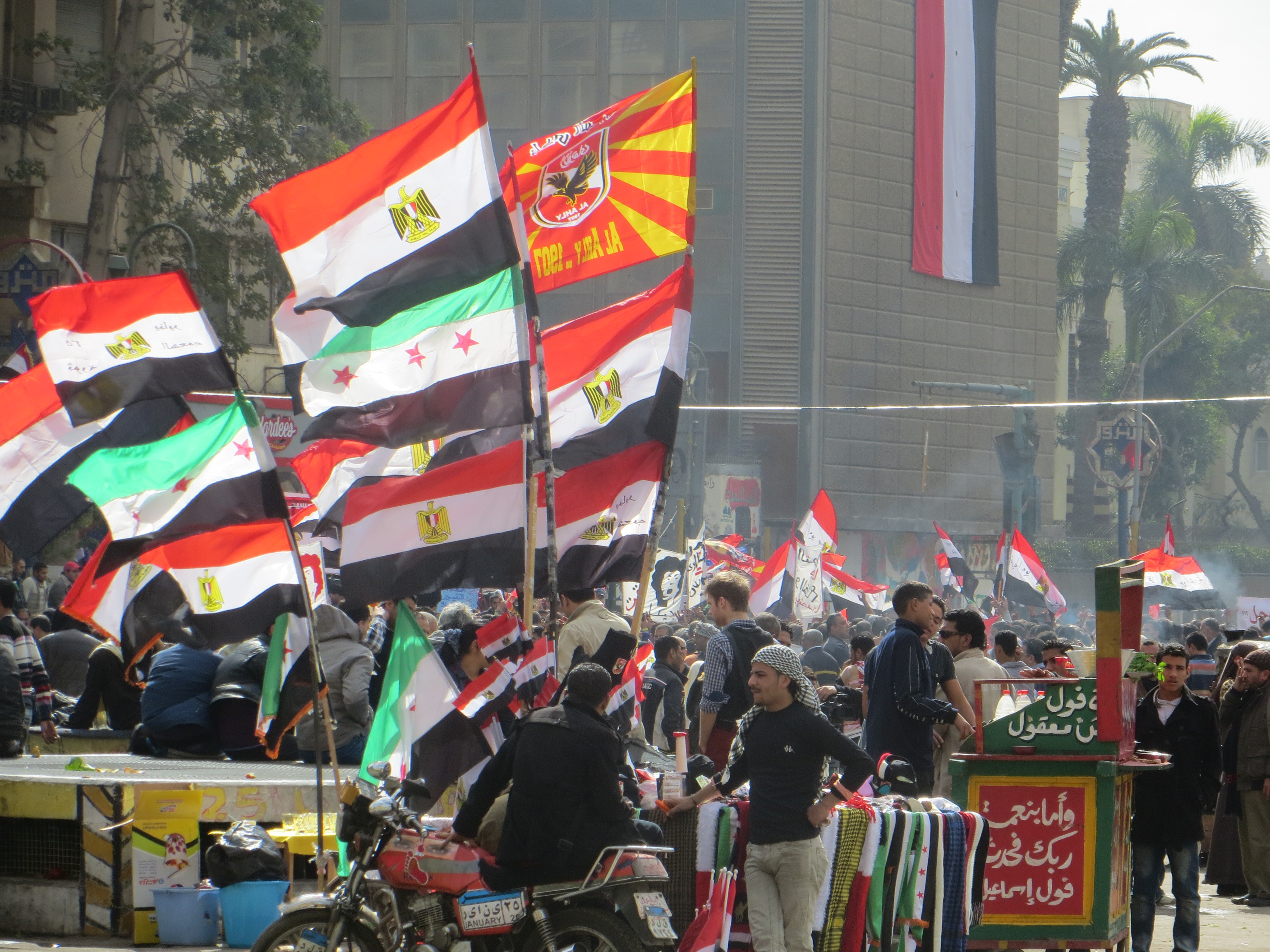
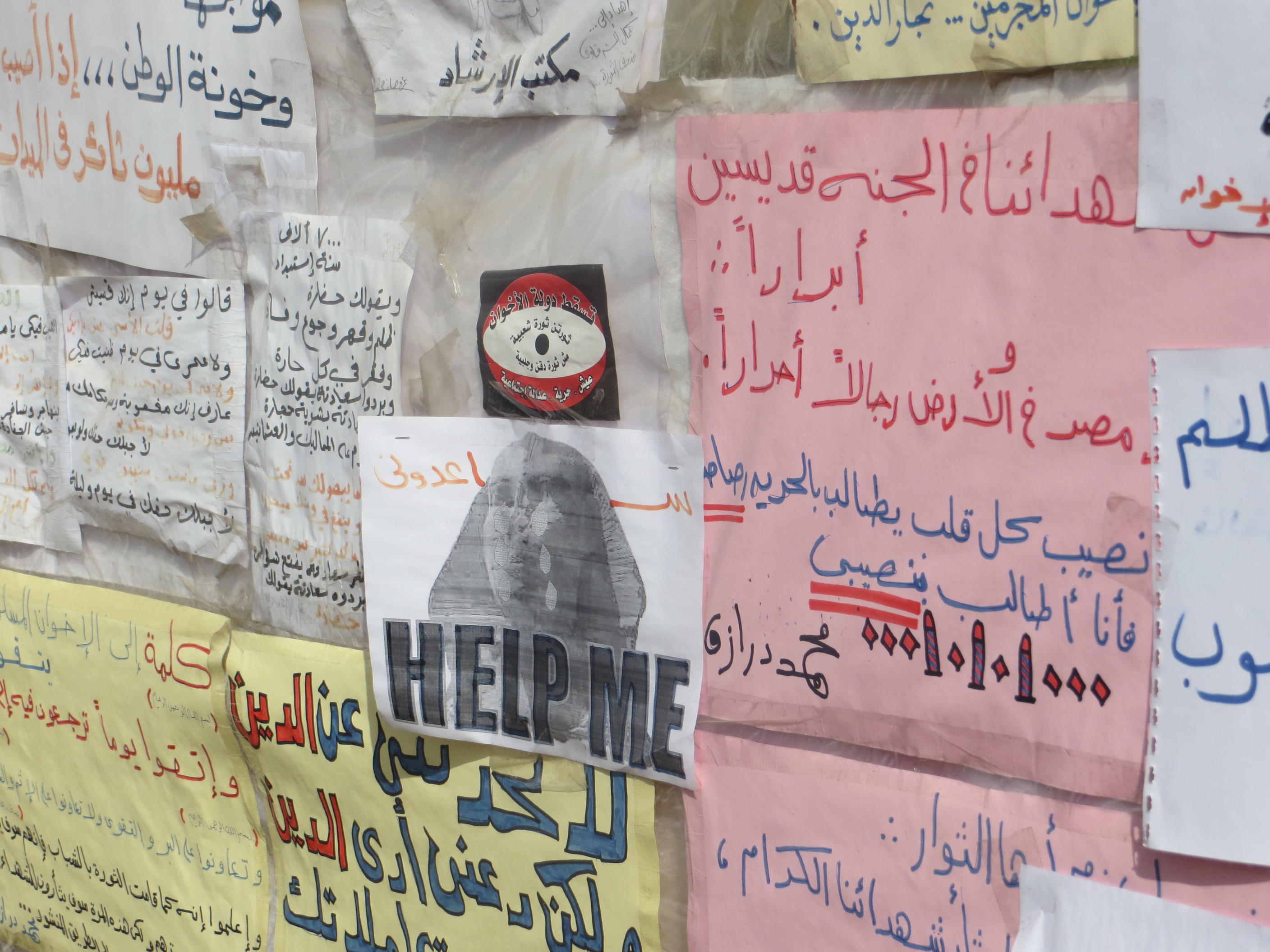
We drove downtown and since the square was already fenced off, parked about two blocks away. As we walked toward the square, we could hear crowds and fiery oratory over loudspeakers. One end of the square was already filled with protestors and tents, again reminiscent of the revolution. The crowd was clearly anti-Morsi and anti-Muslim Brotherhood. One area of tents was setup as a makeshift Revolution Museum, with hand painted signs denouncing the president, the constitution and displayed photos or artwork depicting those protestors who died in the revolution. We saw no police presence, however had the sense we were being followed as we walked through the crowd and among the tents. The only thing that seemed out of place was a number of food cart vendors, flag, poster and T-shirt stands just outside the fence. It could have been a rally at the FSU-Florida game if not for the absence of team jerseys.
While the crowd seemed to be revving itself up for what would happen later in the day, at no time did we feel threatened, not like the last time I visited Tahrir Square during the revolution itself. Seeing that nothing was about to happen, we went to the Nile Valley Coffee House just outside Tahrir Square for tea and to smoke a sheesha.
Background
When I was last here, in November of 2011, Egypt was about to hold its first free election since – well, they have never had a free election in their 6,000 year history. I managed to interview five candidates for the People’s Assembly, basically their House of Representatives, from liberals to religious conservatives. The election was held and the results came out strongly in favor of the religious right, the Muslim Brotherhood and the more radical Salafis. These parties together captured more than half the vote.
Part of the reason they did so well is that the Muslim Brotherhood, since its formation in 1928, has provided social services for the “have nots” of Egypt, akin to the Salvation Army here. The dictatorships that have run Egypt for most of that time have prevented the MB from taking a political role, knowing they would have popular support. At the same time, more liberal and democratically minded politicians have also been prevented from becoming a force in Egyptian politics. So when Mubarak was overthrown as a result of the Arab Spring, the selection of candidates for office amounted to numerous unknowns on the one hand, and the MB on the other hand. The result was never really in doubt. At least it was a free election as confirmed by those outside observers who witnessed it.
The next step was to write a new constitution based on democratic principles. Then came the first surprise. The county’s judicial, mostly Mubarak era appointees, voided the congressional election results. Back to square one. The 100- member constitutional committee, called the Constituent Assembly of the Constitution and made up of appointed representatives from all reaches of Egyptian society came up with a somewhat hastily drawn constitution that was not, shall we say, all inclusive. Those on the committee who were not representing MB or Salafis actually walked out before the final draft was written. The draft constitution was then sheduled for a referendum, but the next surprise was that President Morsi declared himself absolute ruler. This was to thwart any attempt by the judiciary to void the newly written constitution.
The referendum was held and the constitution approved, largely along religious lines. The 47% or so that were not MB or Salafi supporters were unhappy or frightened. A new parliamentary election is now scheduled for March, but people became dissatisfied with Morsi, who now seemed like just the latest dictator in a long line of dictators. A new parliamentary election was scheduled for March, but January 25th was a date to significant to pass up for those opposed to Morsi, the Muslim Brotherhood and the economy in general . the fact that it occurred on a Friday, the Muslim day of worship, was also significant. The revolution itself started when prayer services ended that day in 2011.
Afterward
I found out later that evening that the crowd never reached the proportions promised by protestors that morning and violence was limited to police shooting tear gas to disperse crowds that had broken out of the square and seemed bent on destroying something. One reason for the limited crowd was that supporters of the Muslim Brotherhood did not show up. I assume that was somehow orchestrated to diffuse the protest, but what happened the next day was not.
Another reason to expect countrywide trouble was that on January 26 the verdict was to be announced in a trial that was closely followed throughout Egypt. In the coastal city of Port Said, a soccer game last February 1 between two Egyptian teams ended in a mob stampede that claimed 70 lives. This was the first test of the Muslim Brotherhood’s promise of social justice in a country where little of it existed. Surveillance cameras were located all around the soccer stadium where the stampede occurred, so the perpetrators were quickly identified. Twenty one fans of one team were then jailed and tried for murder. The Egyptian public would not be satisfied unless all of them were sentenced to death. The verdict was announced on January 25 (today) and they were all condemned to death in a matter of days. The police chief was also sent to prison for not stopping the riot once it started. Rarely do we see in a democratic country that 21 people would be correctly identified, jailed, sentenced and executed in a few months. But this is yet to be defined as a democratic country.
The Egyptian public was satisfied, at least most of them. Supporters and family of the 21 condemned rioters, rioted themselves in the streets of Port Said. More than 20 were killed by police before it was over. We now await President Morsi’s next move.
 Indian River Guardian