
BY MARK SCHUMANN
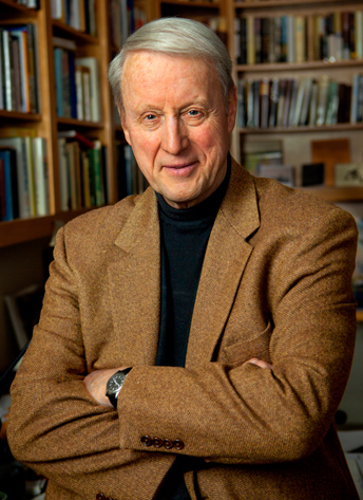
Now sputtering through the third jobless recovery since the early 1990s, the country’s economy and political system are in need of fundamental reform, says Hedrick Smith, a Pulitzer Prize-winning journalist, and author of “Who Stole the American Dream?”
Smith, who worked 27 years as a reporter and editor for the New York Times before becoming a Emmy Award-winning producer and correspondent for PBS, will speak at the Emerson Center Wednesday, Feb. 6 at 7 p.m.
“There are big structural problems in the economy. The middle class is not benefiting from the gains in productivity. As a consequence, we are seeing an every-increasing concentration of wealth in the country, and that is not good for economic growth,” Smith said.
Beyond the widening income gap and its depressive effect on the economy, Smith said the second big problem facing America is political polarization and gridlock in Washington. “Congress can’t even pass a budget. We are seeing a failure of the political system.”
Smith believes both of these trends – increasing economic disparity and political gridlock – are pushing America into decline. “We are seeing a higher concentration of power in the hands of the financial and political elite,” Smith said.
In “Who Stole the American Dream,” published in 2012, Smith documents key changes in public policy, beginning with the pivotal 1977-1978 Congress. These policy decisions have led to the profound shift in political and economic power now threatening to disenfranchise the middle class.
From the introduction of individual retirement accounts and the bankrupting of traditional pension plans, to the failed financial deregulation that lead to the credit bubble and housing market crash, to the gutting of campaign finance and lobbying laws, Smith chronicles the twists and turns in the increasingly steep decline of America’s once great middle class.
“Middle class Americans have got to make some choices,” Smith said, arguing that it may be time for a peaceful political revolution.
Distinguishing between protests and political movements, Smith contrasts the Occupy Wall Street protests, which lost momentum, with the Tea Party movement, which has managed to shift the balance of power within the Republican Party and in doing so is having an impact on public policy.
All successful political movements, Smith said, including the women’s suffrage movement, the civil rights movement and the environmental movement, have had a clear vision, specific goals and leadership that can reach out for support and negotiate with leaders in Congress.
Rather than occupying Wall Street, Smith said the mall in Washington is where America’s most successful political movements have gathered to redress government. The fundamental question for middle class Americans, Smith says, is whether they will organize to exercise power in a ways that demonstrates they want change?
Tickets for Smith’s lecture are $25 in advance and $30 at the door. For ticket information regarding Smith’s Feb. 6 lecture, or for any of the speakers in the Celebrated Speakers Series, Planet and Oceans Series, or the Florida Humanities Series call 778-5249.
 Indian River Guardian