
BY MARK SCHUMANN
VERO BEACH – With Jay Kramer absent from Tuesday’s City Council meeting, one empty chair separated Richard Winger from fellow Council members Tracy Carroll, Craig Fletcher and Pilar Turner – but the distance between them seemed more like a thousand miles.
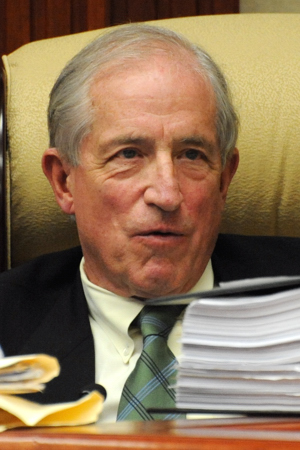
With Kramer out of town, Winger could not get a second for his motion to postpone the March 12 referendum until the proposed sales agreement between Florida Power & Light and Vero Beach can be finalized.
Voicing concerns that the city’s transactional attorneys, who have charged $879,000 through December, are not making sufficient progress in resolving the city’s contractual obligations to the Florida Municipal Power Agency, Winger also objected to approving an additional $200,000 payment to the firm of Edwards Wildman. “I believe this process is failing. I have lost confidence in this lawyer,” Winger said.
Though the Council majority of Carroll, Fletcher and Turner could have let Winger’s motions die for lack of a second, all three of them challenging Winger point for point.
Carroll characterized the contract negotiations as being well along, likening the process to a football game that is now in the fourth quarter. Last Tuesday, though, the Council heard from transactional attorney Rick Miller, who said the remaining negotiations would be “arduous.”
Those negotiations include finding a way out of the Florida Municipal Power Agency All Requirements Project before Oct. 1, 2016, and resolving secondary liability and tax issues associated with the city’s FMPA entitlements, which are to be assumed by the Orlando Utilities Commission.
The resolution to any or all of those remaining issues could result in significant changes to the essential terms of the agreement, Winger argued. For that reason he thinks the referendum should not be scheduled until the contracts with FPL and the OCU are finalized.

Countering Winger’s objections to holding a referendum while the contracts are still in flux, Fletcher said he thought it was important to know if voters support the sale. Winger insisted, though, that it is unfair to ask voters to approve the sale until they can know the specific terms of the agreement.
In advance of the November 6 election, Fletcher had insisted it would be premature to hold a referendum before the contracts were completed. “When we get a full contract in 2014, I would consider the referendum a good idea,” Fletcher said late last October.
Just three weeks after the election, at an open house hosted by Florida Power & Light, Fletcher altered his position, announcing he would call for a referendum for to be held in mid-March, months before contract negotiations are expected to be complete.
Also reversing her opposition to holding a referendum on the sale, and dropping her earlier insistence that the November 2011 referendum on leasing the power plant site served as voter approval of the sale, Turner joined Fletcher and Carroll in calling for a mid-March referendum.
Kramer and Winger, who have both long supported letting city voters have the final say on the deal, objected to scheduling a binding referendum before the details of the agreement can be worked out. Buy a vote of 3-2, the Council at its Dec. 4 meeting instructed City Attorney Wayne Coment to draft a referendum to be placed on the March 12 ballot.

At yesterday’s Council meeting, Turner said voter approval of the March 12 referendum would serve as “ammunition” to be taken to the FMPA board of directors and to the member cities of the FMPA’s All Requirements Project.
Industry experts familiar with municipal cooperatives and joint action agencies such as the FMPA are skeptical of Turner’s strategy of taking “ammunition” with her to her planned meetings with the city councils of each of the member cities of the All Requirements Project.
As a member of the All Requirements Project, Vero Beach is obligated to not sell its electric system. Without a waiver, which would have to be agreed to by each of the member cities, Vero Beach will be unable to sell its electric utility until late 2016.
Vero Beach has a fractional share in the FMPA’s obligation to service bond debt taken on when the city agreed to participate in long-term power projects such as the Saint Lucie nuclear plant, and the OUC’s Stanton coal-fired generators. The city also shares in any contingent liabilities that might arise for the All Requirements group between now and Oct. 1, 2016. Letting Vero Beach exit the group early would leave the remaining members to assume the city’s share of the liability, which is why it seems unlikely to some that a sale could take place before late 2016.
For this reason, the proposed closing date for the sale of the electric system was change from January 1, 2014 to as late as December 31, 2016. Though the sales contract allows for a 36-months window for a closing, the remaining terms of the agreement are essentially what they were when the closing date was set for early 2014.
Finance Commission Chairman Peter Gorry, while not objecting to the sale, has raised concerns about the additional costs a three-year delay in the closing will mean to the city. These added costs and assumed liabilities would, he said, represent a “substantial” change in the terms of the agreement; and because the referendum’s wording ask voters to approve a sale “… under the terms substantially similar to the asset and sales agreement between the City and FPL,” Gorry and others fear the city is leaving itself open to a legal challenge by holding a referendum before the sales contract is finalized.
 Indian River Guardian