
BY MILT THOMAS
EDITOR’S NOTE: InsideVero Contributing Editor, Milt Thomas, is traveling in the Middle East, and will be corresponding with our readers as he journeys to Egypt to the United Arib Emirates

One day we were in Benha City (population 750,000) riding in a taxi and stuck in traffic. Directly in front of us was a sight totally out of place. It was a horse-drawn carriage, at least 50 years old, probably much more. The carriage reminded me that wherever you go in Egypt, you realize this is a civilization thousands of years older than ours. But what drew my attention to this carriage was its wheels. They were wobbly, each seeming to move independent of the others, worn down to the rims and looked like they could fall off at any minute.
It reminded me of Egypt itself – a proud history but a shaky present, crumbling infrastructure and a future that could sustain its important legacy if they could simply fix the wheels.
To understand why Egypt and the Middle East seem mired in a different paradigm than the rest of the civilized world you must look at its history. Just as America’s strength and way of life are drawn from our constitution, the Arab world is a product of its desert environment. It is impossible for us to imagine how these people even survived in the desert world for thousands of years, devoid of resources, a way of life totally dependent on finding a water source. Only a tribal way of life could survive under these conditions. The tribal family provided comfort and joy, the tribal leader responsible for security and survival. Tribal leaders could be ruthless. As one Syrian once told me, like a stern father whose word was never questioned and compliance an absolute necessity. Rugged individualism, a trademark of the American psyche, was unknown. Only as a tribe could people survive. Rejection by the tribe meant certain death in the hot, arid desert.
Many of those cultural norms still exist today. The Middle East has until recently been ruled by strong, ruthless dictators, who must be obeyed if you were to survive. Those rulers maintained their positions by surrounding themselves with members of their ancestral tribes. Saddam Hussein was an al Tikriti, the tribe from Tikrit. All the key people in his ruthless regime were also al Tikritis. Bashar Assad represents a religious minority, the Alawites, a Shi’a sect, which is itself a minority in the predominantly Sunni Muslim country. All his minions are also Alawites. The sheikdoms of Arabia, the United Arab Emirates, Kuwait, Qatar, Oman, etc. are all ruled by strong tribal leaders supported by their tribal members. In Dubai, you can only become a citizen if you are a Maktoum. Every citizen of the emirate benefits from the constant flow of money into its coffers in exchange for the oil that leaves.
Oil is what changed the Middle East, starting in the early 1930s. King Saud (and his tribe) ruled a land that gave the world Islam. The discovery of oil was of no value until the West started throwing money at him to take it from beneath the sand dunes. Those sand dunes were simply a way to get from one water hole to the next, or in the case of Arabia, from Mecca to Medina.
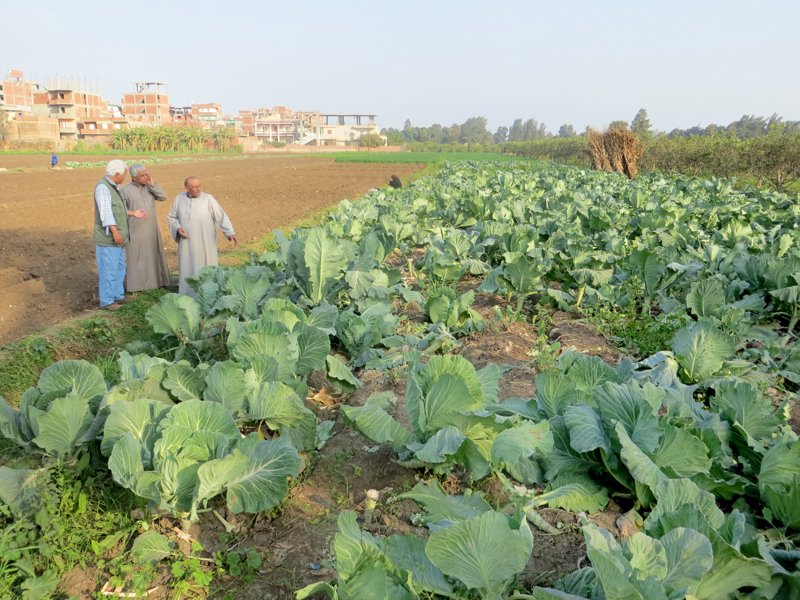
Egypt was different and that difference was the Nile River. Without the Nile, Egyptians would be no better off than their Arab cousins. Most of the world discovered agriculture about 10,000 years ago. The only agriculture in Arabia was found in oases, few and far between. Ten thousand years ago, Egypt was not a desert, but a savannah, much like the Serengeti in equatorial Africa. As the savannah dried out (due to climate change), Egyptians moved closer to the Nile until no savannah was left. As a result, agriculture did not come to Egypt as a way of life until 6,000 years ago. Civilization soon followed and dynastic Egypt, the era of Egyptian history familiar to most of us (pyramids, Sphinx, Ramses, King Tut, etc.), started 5,000 years ago. Egypt became a nation and has been a nation ever since. Most of the Middle East was known as Greater Arabia until 1922, when the British and French created the nations that exist today: Syria, Iraq, Jordan, Lebanon…..and, through the United Nations, created Israel in 1948. Essentially, they created a bloc of nations based on European interests, then dropped a bomb right in the middle of it in 1948. But that’s another story.
Middle Eastern history changed with the Arab Spring. Arab youth, at least a generation removed from the desert life, were not satisfied to live under stifling dictatorships patterned after tribal custom. They wanted a future with jobs and freedom. Middle Eastern economies, mired in a pre-industrial revolution time warp, were stagnant and could not provide jobs for the increasingly restless and better educated youth. The arrival of satellite television, cell phones, the internet and social media, enabled these disaffected youth to share their unhappiness with each other, seeding the Arab Spring.
Where it goes from here is still a major question. Minority rule, as in Syria, is quickly becoming a thing of the past. Assad is doomed along with his Alawite hold on power. But who will take his place? Neighbor Iran, a Shi’ite country, has a vested interest in Syria as a buffer against the Sunni majority countries that surround it. Iraq is a story unto itself. Syria also exerts a significant influence in Lebanon. Both countries have significant Christian minorities, adding more fuel to the fire of change, but not necessarily for reasons you might think.
Tunisia, where the Arab Spring actually started, has its first popularly elected government and it is pro-Islamic with an Islamic president. Turkey has had a pro-Islamic government and is the most democratic Muslim majority country in the region.
So what does this all mean for Egypt? A year ago it seemed the Muslim Brotherhood had been swept into power with its chosen candidate, Mohammed Morsi. Morsi has shown positive and negative qualities as far as the West is concerned, helping to broker peace between Hamas and the Israelis, then declaring autocratic power to push through a new constitution, approved in a referendum, that many secular and non-Muslim Egyptians fear will treat them poorly. However, neither Morsi nor the Muslim Brotherhood have done anything positive as far as the public is concerned. The new parliamentary election in April should give a better indication of where the country is headed.
A year from now, we will all know whether Egypt moves closer to a democracy or reverts back to its authoritarian form of government. Until then, life will go on as it always has, assuming the wheels don’t fall off.
 Indian River Guardian
Great column, Milt. You’re one columnist i can believe in.. Art Neuberger