
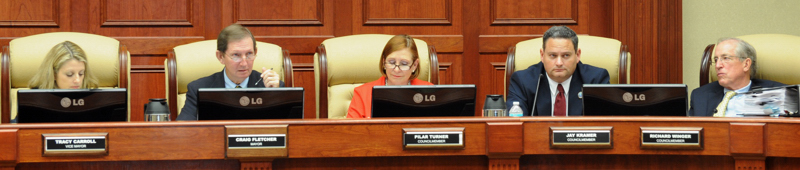
VERO BEACH – Tuesday’s special call meeting of the City Council opened with Councilman Richard Winger requesting that consideration of the asset purchase and sale agreement between the city and Florida Power & Light be postponed two weeks. Winger said he thought the Council should have more time to analyze the revised version of the agreement sent out over the weekend.
This is a complete revision of the agreement that existed Friday afternoon,” Winger said, explaining why he thought the Council should have more time to study the changes. “This agreement as it now stands, with all the many changes, is not the agreement approved by the commissions, either Finance or Utilities, and therefore their approval is invalid, in my opinion.”
John Igoe, the city’s transactional attorney, said the revisions did not change the basic terms of the agreement. “I do not view these as material changes.”
As with most of the concerns and questions Winger raised at today’s meeting, his request for more time to consider the revised agreement was not supported by the Council majority of Tracy Carroll, Craig Fletcher and Pilar Turner.
Igoe then summarized the latest changes, some of which addressed license agreements with the Indian River Farms Drainage District, and with the leasing arrangements for FPL’s use of a fiber optics network to manage its system in Vero Beach.
Another revision included a provision allowing the city to either sell or use the fuel oil now stored in the tanks at the power plant.
An additional change to the agreement allows the city or FPL to terminate the contract if regulatory approvals impose restrictions that are unforeseen and unacceptable, unless FPL is willing to pay the additional costs.
Winger then questioned why FPL plans to leave the concrete slab under the power plant, rather than remove it when the plant is decommissioned, presumable within three to five years after the eventual closing date.
A lengthy discussion followed on what environmental contamination might be found under the power plant and how the land will eventually be used, once FPL no longer needs it. Carroll and Fletcher both spoke of the possibility the site might some day become a marina.
Next Winger questioned FPL’s request to change the venue for litigation to Volusia County. FPL first proposed that any court proceedings between the city and the company be held in Palm Beach County, where FPL has its headquarters. City Attorney Wayne Coment explained that as a local government, Vero Beach has “home venue privilege,” unless it is waived by contract. The Council instructed Igoe to change the agreement so that any court proceedings would take place in Indian River County or St. Lucie County.
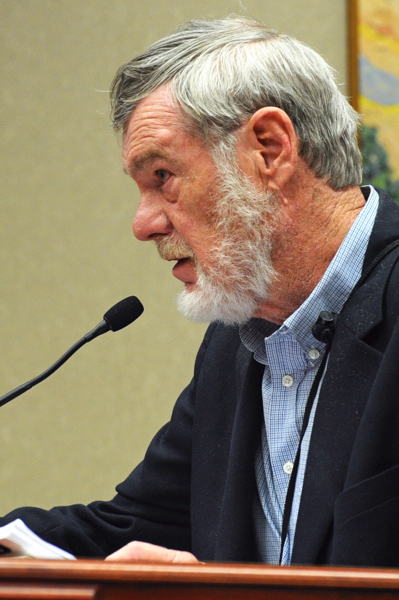
Winger then proposed the contract wording be amended to require FPL to make a good faith effort to find job assignments for Vero Electric employees at their current pay level, and in Indian River County or as close to Indian River County as possible. Carroll, objected, saying Winger’s suggestion would create “an undue obligation on FPL.”
Working through his twelve proposed agenda items, Winger next suggested any deeding of land to FPL for a substation include a reversion clause, so that ownership of the land would return to the city should the time ever come when FPL would no longer need use of the property for the operation of its primary business.
Along with Winger’s objection to waiving home venue privilege for litigation, his proposal to include a reversion clause was the only other modification to the the Council accepted.

Winger next asked FPL to notify the city as soon as possible if it intends to lease property at the airport west industrial park where the transmission and distribution warehouse and offices are located. FPL has the option to lease the facilities, and Winger said it would be helpful to the city to know the company’s intentions.
There has been some question as to whether the Federal Emergency Management Agency would help the city cover catastrophic hurricane damage while the electric system is under contract to be sold to an investor owned utility, such as FPL. Winger said he wanted to get a clearer sense of what additional risk the city and its ratepayers will be assuming. “There is a risk of $10 million,” Igoe explained.
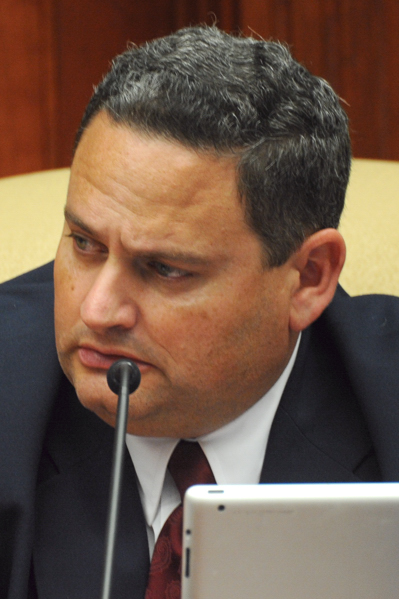
Winger asked Finance Commission Chairman Peter Gorry to outline his questions and concerns about what a delayed closing might cost the city. When the council first called for a referendum to be held March 12, the parties envisioned a closing in January 2014. It now appears a closing may not take place until late 2016.
Before Gorry spoke, Fletcher said, “Let me keep this on track. We are here to talk about the purchase and sale agreement, not whether or not it’s going to be financially feasible for the City of Vero Beach to do this.”

Gorry suggested the Council consider a sliding scale for paying the Orlando Utilities Commission, depending on the actual closing date. The draft of the agreement that existed at the time the referendum was schedule provided that OUC would be paid $54 million in cash, plus the assignment of gas transmission rights valued at $10 million, in exchange for assuming the city’s FMPA entitlements and to cancel its wholesale power agreement with the city.
If the deal closes as much as three years beyond the originally planned date, the city’s payment to the OUC should be something less than the full $54 million, Gorry said. As with most of Winger’s suggestions, Gorry’s point did not gain traction with the Council majority.
After Gorry completed his summary, Kramer shared his assessment of the deal. “I have no confidence this deal will get done until late 2016. I see a lot of problems with this contract,” he said.

Kramer then predicted the city would be in litigation with the FMPA by summer. He reminded the Council that Rick Miller, another of the city’s transactional attorneys, led the City of Lake Worth in failed litigation with the FMPA. “I don’t want to be a part of this at all. In time I’ll be proved to be credible on this,” Kramer said.
Kramer concluded by suggesting that the Council majority had surrounded themselves with a bunch of “yes people.”
Turner followed Kramer. Reading from a prepared statement, she said, “It is time to get the city out of the electric business. It’s time to move on.”
Carroll made her case for moving forward with the agreement, largely by challenging Kramer’s points. Finally, Fletcher interrupted Carroll, “Let’s not get personal,” he said.

During public comment, former Councilman Caroline Ginn addressed concerns about how little the city is getting in proceeds. Though is it is frequently reported the proceeds will be some $34 million, $30 million of that amount will come from electric system proceeds. Ginn stressed that out of an offer FPL has valued at just under $180 million, the city will net just $3 million to $4 million.
Utility activists Glenn Heran told the Council the deal is a good one and that it is time to go forward.
Ken Daige, another former Councilman, followed Heran. “It is up to the community to now make an informed decision,” he said, referring to the referendum scheduled for March 12. “Folks need to pay attention.”
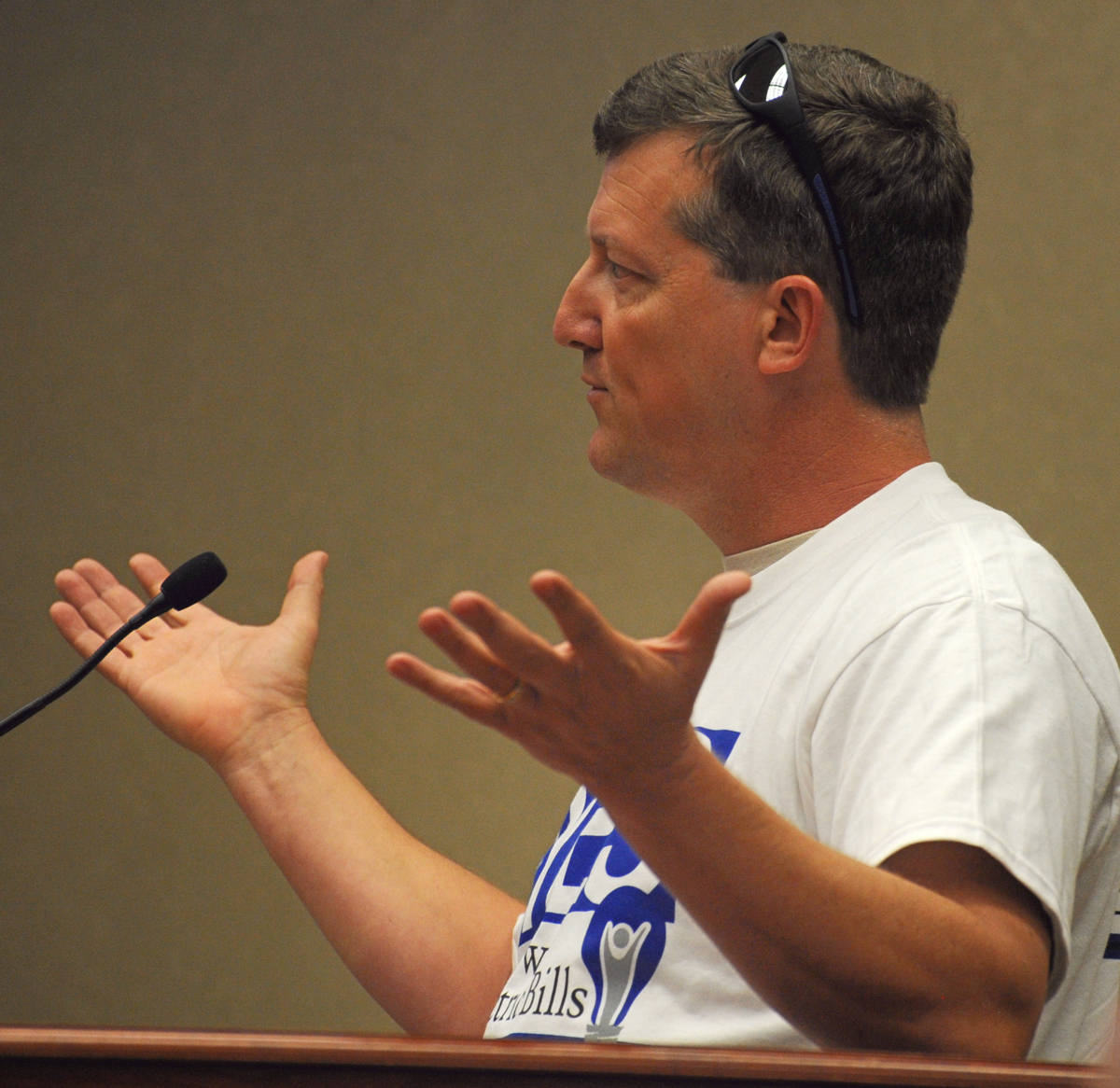
Daige raised concerns about the potential liabilities to the city. “Will we get help from FEMA, or will city taxpayers have to pay for repairing any hurricane damage? Will we have the money? Are we going to be able to take the hits? What is going to happen to us? Are we going to be able to afford this?”
Daige charged that the deal is structured to favor FPL, and questioned whether the Council is doing what is best for the city.
The Council is scheduled to vote on the proposed sale at its regular meeting on February 19. The deal will then go to voters March 12.
 Indian River Guardian