
Editor’s Note: The following commentary was first published February, 17, 2013.
“After more than a year of negotiations that have cost the city close to $1 million in legal fees, it is painfully clear the best deal that can be made for a sale of Vero Electric will leave the city with next to nothing, in a transaction that cannot be closed for almost another four years.”
“Now that it is obvious a sale of the full system is a bad deal for the city and ALL 34,000 ratepayers, the Council should slow down, draw back and more carefully consider all options, including a partial sale, or forming an independent utility authority. The middle of the road is often the place where the more prudent solution is found.”
BY MARK SCHUMANN
When I asked someone recently to confirm a statement that seemed questionable, he said, “I read it on the internet.”
Well, there you have it. If what he was claiming appeared in writing, it must be true.
About the same time, I also received a forwarded email with a subject line which read, “I’m not sure if this is true, but…”
If we require no more proof than to see something in writing, before accepting as fact claims that square with our beliefs, then how will we ever discover the truth that transcends our biases?
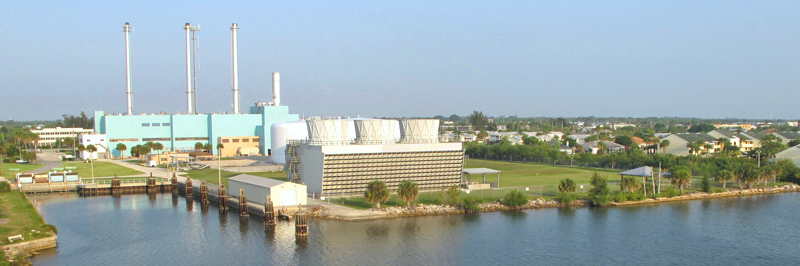
With misinformation now spreading as rapidly as computer viruses, I predict a bright future for fact checkers. When it comes to all the claims being made for and against the sale of Vero Electric to Florida Power & Light, what we need right now is a well-armed truth squad.
For example, telephone surveyors working for the political action committee Citizens for a Brighter Future are telling people the city’s taxes will be kept low by the $179 million they claim FPL is paying for Vero Electric. That assertion is outlandish.
First, FPL is proposing to pay the city $111.5 million, and of that amount the city will have approximately $4 million left after paying off debt and buying its way out of long-term wholesale power contracts. The city also has $30 million in utility reserves that will become available to do things such as restructuring pension funds, but that is not money FPL is bringing to the table.
Second, taxes will not be kept low. Taxes will rise and city services will have to be cut. Regardless of how some might try to spin the truth, those are the facts.
For me, it is important to acknowledge that, like everyone else, I have biases. For starters, I will admit that I love Vero Beach and Indian River County, not just the barrier island, the entire county, from Blue Cypress Lake to the ocean, from the Vero Highlands to the Sebastian River.
It concerns me to see the City of Vero Beach and the county at odds, and it troubles me even more to hear talk of disincorporating the city, letting the mainland neighborhoods be absorbed by the county, and then re-incorporating the central barrier island as a separate municipality.
While I realize each municipality within the county is unique, from Fellsmere, to Sebastian, to the Town of Orchid, to the Town of Indian River Shores, to Vero Beach, the fact remains that the larger common good is better served, not by accentuating our differences, or by pursuing advantage over one another, but by working together.
I also realize that some local libertarians who have grown weary of excessive government want to make a difference where they can. Unable to prevent a second term for President Obama, they are striking out on home turf. The easy target now seems to be the City of Vero Beach.
Capitalizing on festering discontent over high electric rates and excessively generous benefits for city employees, the local Tea Party and at least some members of the Indian River County Taxpayers Association seem determined to dismantle the city, one utility at a time. They make no secret of the fact that if they are able to convince city voters to relinquish the electric system, they will move next to turn the city’s profitable water and sewer system over to the county.
The formation of an independent utility authority serving the entire county might be in everyone’s best interest, but before that will be possible a lot of egos will have to excuse themselves from the negotiating table.
Short of forming a utility authority, forcing the city to hand over its water and sewer system to the county is certainly not in the best interest of city residents and taxpayers. Those pushing hardest to get the city out of its utility businesses know quite well the city as it exists today cannot survive the loss of both of its utilities.
To be sure, some cities across the country have succumbed to disincorporation. But Vero Beach need not be one of them. If the limited government crowd that now has the city in its crosshairs is allowed to have their way, their folly will lead to the unnecessary demise of the county’s marque municipality. Disincorporation is not necessary, and it must not be allowed to happen.
The City Council troika of Tracy Carroll, Craig Fletcher and Pilar Turner is continually pointing to high electric rates, which peaked some five years ago, as the reason for selling Vero Electric. It is important to note, though, that under their watch these past few years, rates have been allowed to rise. Higher rates lead to more customer discontent, which only serves to strengthen their argument for selling the electric system.
By focusing on the mistakes of the past, while failing to articulate a plan for the future, Carroll, Fletcher and Turner are like a driver who is alternately fixating on his rearview mirror and then staring at the hood ornament of his car. Because they are not scanning the horizon for options, the Council troika is driving the city straight for a financial cliff.
The ruinous consequences of selling Vero Electric in a deal that will net just $4 million, and then moving to divest the city of its water and sewer utility are so clear it is hard to image the Council troika’s dash to financial disaster is not intentional.
Between now and the March 12 referendum, those pushing for approval of the contract between the city and FPL will surely continue to repeat their mantra that the city, as a government, should not be in the utility business. Never mind that, at least with the water and sewer utility, they propose to turn it over to the county, which is itself a government.
Consider also that Vero Beach is the only city in Florida with its electric utility on the block. The City of Lake Worth is considering selling its system, but it is also carefully exploring other options as well.
Some opponents of the sale seem unwilling to acknowledge that the city needs to find a way to address the concerns of its county customers. But many who question the wisdom of selling the system under terms that would net just $4 million on a $200 million asset, also understand that the city must make some fundamental changes.
On the other side, whatever their motives are — be it dismantling the city, or developing the waterfront — some proponents of the sale are so fanatical about achieving their objective that they have closed their minds to any and all evidence for the benefits of forming a utility authority, or of pursuing a partial sale.
They repeat claims that a partial sale is technically impossible. Not true!
Pointing to carefully scripted statements made by FPL’s public relations team, they claim FPL would not be interested in a partial sale. Not true!
Without any knowledge of the financial models for a partial sale, they summarily dismiss the idea on the false assumption that a smaller system cannot be more efficient than Vero Electric’s current business model. Again, not true!
Unless voters wake up and pay attention to what is about to happen, the city will become locked in a sales agreement with FPL that has little or no chance of being concluded before late 2016, if at all. In the mean time, all of Vero Electric’s customers will be stuck paying unnecessarily high rates.
After more than a year of negotiations that have cost the city close to $1 million in legal fees, it is painfully clear the best deal that can be made for the sale of Vero Electric will leave the city with next to nothing, in a transaction that cannot be closed for almost another four years.
Now that it is obvious a sale of the full system is a bad deal for the city and ALL 34,000 ratepayers, the Council should slow down, draw back and more carefully consider all options, including a partial sale, or forming an independent utility authority. The middle of the road is often the place where the more prudent solution is found.
 Indian River Guardian
Thank you, Mr. Schumann, for expressing what many of us have been fearing – that the desire for the elusive lower electric rates may bring the walls of Vero Beach tumbling down. That this is like an extremely vicious divorce with one party getting the gold mine and the other getting the shaft. Guess who is getting the shaft. Agree that the Council needs to take a deep breath and look for a way to stabilize Vero – not destroy her. Bring out the best in her – not turn her into a 2nd class town. Common sense must prevail!
[…] via Driving down the middle of the road is better than heading off a cliff. […]