
BY MARK SCHUMANN
Criticism that the press has a short attention span is often justified, for the media is long on screaming for attention with headlines that exaggerate facts and sometimes mislead readers, but is short on offering the kind of follow up reports that help readers better understand unfolding stories.
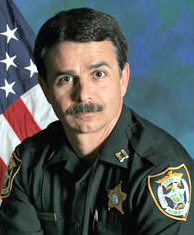
Last summer, for example, in the midst of a hotly contested race between incumbent Sheriff Deryl Loar and challenger Lieutenant Bill McMullen, headlines in the island weekly splashed the news that a formal complaint had been filed with State Attorney Bruce Colton against Sheriff Loar and Captain Don Smith for allegedly falsifying public records.
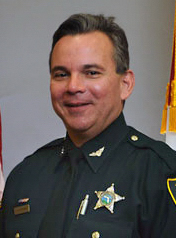
Colton turned the complaint over to the Florida Department of Law Enforcement, which then conducted an investigation. In a January report based on FDLE’s investigation, Assistant State Attorney Ryan Butler concluded Smith had, in fact, altered public records, but under mitigating circumstances.
No charges were filed, but the Sheriff’s Office was encouraged to offer its command-level employees training in maintaining public records.
Local attorney Bobby Meadows, whose sister, Ginny Meadows, served as McMullen’s campaign manager, alleged that Smith, with Loar’s knowledge, altered public records to make it appear the barrier island’s two patrol zones were covered more often that was actually the case.
Responding to a request from a reporter with the island weekly, Smith provided an initial set of records showing Sheriff’s Office staffing for its 14 patrol zones during February 2012. A few days later, after having made a number of changes to the records, Smith gave the reporter a second set of staffing records, which he said more accurately showed the number of officers available to respond to emergency calls.
In preparing the second report, Smith used two sources of information, shift reports, known as Speed Shift records, and payroll records. Speed Shift records show which officers are scheduled to work, though changes are often made as officers call in sick, or as adjustments are made for other reasons. Payroll records, presumably, are a more accurate record of actual staffing.
As it turned out, both the shift reports and the payroll records were not accurate, causing Smith to compile a report with many errors in it. The FDLE’s investigation concluded there were 314 instances when patrol zones were vacant out of a possible 1276, resulting in full coverage 74.1 percent of the time. Smith’s amended report only increased the percentage of coverage to 75.4 percent.
As Assistant State Attorney Ryan Butler observed in his report to Colton, if Smith’s intention for consolidating the two conflicting sets of records was to exaggerate the level of patrol zone coverage, he didn’t do a very good job.
“While proponents of the Sheriff’s challenger may see the amended line-ups as a benefit to the Sheriff’s campaign for re-election, less partisan observers may view the issue as insignificant,” Butler wrote.
A second issue raised in Meadow’s complaint was that in preparing the amended line-ups Smith had overwritten the first set, thus destroying public records. While Smith acknowledged to FDLE investigators that he knew he was altering the original records, he said Sheriff’s Office counsel, James Harpring, told him he could make the changes because the original documents were only “working copies.”
Butler concluded Smith was negligent in overwriting the original records, but had done so with the advice of counsel. “In this case, the fact that Captain Smith relied on the advice of the attorney representing the agency is a compelling reason not to cite him for a civil infraction of the statute,” Butler wrote.
According the Butler’s reports, the FDLE investigation highlighted the need for the command-level employees in the Sheriff’s Office to receive additional training on how to maintain public records. “Florida’s public records management laws are complex and confusing,” he wrote.
 Indian River Guardian
David Cox
Thanks for following up on this story. This sort of attention to accurate completion of initially tantalizing tidbits is as commendable as it is rare. Good work!