
BY JANIE GOULD
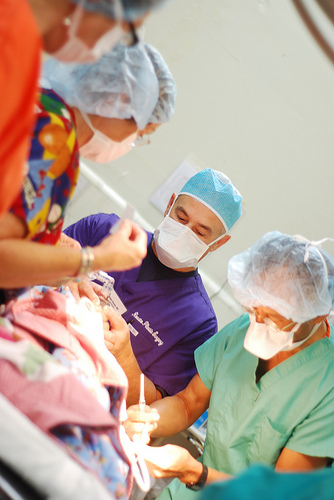 The pictures we’ve all seen in magazines tug at the heartstrings: a Third World tot trying to smile through lips horribly misshapen by a genetic abnormality known as cleft lip and palate.
Cleft lip and palate describes a failure of the left and right side of the lip and roof of the mouth to fuse properly before birth. When the condition is left untreated, it causes children to develop a gaping separation above their lip. The consequences can be life-altering: speech delays, eating problems and in some cultures, social isolation, and worse.
About one in 800 babies is born with cleft lip and palate in the U.S. each year, but most have surgery to correct the problem when they are babies. It’s a different story in many developing countries, where the condition is much more widespread, in part because gene pools are smaller. Some societies consider cleft lips to be a curse.
Smiletrain, one organization that provides cleft lip surgeries in the Third World, says every baby born with a cleft in Uganda is given the name Ajok, “which means, literally, cursed by God, with some newborns killed or abandoned right after birth.”
Smiletrain estimates one million Third World children are suffering from unrepaired clefts. Most cannot eat or speak properly and aren’t allowed to attend school or hold a job.
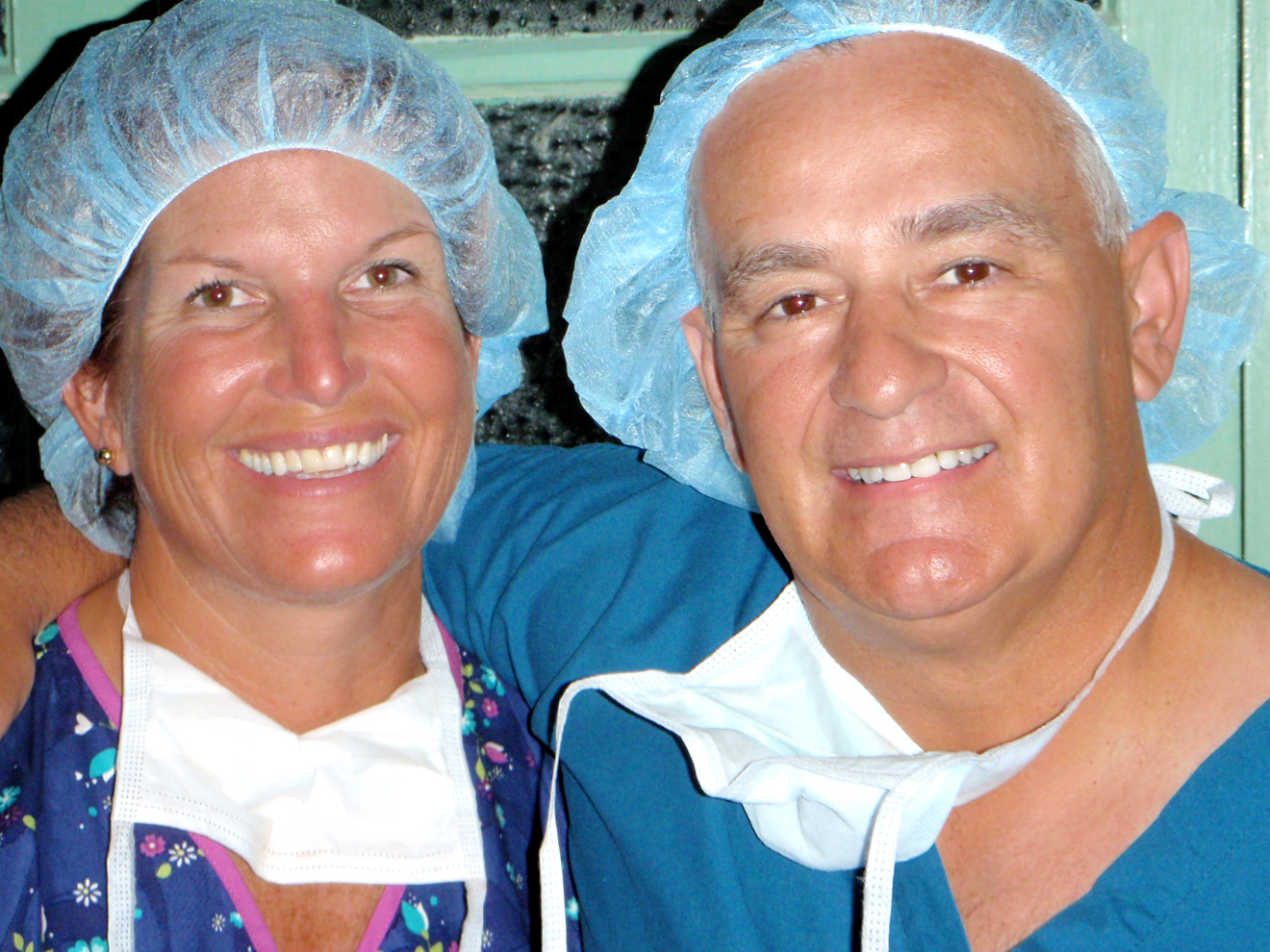
Dr. Ralph Rosato of Vero Beach is a board-certified surgeon specializing in cosmetic, plastic and reconstructive surgery. He’s also a member of Sunrise Rotary Club, and when he became club president a few years ago helped put together a medical mission trip to Lima, Peru. The plan was to perform cleft surgeries on children and adults, in cooperation with a program known as Rotoplast International. Founded by the Rotary Club of San Francisco in 1992, that group has performed 15,000 reconstructive surgeries throughout the world.
Rosato said Rotary Clubs of Southeast Florida raised $40,000 for the two-week mission to Peru in 2009, and he and the other physicians paid their own airfare and lodging. Peruvian Rotarians found a hospital for the surgeries. Rosato’s wife, Catherine, a nurse, worked in the recovery room. The mission team brought in such essentials as anesthesia equipment and sutures.
“It’s like a mobile MASH unit,” he said. The team performed about 125 operations, “operating from 7 o’clock in the morning until 7 at night.”
Rosato says children with cleft lip and palate don’t really understand that anything is wrong with them.
“The impact is with adults,” he said, recalling a female patient who always wore a veil to hide her face, never smiled, and suffered abuse from her husband. After her lip was repaired, she stopped wearing the veil and started smiling.
Children with cleft lip are often shunned, even by their own family.
“Sometimes they’re kept in a back room,” Rosato said. “I think that’s why education is so important. In a lot of Third World countries, education is seen as a luxury, so people don’t understand why a child has a cleft, that it’s not their fault, that it’s not a curse, and that the families haven’t brought it on themselves.”
A native of New Jersey who grew up in Connecticut, Rosato earned a medical degree with honors in surgery from St. Louis University School of Medicine in 1985. He completed his residency in plastic and reconstructive surgery at the Cleveland Clinic Foundation in Ohio. He has served as chief of plastic surgery at Indian River Medical Center since 2002, and medical director of the Rosato Plastic Surgery Center since 1998. He is a former chairman and president of the Florida Society of Plastic Surgeons and a former president of the Indian River County Medical Society.
While at the Cleveland Clinic, Rosato participated in his first medical mission, to Ecuador. Rotary has since sponsored more missions to that country. Now, he is considering doing more mission work during the summer months, when things slow down a bit in his local practice. He’s thinking about working on a Mercy Ship. A global charity, Mercy Ships has operated a fleet of floating hospitals since 1978.
Rosato says what he’s doing is not unusual among local physicians.
“Physicians in Indian River County do this type of thing every day,” he says. “There’s a program called We Care, in which physicians treat local patients. The doctors have donated millions of dollars in treatment and supplies for needy patients.”
 Indian River Guardian