
Editor’s Note: Just yesterday, it was reported the City of Vero Beach will have to come up with some $46 million to cover the stranded costs the Florida Municipal Power Agency will incur when the City leaves the All Requirements Project in last 2016. The following story explaining Vero Beach’s contractual obligations to the Florida Municipal Power Agency was first published by Inside Vero May 16, 2013.
MARK SCHUMANN
Having raised expectations by signing a binding sales agreement with Florida Power & Light, city leaders and their outside counsel must now figure out to close the deal. In order to “clear a path forward” the city’s transactional attorneys are looking for ways to settle the city’s contractual obligations to its fellow Florida Municipal Power Agency members and their bondholders.
From the beginning, it has been clear commitments Vero Beach made as a member of the FMPA’s 15-city All Requirements Project, and its participation in three FMPA power projects pose perhaps insurmountable hurdles to the sale of Vero Electric.
Several members of the City Council and the transactional attorneys continue to speak as if they expect the electric system to be sold to Florida Power & Light some time in the first quarter of 2014. In the view of some, including Councilmen Jay Kramer and Richard Winger, that target date seems unrealistic.
As customers of Vero Electric become increasingly aware it may be late 2016 or beyond before they see significant rate relief, some are asking how contracts agreed to in the early 1980s could restrict the City’s ability to sell its electric system. How is it decisions made a quarter of a century ago continue to bind the city to the FMPA?
The answers are complex. In the plainest terms, the City is not free to walk away from its participation in the FMPA because a deal is a deal. Vero Beach, along with other cities, bonded together in what is known as a join action agency. In doing so, all the participating cities made multi-decade commitments to their fellow members and ultimately to bondholders.
What exactly are the commitments Vero Beach made as a member of the FMPA, and how might those obligations prevent the City from selling its electric system, at least not until late 2016?
POWER PROJECTS
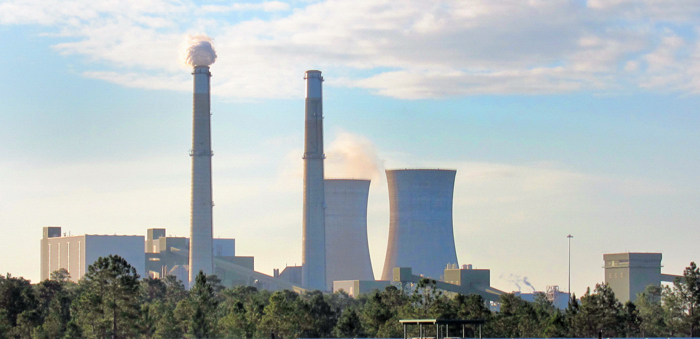
Beginning in 1984, Vero Beach joined three FMPA power projects. Through its participation, the City is committed to buy power from the Saint Lucie Two nuclear plant, and the Stanton 1 and Stanton 2 coal-fired generators in Orlando, all projects in which the FMPA owns a fractional interest. The City is also obligated to pay a share of debt service and fixed costs on these power plants.
Because the projects were funded with tax-exempt revenue bonds, there are restrictions on who can buy the power and on what can be done with the base of customers pledged to secure the debt. In the simplest terms, because the anticipated utility revenue of FMPA’s member cities backs the bonds members are not free to sell their customers to utilities such as Florida Power & Light, that are not also members of the FMPA.
Vero Beach is proposing to pay the Orlando Utilities Commission, an FMPA member, $34 million to assume its obligation to buy some 54 megawatts of power from the three power projects in which it participates. But Vero Beach is proposing to sell its customers to FPL. This bifurcated transaction will leave Vero Beach with a contingent liability it cannot secure, since, as a result of the sale, the City will be left without its 34,000 customers.
Further complicating the sale is the plan for FPL to buy power from the OUC for three years. Because the FMPA projects in which Vero Beach participates were funded with tax-exempt bonds, the Internal Revenue Service restricts the sale of that power to investor-owned utilities.
To resolve the contingent liability issue, some have suggested FPL should assume the risk, but the company has so far been unwilling to do so. The private use issue could be settled with a ruling from the IRS, but the city’s transactional attorneys are insisting that assurance is not necessary.
From the perspective of FMPA officials, to approve the sale without first receiving a ruling from the IRS would be like buying real estate without insisting on title insurance.
FMPA’s lead counsel, Fred Bryant, has been quoted in the press as saying the sale of Vero Electric is not likely to take place until late 2016, if ever. The last two words in Bryant’s statement – “if ever” – refer to the contingent liabilities and the private use issues. Until and unless the city’s transactional attorneys are able to find a way over, under, or around these hurdles, Vero Electric will remain a municipal utility.
THE ALL REQUIREMENTS PROJECT
At least as complicated as the power projects are the intricacies of the City’s obligations as a member of the FMPA’s All Requirements Project (ARP).
Vero Beach entered the ARP in 1997, though the original contract was signed eight years earlier. Implementation of the agreement was delayed while the FMPA sued and won an anti-trust case against FPL.
As a result of the lawsuit, FPL was forced to provide the network transmission necessary to enable cities with their own power generation to join the ARP. In the ARP, member cities pool their power resources and their power needs as if they were one utility, presumably allowing them to operate more efficiently.
Cities without generating capacity buy power wholesale from the group. Cities with their own power plants, such as Vero Beach, contribute to the power pool, which is also supported by additional power plants owned by the ARP. Interestingly, Vero Beach was the first city with its own power resources to sign and ARP contract in 1989, and it was the first city to implement its contract after the FMPA won its anti-trust lawsuit against FPL.
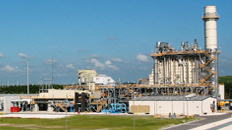
One such ARP plant is a new 300-megawatt combined cycle natural gas generator in St. Lucie County, which was built concurrent with the decommissioning of Ft. Pierce’s riverfront power plant. The same employees who once operated Ft. Pierce’s power plant now run the ARP’s new Treasure Coast Energy Center.
As a member of the ARP, Vero Beach turned over control of its power plant. From the beginning, the road was rocky, with Vero Beach officials believing the city was getting the short end of the deal.
Rather than using the City’s power plant to help meet the ARP group’s base load, FMPA operators chose to use it to meet peak demands. Powering the generators up and down frequently and for short periods proved inefficient and expensive, resulting in losses to the city.
In 2004, Vero Beach gave the required five-year notice to reduce its commitment to the ARP to what is known as a contract rate of delivery (CROD). Rather than reducing its commitment to a CROD, Vero Beach could have chosen to withdraw from the ARP, a move that would have required only three years notice. Instead, the city chose to remain a member of the ARP, reducing its commitment to a minimum draw.
Determining a city’s CROD, or minimum power purchase commitment, involves a complicated equation which is calculated on the last day of the five-year notice period, and is based on a city’s peak load during the final year. In Vero Beach’s case, after carefully managing its power consumption during 2009 to keep it below 212.5 megawatts, the City’s CROD was fixed at zero as of January 1, 2010.
In 2006, two years after Vero Beach gave notice it would reduce it commitment to the ARP to a CROD, the FMPA entered into interest rate swaps for some $700 million it planned to borrow to build a new coal-fired plant in Taylor County. Then Governor Charlie Crist refused to approve the project, leaving the FMPA stuck with a financing deal that, if settled today, could cost its ARP members some $90 million. Vero Beach’s share of the loss would be approximately $11 million. The FMPA has until September 30, 2015 to find some solution that could either reduce or eliminate the loss.
If Vero Beach had given notice of its intention to withdraw from the ARP before the Taylor Swaps were negotiated, rather than simply applying to reduce its commitment to a CROD, the City might have a more compelling argument for why it should not share in the liability.
In addition to Vero Beach’s proportionate share in the cost of the Taylor Swaps, there could be other stranded costs, all of which will have to be paid before the City can withdraw from the ARP. As it stands, FMPA officials contend Vero Beach is responsible for all stranded costs that will result from its withdrawal from the ARP.
Finally, because it was late 2012 before Vero Beach gave proper notice of its intention to withdraw from the ARP, the city will remain a member until October 1, 2016. For the City to leave the ARP sooner it will have to receive a waiver from each of the remaining 14 member cities.
 Indian River Guardian