
BY MARK SCHUMANN
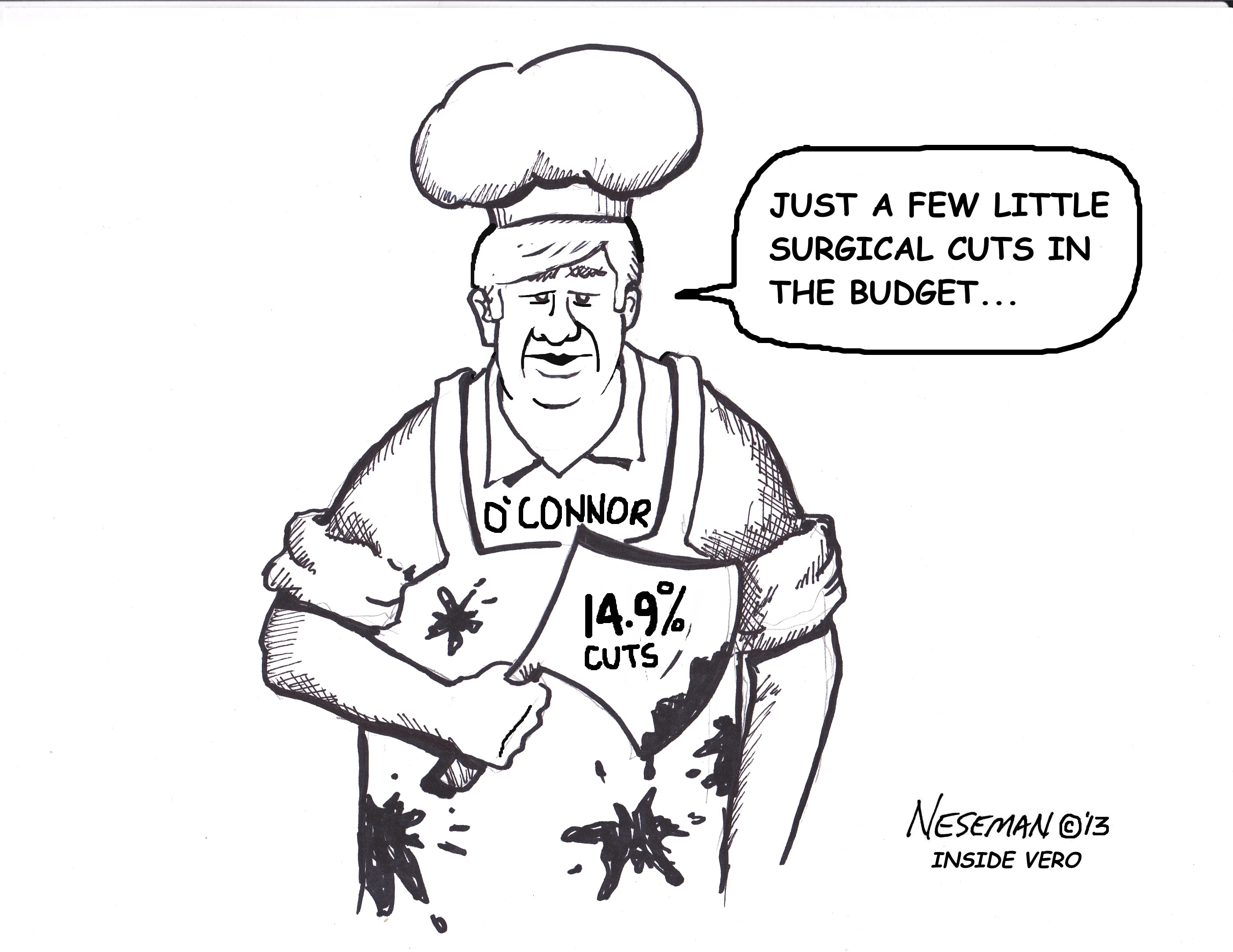 With the coming sale of Vero Electric the city faces a dilemma – how to close a projected $1 million revenue shortfall in the General Fund.
At least three members of the City Council – Tracy Carroll, Craig Fletcher and Pilar Turner are pushing for deep cuts in services, rather than proposing a combination of spending cuts and modest tax increases. If these three Council members believe the low road to diminishing city services is also the path of least resistance, they may have a surprise in store for them.
When proponents of turning over Vero Electric sold their idea to the public, they reasoned that a $10 million savings in electric rates for city residents would more than compensate for any increase in taxes.
As a worst case, they argued, city property taxes would have to double – from $4 million to $8 million. In conjunction with electric savings of $10 million, that tradeoff, they said, is a no-brainer.
As it turns out, at least according to Finance Commission Chairman Peter Gorry and Finance Director Cindy Lawson, the city would only need to raise taxes $1 million, or 25 percent, to keep from further cutting staff and services.
But rather than having a frank conversation about how Vero Beach has relied on utility revenues to keep its property tax rate artificially low, the Council troika is now focusing on further “rightsizing” city government.
In fact, the limited-government crowd is so eager to whittle away at city services that they are looking for $2 million in spending cuts, even though the projected budget gap is only $1 million. Where have the rational thinkers gone?
If Carroll, Fletcher and Turner aren’t inclined to summon the courage for a conversation about “rightsizing” the city’s tax rate, wait until they are facing crowds of angry, frustrated citizens who are unwilling to give up lifeguard protection, or animal control services, or popular recreation programs, or central dispatch for emergency services, or well-manicured public parks.
Now that City Manager Jim O’Connor has asked the city’s department heads to prepare for 10.9 percent to 14.9 percent spending cuts beginning in October, the consequence of failing to address the tax issue is finally coming to light.
The city is looking at cutting 11 percent to 15 percent out of a General Fund budget that has already be trimmed 25 percent since 2007. Because there is a lack of political courage in Vero Beach government, there is also a missing conversation about why Vero Beach’s property tax rate is artificially low. Either Carroll, Fletcher and Turner do not have the courage for this conversation, or they see the Tea Party/Taxpayers Association as the only constituency deserving of a voice in local government.
To not level with the public about the need to raise taxes in the wake of the sale of the electric system is irresponsible.
It seems equally imprudent for the Council to impose steep budget cuts in October, given that the sale of Vero Electric is almost surely several years off.
Earlier this week, O’Connor and the city’s creative and expensive transactional attorneys met in Orlando with representatives of the Florida Municipal Power Agency, the Orlando Utilities Commission and Florida Power & Light. The purpose of the meeting was to explore ways of resolving issues that will otherwise derail the sale of Vero Electric to FPL. To listen to the on-the-records comments made after the meeting, it is tempting to conclude the discussions took place at Disney World, in Fantasyland.
As reluctant as they may be to accept the fact that a closing on the sale of Vero Electric in the 2013/2014 fiscal year is all but out of the question, the Council troika will eventually have to own up to this reality.
Doing so will require acknowledging that they have been overly optimistic, and perhaps too trusting of their transactional attorneys. But there really is only one truth, and eventually it will rise out of the shadows of wishful thinking into the light of day.
 Indian River Guardian
It appears that the COVB officials and elected officials are not fully meeting the needs of the citizenry. The piece meal approach to dealing with the economic realities is not meeting the needs for a open and transparent government. There are unrealistic assumptions being made and attention is only being paid to the most vocal opponents of any attempt to address issues from a 21st century approach. Thus, you have one elected official who understands that the septic tank issue needs to be addressed to protect the lagoon and you have other members who are resistant to understand that taxes need to be increased if you are going to continue to provide the level of service that the residents expect.
Political courage in COVB is non-existent. The public has seen the sad reality over and over again the last few years when decisions are made not on facts but on how large a crowd of dissenters that the Indian River Tea Party/Taxpayers association can pack into a meeting room.