
MARK SCHUMANN
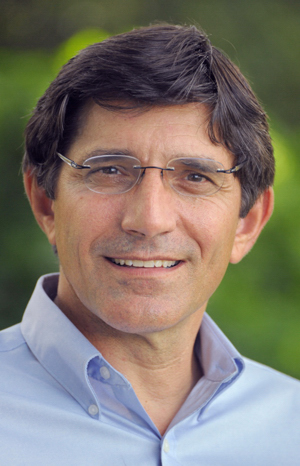 Recently I read through the citizen comments and motions to intervene submitted to the Federal Energy Regulatory Commission, the agency that must now consider Florida Power & Light’s request to acquire Vero Electric.
Notable in the City’s filing, submitted by transactional attorney John Igoe, were numerous references to the dubious claim that the sale of the electric system will free the waterfront power plant site for some “improved public use.”
Reading Igoe’s brief could lead FERC regulators to conclude that the citizens of Vero Beach are as interested in “liberating the waterfront,” to use one of Councilwoman Pilar Turner’s favorite phrases, as they are in finding some path to lower electric rates. Whether that path leads to the headquarters of FPL in Juno Beach or not is beside the point. What they want, simply, are lower rates.
It is puzzling how Igoe got so caught up in selling FERC regulators on the benefits of “reclaiming” the power plant site for public use. Perhaps Igoe was persuaded by Turner that an overwhelming consensus exists in the community for improving her back porch view of the western shore of the Indian River Lagoon.
An entire section of the City’s brief was titled, “The Transaction will allow Vero Beach’s valuable waterfront property to be returned to public use.” What does Igoe think the land is being used for now if not some public use? And what does he mean by “returned?”
Before the land was development as a municipal power plant in the 1950s it wasn’t being put to any use – public or private. Igoe’s arguments are not based on the strength of logic and reasoning one might expect from a $500-an-hour attorney.
Three times the author of the City’s brief employed the adjective “valuable” to describe the waterfront property where the power plant is now located, which leads me to wonder if someone hasn’t let Igoe in on a plan to convince the residents of Vero Beach that their soon-to-be cash-strapped city should ease building height restrictions and then lease the “valuable” power plant site for a high-rise marina resort.
The motions to intervene submitted by Citizens for A Brighter Future, the Taxpayers Association of Indian River County, and utility activists Glenn Heran and Dr. Stephen Faherty were well orchestrated, if nothing else.
Reading these briefs in succession was something like reading all three synoptic gospels in a single sitting. The similarities and share content is hard to miss. The Gospels of Matthew, Mark and Luke, are known as the “synoptic” gospels because, unlike the philosophical and esoteric Gospel of John, they tell the story of the life of Jesus from a quite similar point of view, and all three almost surely share material from a common source, known by biblical scholars as “Q.”
What Citizens for A Brighter Future, the Taxpayers Association, Heran and Faherty submitted to the FERC could be termed the synoptic motions to intervene. In one sense, they demonstrate message control at its best, as all four documents effectively drive home the same points about so-called taxation without representation, just as they claim a loss of some $25 million a year in “disposable income” due to the now artificially high rate differential between Vero Electric and FPL.
Attorney and former Vero Beach City Councilwoman Lynne Larkin, writing on behalf of the Civic Association of Indian River County, submitted by far the most interesting intervention. The CA brief paints FPL as a giant investor-owned utility bent on shrewdly squeezing out competition across the state.
In addition to a David-and-Goliath plot line, the CA’s filing comes complete with character development in the person of Glenn Heran, who is portrayed as an FPL operative serving as an intenerate preacher of privatization traveling the state fomenting discontent among customers of municipal utilities.
What is it they say about truth being stranger than fiction?
 Indian River Guardian
It is rather odd that the overly paid transactional attorney, John Igoe, would cite anything about any property at all in his brief to FERC. FERC has no authority to make decisions based on how public property is used. FERC is not in the land management business.
There will soon be sounds of laughter heard from the FERC staff emitting from lst Street in Washington, D. C.
In a situation with such limited present options I can only wonder why the original power plant in Vero Beach was built not near the delicate river ecosystem, but on the high ground like,where the train tracks are. Also I wonder if “liberating the waterfront” would include removing the water treatment plant from alongside the Indian River Lagoon? Give to Ceasar what is Ceasars, I agree . It’s far beyond me to guess who Ceaser is these days…