
MARK SCHUMANN
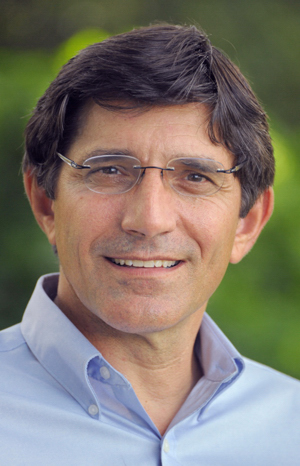 Yesterday’s guest column in the local daily newspaper by Glenn Heran, president of the Taxpayers Association of Indian River County, is the most recent and perhaps the most compelling evidence to support the assertion that there is no discernable difference between the Taxpayers Association and the local Tea Party.
Neither organization seems to be working for better government, just less of it. If the members of these two advocacy groups are as interested in improving efficiencies as they claim to be, they should simply merge.
Heran argues that government should provide only “essential services,” though he consistently fails to specify what current city services should be eliminated.
Heran, who was recently portrayed in the Civic Association’s filing with the Federal Energy Regulatory Commission as an itinerate operative for Florida Power & Light, is missing the point about democracy.
Arguably, government should provide, within Constitution limits, those services the majority of the electorate wants it to provide. Whether those services are “essential” in the view of the Tea Party and Taxpayers Association is not the crucial test.
Heran wants to see the city exit the water and sewer business as well as the electric utility business, but notice that he does not suggest the city should seek private bidders for is profitabel water and sewer system. Instead, Heran has argued that the city should allow its system to be taken over by the county. He has also worked to foment discontent among the city’s customers on the south barrier island.
In his guest column yesterday, Heran claimed city water and sewer rates are an average of 11 percent higher than county rates. That is a dubious claim. According to City Manager Jim O’Connor, if the city were charging county water and sewer rates to its customers on the south barrier island, it would be grossing almost and additional $200,000 a year in revenue from those customers.
Heran did not bother to mention that the city has offered to charge its south barrier island customers county rates. He also failed to acknowledge that for the County to take over water and sewer service to the 3000 residents of the unincorporated area of the south barrier island would require million of dollars in public investment.
To bolster his argument for smaller government, Heran quoted Thomas Jefferson. Jefferson, who was opposed to the formation of a national bank, wrote, “My reading of history convinces me that most bad government results from too much government.”

Point taken. But what constitutes an essential service is subjective. In his own enumeration of “essential” services the city should continue to provide, Heran did not include recreation programs.
Perhaps Heron would do well to study more thoroughly the writing of the founding fathers, for Thomas Jefferson also wrote, “Leave the afternoon to exercise and recreation, which are as essential as reading. I would rather say more necessary because health is worth more than learning. “
If, like many of the members of the local Tea Party and Taxpayers Association, one owns a private pool, or is a member of a private club, then one may be less interested in seeing government provide recreation opportunities for the general public. I am reminded of an observation the Reverend Jessie Jackson made during a 1984 presidential debate. Jackson said the fact that a rising tide lifts all boats is only reassuring to those who own a boat.
Many who advocate for “limited government” are, in fact, taking refuge behind an innocuous term, as they wage class warfare. I suspect the greater the income disparity in a community, the more likely you are to see some of the well-to-do filling their idle time pushing for limited government.
The middle class, struggling to keep from sliding into poverty, has neither the time nor the resources to defend itself against those who seek to eliminate all but the most “essential” of government services. For example, if one can pay cash for a new luxury car, it is easy to dismiss the need for public transportation. We certainly heard that argument not long ago from a leader in the local Tea Party.
As City Council members Tracy Carroll, Craig Fletcher and Pilar Turner seek to emaciate city services, now is the time for a vigorous debate about whether Vero Beach should implement policies that will cause the city to soon resemble a banana republic, or whether it will continue to stand as a shining example of government of the people, by the people and for the people – all the people, even those who do not own pools, boats and tennis courts.
 Indian River Guardian
The second unnofficial kickoff to a city council campaign. It is going to be a crowded race this October and with the apathetic voter turnout we normally get, 500 votes will win. With 15,000 residents that is a sad commentary. Please, will a young, clear thinking young person without a hidden agenda step forward and save our city. Glenn Heran has some nerve, quoting a Humanist.
There are approximately 10, 000 voters in the city limits of Vero Beach. Out of those registered voters 1800 to 3000 vote depending on the issue.
Unless the voter knows or knows about the candidate the voter will base their vote on issues important to them.
During presidential elections the majority of voters vote along party lines.
We have a media black-out in that only news printed is what the press
wants you to know about or consider when voting.
It would be difficult for a voter to know how to vote or who to vote for unless one has followed the issues.
Just looking for someone ‘new’ or ‘young’ will not fix the situation.
We can hope the voter will actually want an elected official familiar with local government procedures and functions. Otherwise that newly elected official will spend the majority of their time in office ‘learning the job’.
Do I sense the unofficial kickoff to a third city council candidates campaign. We’re gonna need a program to follow along.
I would argue that not all of our current council member have “learned
the job” and a young person without an agenda may take that time. One issue candidates are what got us in this mess. That and televised meetings.