
Editor’s Note: In early 1998, Florida Power & Light’s holding company, FPL Group, entered the New England power market, buying central Maine’s Harris Dam hydroelectric plant, along with a number of fossil and wood-fired plants.
FPL Group changed its name to NextEra in 2010. NextEra’s Harris Dam plant has become the focus of controversy, as the company draws down water levels in Flagstaff Lake, seemingly aided by at least one key state regulator. The following story appeared in the June 21 issue of the Portland Press Herald.
http://www.pressherald.com/news/Whose-interests-is-Maines-DEP-commissioner-serving.html
COLIN WOODARD: cwoodard@pressherald.com
EUSTIS, MAINE— On a Wednesday in April, Flagstaff Lake was draining away.
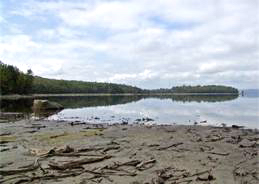
When full, it is the state’s fifth largest freshwater body, nurturing a local tourist economy and providing boating and swimming opportunities for thousands of residents and others visiting Maine.
But on days like this — when the dam owner opens the sluiceways of the Long Falls Dam to generate power farther downstream — the lake begins to disappear, leaving behind thousands of acres of muddy and largely lifeless bottom. Docks are left high and dry and shorefront homes, camps and parks become isolated behind hundreds of yards of exposed, foul-smelling muck.
“They’re killing our area up here,” says Jay Wyman, a longtime selectman in Eustis, where many families moved in 1950 when the newly completed dam drowned their nearby hometowns of Flagstaff and Dead River.
People in the Eustis region fought for nearly a decade to defend their livelihoods, property values and tax base by pressuring state authorities to require the dam owner to keep the lake fuller in summer and early fall as part of its federal relicensing, which comes up for review only three or four times each century.
They’d sparred with the longtime owner, Florida Power & Light, from the hearing rooms of Augusta to the 1st U.S. Circuit Court of Appeals.
By the summer of 2011, it looked like they would win — until the state’s top environmental official stepped in.
That’s when the state commissioner of environmental protection, Patricia Aho — who just months before had been working as a lobbyist for the law firm which represented the Florida power company — met with Matthew Manahan, who was FPL’s attorney and Aho’s former colleague at Pierce Atwood, the state’s largest law firm. After the meeting, Aho’s department quietly did exactly what FPL hoped it would: nothing.
Despite detailed briefings from staff experts and a last-minute warning from the Attorney General’s Office, the DEP quietly let the clock run out, missing a critical federal deadline to influence what happens at the dam for another quarter-century.
Her spokeswoman would later claim it had been an oversight, suggesting staff had dropped the ball when, internal documents and interviews with former staff reveal, the ball had been taken from them and handed to Pierce Atwood’s client for an easy layup…
• THE FLAGSTAFF LAKE EFFECT: HOW MAINERS LOST AN OPPORTUNITY
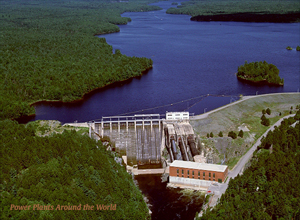
By the time Aho took over the department in the summer of 2011, the fight for Flagstaff Lake had been years in the making. But residents, negotiating with the company from a position of weakness, often came up short.
In many summers over the past decade, the Florida energy company FPL dropped Flagstaff’s water levels so low that by early August the local youth recreation program had to stop holding swimming lessons at the local beach and bused the children to a pool 20 miles away. Other residents reported foul odors wafting from the exposed lakebed and winds carrying silt and sand into a local elementary school and an elderly housing complex.
“You lose a couple feet here and people have to haul their boats,” says Wyman, the longtime Eustis selectman. “You pull three or four feet and you get mud flats. They drain it out too much and you get sandstorms.”
The problems kick in when summertime lake levels fall below three feet from what’s called “full pond,” townspeople report. At 4.5 feet below full pond capacity — the level the newly issued federal license allows in September — the Eustis end of the lake becomes a mud flat, with only the old channel of the Dead River containing any water. When the Telegram visited in mid-April, the Eustis end of the lake looked much as the town described it in regulatory filings: “a nearly empty bathtub surrounded by a dark ring.”
For the past decade, Flagstaff-area residents had fought to get more stringent water level rules written into the dam’s new license, which was up for renewal for the first time since the dam was built. The legal mechanism to do so was through the state DEP, which could impose such requirements under the federal Clean Water Act.
As early as 2004, federal records show, the town had asked the DEP and the Federal Energy Regulatory Commission to ensure that the dam’s new license require that the lake be kept at certain minimum levels in summer and early fall. That same year, the Board of Environmental Protection — an independent body that reviews environmental regulations — ruled that FPL’s winter drawdowns were too severe and, to protect aquatic life, should be limited to less than 9 feet below full pond capacity, rather than the 24 feet allowed under the proposed license.
There was a catch: DEP had to file paperwork by Nov. 15, 2011, or it would lose its seat at the table and, along with it, the means to modify the federal license, which FERC was otherwise ready to approve.
Aho missed the deadline.
Aho’s spokeswoman, Depoy-Warren, later claimed the failure to file the paperwork had been an accident, “something that was lost sight of during the transition of leadership.”
But according to both internal documents and Dana Murch, the staffer who oversaw DEP’s dam relicensing efforts for more than 30 years until September 2011, Aho and other key officials had all been fully and repeatedly informed about the dam and its deadlines.
Murch said he personally briefed the commissioner and other senior managers face to face on the approaching Flagstaff deadline that summer. “She certainly knew what the regulatory options were and where the project file was,” says Murch, who also highlighted the deadline in exit memos sent to staff.
Aho was also briefed on the issue by FPL. Department schedules and correspondence acquired by the Conservation Law Foundation through a public records request showed that Aho met in her office Aug. 4, 2011, with FPL’s attorney — her former Pierce Atwood colleague Matthew Manahan — and two FPL officials seeking to “update Pattie on the status of Flagstaff.”
DEP staff at various levels subsequently received reminders of the impending deadline, including one sent the day before to the staffer responsible for Flagstaff, Dawn Hallowell, by Assistant Attorney General Jan McClintock noting that if no action was “done by tomorrow, certification will be deemed waived by operation of law.” Hallowell forwarded the email to her supervisor, land and water bureau director Michael Mullen, meaning that even at the last hour, key staff were aware of what was about to happen.
“I think it’s disingenuous for the department to argue they did this in ignorance,” says Jeff Reardon of Trout Unlimited, which had fought for tighter water level targets. “We could have gotten a better situation, and it’s entirely possible Eustis and Stratton could have gotten a better summer target.”
“This was a once-in-a-lifetime opportunity to get a balance between hydroelectric energy generation and environmental values,” says Murch, the longtime DEP dam relicensing expert. “The legally proper way to have moved forward would have been to (do an) analysis to try to figure out what the appropriate new water standards would be to meet all needs and impacts. Find out how much environmental bang you get for each foot of water you don’t draw down from the lake and what the negative impacts are.”
“They chose the sit-on-your-hands-and-do-nothing option,” he adds.
The result was something of a slam dunk for FPL and anyone else who owns the dam between now and 2036, when the new license expires, as it killed more stringent limits on drawdowns, both in summer and off-season.
“Once the state made that decision there was no longer any legally binding obligation on the federal agencies or the dam owners to listen to what anybody has to say in Eustis or any other community,” says Sean Mahoney, executive vice president of the Conservation Law Foundation. “It all comes down to money: Having to do studies, having to do recreational things, having limits on what they can draw down affects how much power they can generate and how much money they can get for their shareholders.”
“By DEP waiving their authority, it gives the owner the best of all worlds: a non-appealable order that they needn’t change or defend and they don’t even have to pay for studies,” Reardon says. “It’s less expensive, more secure and gives them more authority.”
The governor appears fully supportive of Aho’s handling of the issue. Asked whether LePage had any concerns about the DEP having waived its powers under the Clean Water Act at Flagstaff, the governor’s communications director, Peter Steele, gave a one-sentence written response: “The Governor is confident that DEP is appropriately managing the delegated (Clean Water Act) program.”
Aho declined to be interviewed about Flagstaff and many other issues raised in this investigation. In mid-April, DePoy-Warren said DEP would not comment or respond to any further questions on this or other issues, saying she and Aho would “instead focus our efforts on the protection of our environment as the people of Maine expect us to do.”
 Indian River Guardian
Aho’s handling of the Flagstaff situation is outrageous! It definitely appears that she is in the back pocket of FPL. As a big corporation that is beholden to stockholders and seems quite aggessive, I don’t trust them. Even if they save people money, I don’t like their tactics.