
COMMENTARY
“The problem for Heran, though, is that he has been carrying FPL’s water for years, and the utility giant would rather play the long game in hopes of walking away with everything. More to the point, though, it seem likely FPL is using its negotiations for Vero Electric as a way to crack the FMPA contracts, so that it can then march across the state buying up one municipal utility after another. In a presentation to investors last spring, FPL President Eric Silagy made clear his appetite for acquiring municipal utilities.”
MARK SCHUMANN
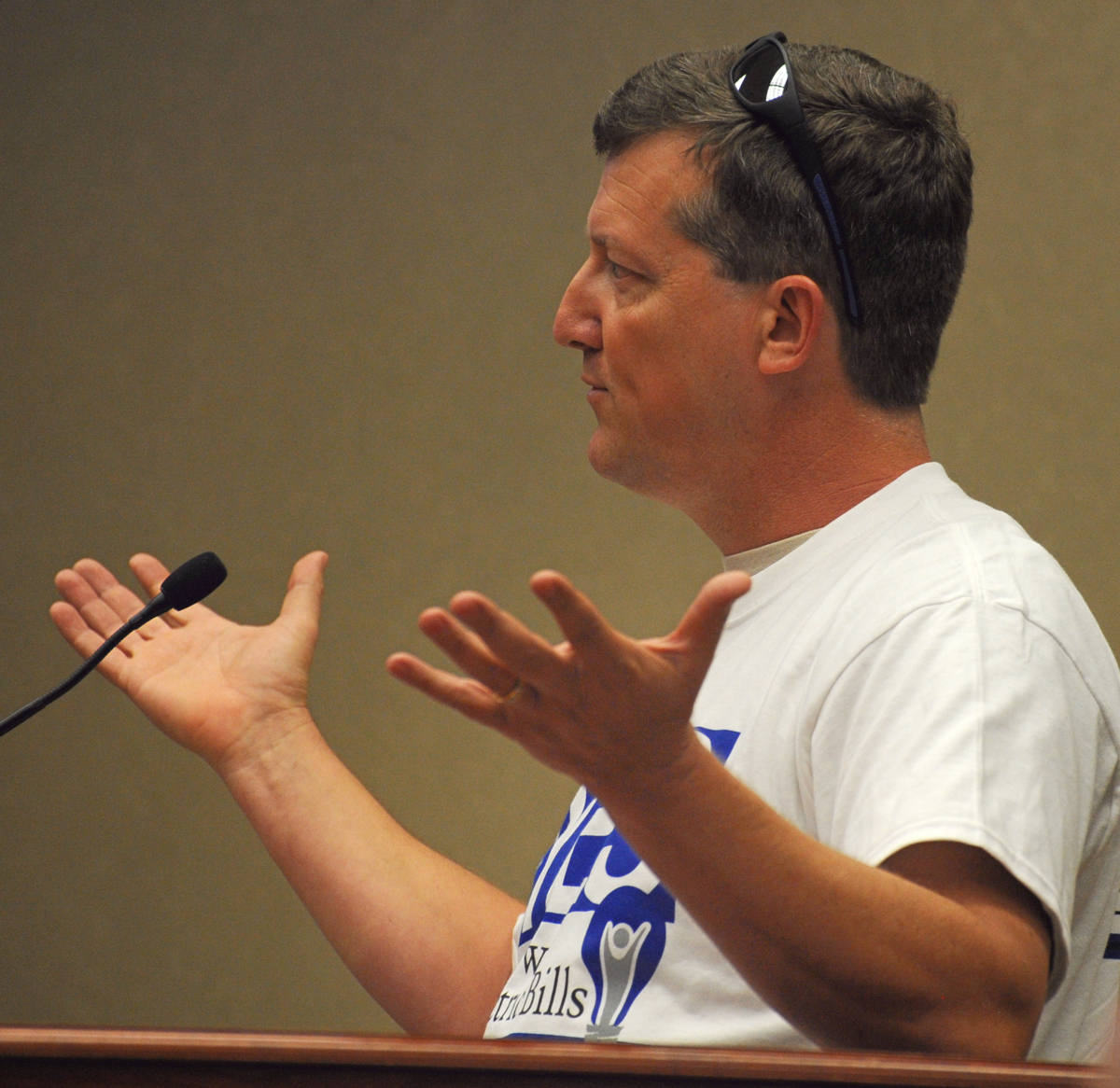
Glenn Heran, utility activist and president of the Taxpayers Association, issued a red-letter “Call to Action” Sunday, apparently in response to City Councilman Richard Winger’s proposal to hire another outside law firm to give the city a second opinion on how best to structure a deal to sell Vero Electric.
Heran’s diatribe is naïve, simplistic, and disingenuous, and is laden with wishful thinking. The president of the Taxpayers Association may be making claims he believes to be true, but his “Call to Action” is so full of inaccuracies that it is challenging to determine where best to begin a critique.
From the start of the effort to sell Vero Electric, Heran has been either dismissive, or ignorant of the contractual obligations Vero Beach made to its fellow Florida Municipal Power Agency members, and more importantly, to the joint action agency’s bondholders.
Clearly, Heran has yet to comprehend the fact that the long-term pledges Vero Beach made to participate in billion dollar power projects are more akin to getting married than they are like simply choosing to live with someone.
In a “Call to Action” that rings with the tone of a child frustrated at not getting his or her way, Heran claimed the FMPA has rejected “reasonable offers” to dispose of Vero Beach’s FMPA contracts. In truth, all four parties to the negotiations (Vero Beach, the FMPA, Florida Power & Light and the Orlando Utilities Commission) now agree the original power transfer agreements signed last fall would likely not meet with Internal Revenue Service approval.
Heran may be unhappy with the fact that power generated by plants funded with tax-exempt bonds cannot be sold without restriction to investor owned utilities such as FPL, but the law is what it is, and the FMPA is hardly to blame for that.
Among Heran’s questionable statements is the assertion that all 33 municipally owned utilities in Florida are inefficient, and cannot compete with FPL. Heran is parroting a claim that comes straight out of FPL’s publication relations playbook. It is simply not true.
Sounding like a fundamentalist Libertarian, Heran seems to believe it is un-American for cities to own their own utilities. Yet, in other cities that own and operate electric utilities leaders are generally supportive of municipal power.
In fact, Vero Beach is the only city in Florida actively negotiating to sell its electric system. Widespread discontent with municipal power simply does not exist. Heran knows as much, which is why he is now proposing to “fight” the FMPA by spending public money to conduct a statewide effort to sow seeds of discontent.
Heran speaks and writes with an air of absolute assurance that belies the fact he has in the past been off course by as much as 180 degrees. Aided by a local daily newspaper that publishes his many “guest” columns and never fails to cite his credentials as a Certified Public Accountant, Heran is seen as a utility expert in the the eyes of those who do not yet know any better.
Perhaps because they work for a newspaper whose publisher is married to a key FPL employee, the editors and reporters of the Press Journal have remained silent on Heran’s unrealistic projections, just as they have yet to report that the negotiations are now so far off track Heran felt compelled to take what can only been seen as an act of desperation.

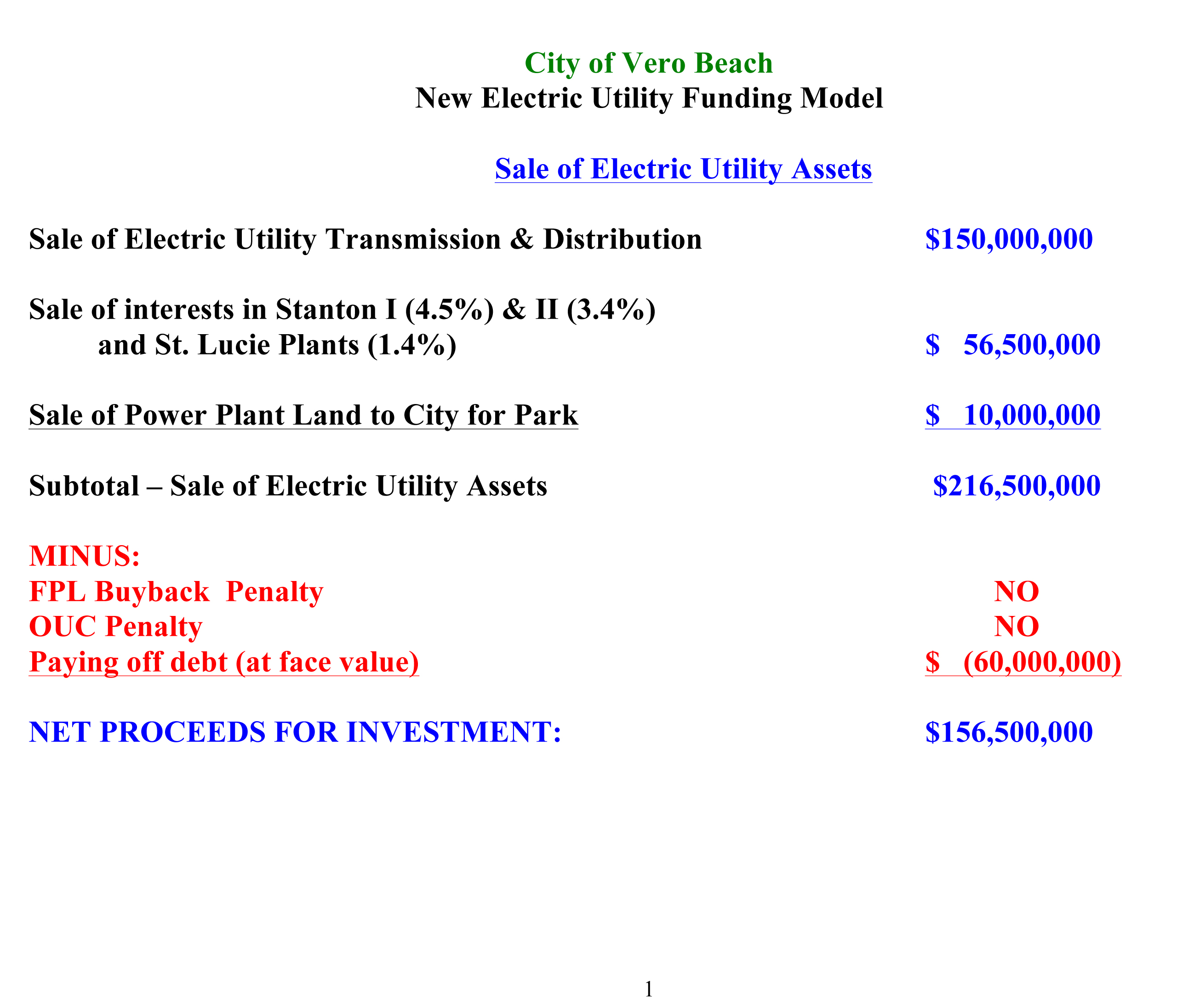
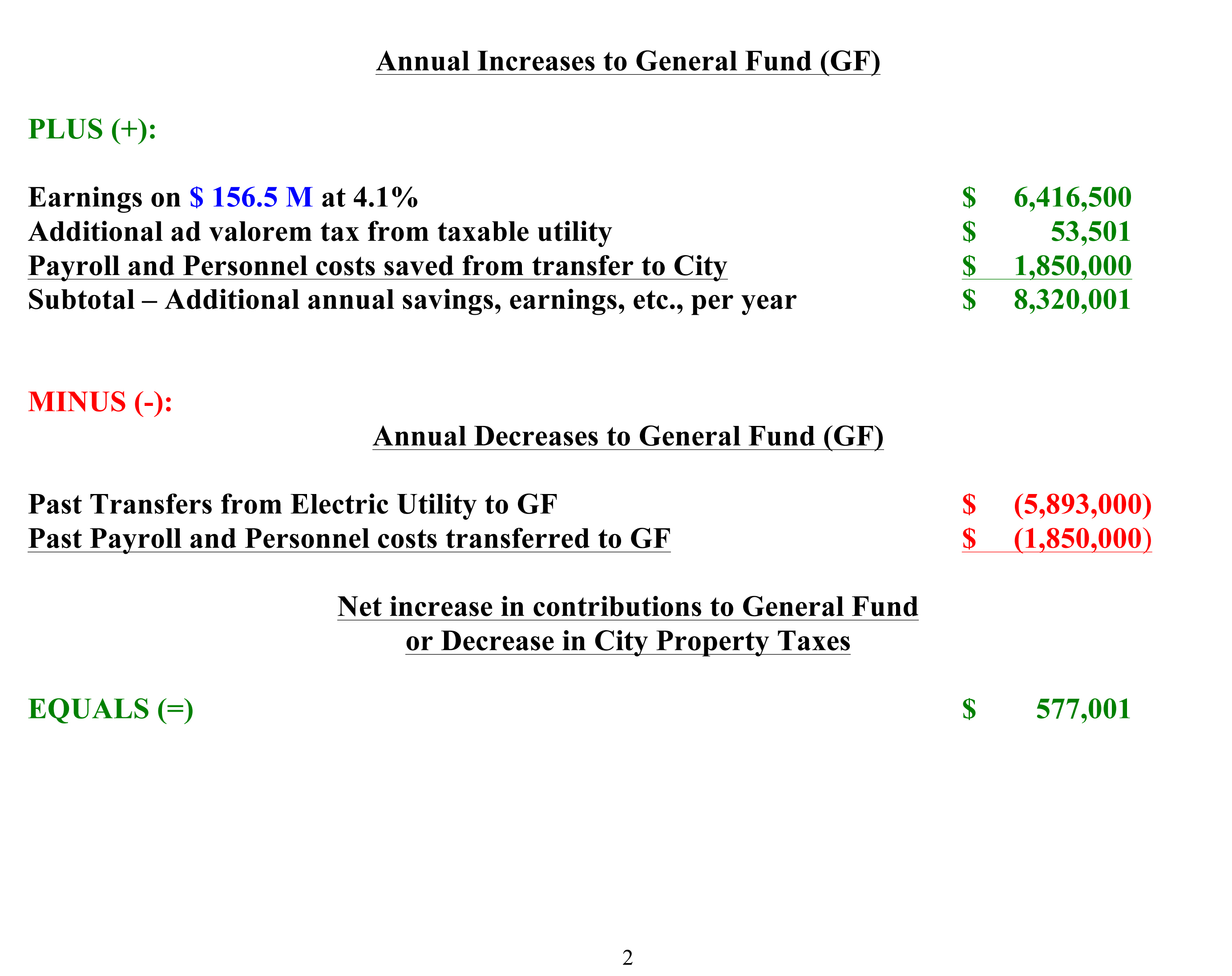
In 2009, Dr. Stephen Faherty was presenting a financial model he attributed to Heran showing the city would net $156.5 million on the sale of Vero Electric, which, he said, would lead to a boost in the general fund of some $600,000 a year. On these and similarly rosy projections, Heran and Faherty first built community support for selling the electric system.
At least in terms of the consequence of the sale on the city’s budget, Heran and Faherty were tragically wrong. The city’s will be lucky to net $3 million on the sale, not $156.5 million. Rather than gaining $600,000 in investment income, the city will lose some $5.6 million each year now transferred from the electric fund to the general fund.
Regarding Heran’s C.P.A. badge, perhaps it is instructive to remember than an army of C.P.A.s at the now defunct accounting firm of Arthur Anderson did a poor job of protecting investors in ENRON.
Even if Heran’s plan to hire a public relations firm to “direct and support activism in other (FMPA) member cities” is ultimately successful in bringing down the FMPA, which seems highly unlikely, the campaign will, at the very least, take years to conduct.
All the while, Vero Electric’s county customers, about whom Heran and the leaders of Taxpayers Association claim to be so concerned, will continue as customers of the city. If Heran and the Taxpayers Association are as committed to securing rate relief for the city’s 22,000 county customers as they claim to be, they would stop resisting the concept of a partial sale.
A plan for a partial sale is more likely to meet with the approval of FMPA’s bond trustees, and could lead to lower rates for the city’s county customers much sooner that would a sale of the full system, assuming a sale of all 34,000 Vero Electric customers will ever be possible.

Eric Silagy
The problem for Heran, though, is that he has been carrying FPL’s water for years, and the utility giant would rather play the long game in hopes of walking away with everything. More to the point, though, it seem likely FPL is using its negotiations for Vero Electric as a way to crack the FMPA contracts, so that it can then march across the state buying up one municipal utility after another. In a presentation to investors last spring, FPL President Eric Silagy made clear his appetite for acquiring municipal utilities.
Silagy said, “FPL’s opportunity to grow earnings comes from a variety of sources, including: Base rate increases and settlement agreement: Service territory volume growth; Wholesale/service territory expansion.”
Silagy added, “One of the things that’s happened is I’ve now got the governor of Florida going around to the munis saying, ‘Why aren’t you selling yourself to FPL?’”
Winger’s proposal to seek a second legal opinion on how best to negotiate the sale of Vero Electric makes sense, especially given that the Council troika of Tracy Carroll, Craig Fletcher and Pilar Turner is not likely to agree to sack the transactional attorneys.
That move has even more merit, though, for by refusing to recognize and address the failings of the transactional attorneys, the Council may well be exposing the city to liability for not bringing the deal to closure.
 Indian River Guardian
THEY BETTER HURRY. THE “TROIKA” IS ALMOST HISTORY.
Well said. Glenn Heran has been wrong about this entire FPL deal, and should step down as the President of The Taxpayers Association. There has been NO effort to be unbiased on the sale of Vero’s Electric Utility – quite the opposite is true.
I support Dick Winger’s suggestion that the City hire additional attorneys to oversee the current contracts, and comment on same.
is mr. Heran a city resident?
No, Mr. Heran is not.
fpl is laying off meter readers and meter repair techs as the smart meters become phased in. this is to save them money. yet the rates having dropped at all. hmmm I though the free market was better at well utilities.
It is important to remember that If FPL has a history of acquiring municipal utilities that has not been beneficial to the customers, then the Federal Energy Regulatory Commission is not likely to approve the sale of the COVB utilties.
The county residents who live on the northern end of the barrier island have enjoyed low FP&L rates for years. So there is no reason for all the doom and gloom. For example, the Indian River Shores community is able to meet the needs of its community without being dependent on a revenue stream for a utility provider.
FPL may indeed be laying off meter readers but that is not much different from the fact that the COVB has also laid off some of its employees.
The claim has been made that 60 to 70 percent of city amentities are enjoyed by non-city residents. However, it is important to recognize that it is only the south County COVB rate payers who are being accused of “stealing” city services. If the COVB is not able to afford to maintain the parks and sports facilities because of the loss of electrical utility revenue, then consideration has to be given to getting the users from the northern end of the barrier island to pay their fair share for their usage of city services. .
Pat, your comment suggest an island-centric perspective. There is a mainland over here, you know.
the point is if fpl buys all the power in the entire state of florida don’t expect any reason to lower rates. if you that are stuck on the covb grid were to complain about the rates as you do with fpl. that would amount to what? nothing. as fpl doesn’t care. utilities aren’t free market but monopolies. I am on fpl and not on the city.my step daughter apt has the same size in square footage as my house. I pay 20 bucks less a month. both of us are in the county as she is on the covb grid. a factor to consider is that the storm response time. fpl is real slow about that. to be fair it kinda has to be.vero is a small area.
Jason Cranman is the exception if he is pays less with COVB utilities. Most non-city users pay MORE for electic service than do others with more square footage of space. This is why there has always been such widespread support for even a partial sale.
The mainland has been heavily subsidized for years. This is why there are so many on the barrier island who would welcome even a partial sale.
I sat without power for two weeks while during hurricane Wilma .yet the city had power restored in two days. its something to be considered. remember that unlike phone and cable where on can pick the lowest price, fpl nor vero have any reason to lower rates. but I have heard that fmpa gave a deal to lake worth for not selling and they lowered their rates or last considered. heard they lowered it. if so then why hasn’t who is far bigger then any power company in florida ever done so?fpl btw is the 4th biggest power company in the u.s. they don’t need us to pay for a nuke plant or green tech, they don’t need goverement money to do this.
Jason Cranemaker needs to realize that the taxpayer is going to pay for nuclear power whether or not your utility service is provided by COVB or FP&L. This is because the Price-Anderson Act allows the use of Federal dollars to provide corporations that invest in nuclear power with liability insurance. John Q. Taxpayer foots 100% of the bill. However, even with this guarantee no new nuclear power plants have been proposed in the USA since the Three Mile Island accident.
im on fpl not the covb grid. remember that if the city didn’t raise it rates it would be closer to what fpl has. fpl just got a 6% and now will raise it another.
Jason Cranman is speculating. FP&L is not able to raise rates without approval of the Public Service Commission.
@pat , there has never been a time where they haven’t got a raise. they got it twice this year at 6% and another. Pat is speculating that FPL doesn’t have Tallahassee on their payroll and neither do have the troika, glen heran and also Wilson and company. that is the reason I prefer an alternate solution, if its doable. all power grids are interlinked from Canada to mexico. its feasible and its already been said that if you buy power as plants sell extra power to other grids that need it. so why not have an option of picking a power provider from anywhere to supply the power? at least check into that. vero and ft,pierce are directly tied in to each other. fpl and vero link up at 58th ave with those transfer station near each other.
I know that nuke power is paid for either way but fpl has and is notorious for taking money and not using for what it should. I don’t think the feds should take tax money for what a private company does. fpl has asked for a $9.00 month nuke plant construction fee. its been denied by the psc. If they used it for what they should I wouldn’t care but they are from the keys to main and one a lot more then just st.lucie one and two. here is a quote from a link.
“FPL originally filed a rate proposal early this year that called for increasing base rates by $516.5 million in January 2013 and another $173.9 million in June 2013 when a new Cape Canaveral power plant starts operating.” that is now in effect now.