
NEWS ANALYSIS
MARK SCHUMANN

At today’s City Council meeting, Florida Power & Light attorney Patrick Bryan and the city’s transactional attorney, John Igoe, assured the Council negotiations with the Florida Municipal Power Agency and the Orlando Utilities Commission are progressing.
“Much progress has been made,” Bryan said, adding, “A comprehensive plan for a path forward to closing on this transaction has been laid out for FMPA’s consideration.”
Bryan and Igoe seemed to be putting the onus on the FMPA to accept their latest proposals for resolving what they acknowledged are the FMPA’s “legitimate objectives” of protecting its bondholders and the tax-exempt status of its bonds.

“The FMPA has repeatedly assured the city it wants to cooperate,” Igoe told the Council. Bryan underscored the point. “FMPA has stated publicly it will work with all parties on this transaction to insure the deal can get done…That commitment will need to be honored in order for this deal to close,” the FPL attorney said.
The latest proposals, which were presented just yesterday afternoon, have yet to be reviewed by the FMPA. Officials with the OUC, though, have already made it clear in a memo to Igoe’s law partner, Rick Miller, that they will need to give the so-called “Plan B” careful consideration.

In an email sent to Miller late yesterday, OUC counsel, Chris Browder, wrote, “I talked with Jan (OUC C.E.O. Jan Aspuru) and we do need to think through the idea of termination and replacement of the FMPA agreement vs. assumption of existing Vero agreement. I think at this point the OUC will need some additional details before we can fully analyze the approach.”
Browder’s memo to Miller then enumerated eight questions he and Aspuru have about how the proposed “Plan B” might impact the OUC.
Though Bryan told the Council today, “FPL is confident there is a path forward to closing,” not even officials for the OUC appear to share the FPL attorney’s confidence.
When asked in writing if the FMPA board would be willing and able to approve the new approach proposed by Igoe and FPL, FMPA Assistant General Manager, Mark McCain, wrote, “FMPA staff has not discussed either of these proposed agreements with our Board of Directors or Executive Committee, so we are not in a position to give any preliminary indication on the willingness or ability of our governing boards to approve these proposals. FMPA staff has agreed to consider the proposals.”

McCain added, “A more important priority is for Vero Beach and OUC to finalize Plan B for the entitlement transfers and for the request language to be developed for the Private Letter Ruling from the IRS. If the IRS does not provide an affirmative opinion that assures the tax-exempt status of FMPA’s bonds, the rest of this is moot.”
In order to avoid triggering a provision in the FMPA contracts requiring that changes be approved by each participating member city, Igoe is proposing to cancel the city’s contract with the FMPA, rather than amending it. In place of the cancelled contract, the OUC would then enter into a replacement contract with the FMPA.
What was an “assignment” of a contract, Igoe now proposes to call an “agreement.” Whether the idea is a stroke of genius, or just another in a series of Hail Mary passes that have fallen far short, only time will tell.
It could be that if the deal “walks” like an assignment and “quacks” like an assignment, it is likely to be seen as an assignment of the city’s existing contract with the FMPA. In the same way, the city’s transactional attorneys have proposed getting around the issue of the OUC selling Vero Beach’s power entitlements to FPL by redefining the power transfer agreements as a “system sale.” The challenge, though, may come in convincing the Internal Revenue Service it is possible to differentiate one electron from another.
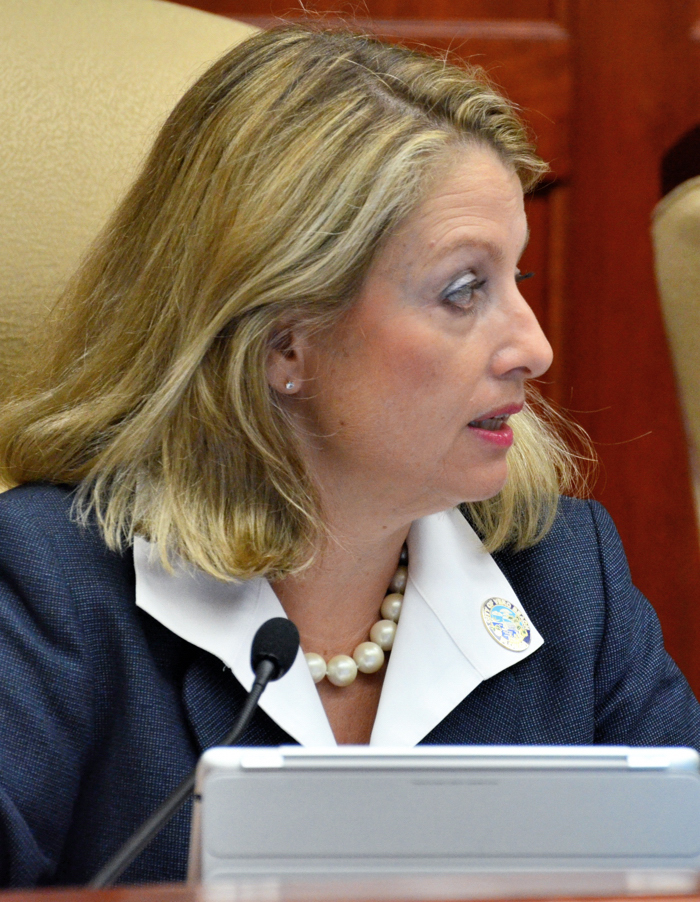
When given an opportunity to question Igoe, Councilman Richard Winger said his biggest concern is that, as the negotiations drag on, the party losing is the city and its electric customers.
“My interest is getting people off the hook for the $2 million a month and the $60,000 a month in legal fees. You sounded like you were prosecuting a case against some other parties and that could get us caught up in a long, drawn-out situation. The people of Vero Beach are pawns, it is costing them money, and no other player in this is paying money, and I don’t think that is right,” Winger said.
Councilman Jay Kramer followed. “Bottom line, we don’t have a deal. You made us sign a contract we are still negotiating. You said you would not let Vero Beach sign a bad deal. I don’t see how you can say if the deal is good or bad, if we are still negotiating. We are three years into this. We have gotten nowhere.”
Kramer then seemed to echo Winger’s concern about taking what appears to be a confrontational approach with the FMPA. “I don’t see how you dictating to FMPA how to do their business is going to help,” Kramer said to Igoe.
Igoe replied, “Look, I didn’t want to negotiate this in public but somehow everything that happens when we have meetings with the FMPA ends up in the press and you are getting one side of the story.”
“Mr. Igoe, this is government in the sunshine, out in the open. People come after us because we negotiate behind closed doors,” Kramer said.
Kramer then suggested the time has come to cancel the city’s wholesale power agreement with the OUC. The 20-year contract was negotiated in 2007, when the price of coal-generated electricity was 50 percent above today’s market price. By paying the OUC $20 million to cancel the agreement, and then renegotiating, either with the OUC, or with another wholesale power provider, the city would save far more than the cost of the debt service it would have on $20 million.
“It (renegotiating the wholesale power agreement) would bring rates down, but unfortunately if you bring rates down the incentive to go to FPL starts to go away. So that would be a real interesting conundrum to deal with,” Kramer said.
After some sniping between Councilwoman Tracy Carroll, Kramer and Winger, the Council moved on to other business before breaking for lunch, at which point the city’s $500-an-hour transactional attorneys and FPL representatives dined together at the Patio Restaurant.
 Indian River Guardian
Was Charlie Wilson their server at the Patio. They’ve all ready been tipping him!!!!
Can’t we get out of the OUC contract without a penalty in a few years.That also frees up the power plant for decommisioning. I say, negotiate the exit penalty down by threatening an investigation of the original deal.