
MILT THOMAS
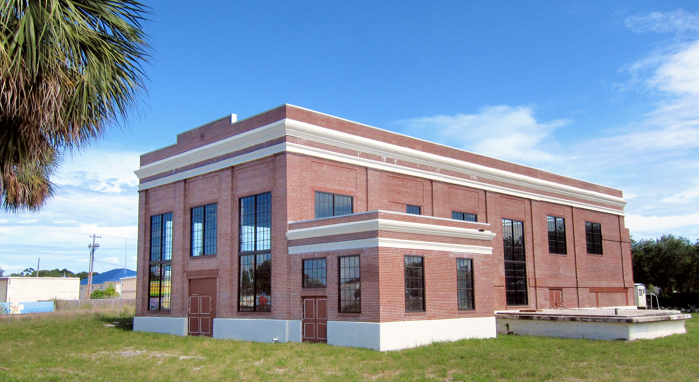
The building is old, a piece of Vero Beach history and it could become a linchpin in the revitalization of downtown Vero Beach, but there it sits, waiting for something to happen. Everyone knows it as the old diesel electric plant, just west of the railroad tracks on SR60 (Twin Pairs) Eastbound. It was replaced as the primary electric source in 1961 by the current Vero Electric plant, the blue monster, which is itself on the verge of being replaced.
The diesel plant story is a long one but worth recounting to understand how we arrived at the point where it sits, all fixed up with no place to go. Before Vero had a Beach in its name, the city’s first power plant was built in 1918 by a private operator, Vero Utilities Company. It consisted of a 25h.p. oil engine bolted to a generator and housed in a sheet metal building across from Vero Furniture Mart (formerly Indian River Citrus Bank), on the Twin Pairs westbound. Vero was growing so fast that VUC could not keep up with demand and sold their facility to the city. A bond election was held in early 1920 in favor of buying the plant and distribution system as well as a new site adjacent to the railroad. A wood and sheet metal building was erected on that site and the plant went into operation by fall. The population of Vero at that time was 793.
Three years later, a fire destroyed most of the plant, and in April 1925 a contract was approved to build the first phase of the current diesel plant building, designed by the Carter and Damerow engineering firm. That became the city’s very first public facility and is the city’s oldest municipal building. The diesel plant served as our primary source of electricity until the current plant went into operation in 1961. From then until the late-1980s, the diesel plant served as a back-up electric source.
About ten years later, when it appeared that the out-of-date and crumbling diesel plant might be destined for the wrecker’s ball, Ruth Stanbridge and other members of the Indian River County Historical Society put forth an effort to save the building, applying for status on the U.S. National Register of Historical Places. That status was granted on February 26, 1999.
About the same time, Downtown Vero Beach was awarded Main Street designation by the State of Florida partially because three buildings were now on the Historical Register, the old railroad station, which became a museum and office of the Historical Society, the Heritage Center and the diesel plant. The first two buildings were in use, but the question now was what to do about the diesel plant.
Amtrak had proposed offering passenger rail service down Florida’s east coast and Vero Beach was included as a possible stop. Thus, the first idea for use of the diesel plant would be to make it into a commercial center with a ticket office for the new passenger train. The idea was supported by many involved in the project. The city approved a long term lease in late 2001 with developer Phil Barth and architect Charles Block, both Vero Beach natives, operating as B&B Redevelopment Team. Their plan was to spend $750,000 on the building in return for a 45-year lease. The lease was to take effect once environmental cleanup on the site was completed. The city hired a Virginia firm to do the clean up for a reported $20,000.
The cleanup work was to be completed by April 30, 2002, but it wasn’t. The city terminated its contract with the Virginia firm in June. In fall of 2002 Barth and Block announced plans to build a four-story building next to the old Gulf & Western (Vara) building, which would also be renovated as a twin. That would tie in to the diesel plant, but cleanup by the city was still underway. It would not be completed until late in 2007 at a total cost of about $300,000, not the $20,000 originally forecast.
Meanwhile, David Croom of Croom Construction Company had joined Barth and Block on the diesel plant project. With the city’s cleanup finally completed after six years, the Croom-led group now could begin restoration work, expected to take 12-18 months.
That timetable passed by as well. Work was eventually completed on the building’s exterior and roof, as well as other structures removed from the site. But then the Great Recession of 2008 devastated the local real estate market and tenants for the building were not to be found. The initial three years of the lease, which were rent-free, had passed with little prospect for a paying tenant. Lease payments were due and unpaid as the building sat untouched. To date, Croom’s group has accrued more than $60,000 in past due rent and Croom has estimated his group had already invested over $1 million.
Last month City Council directed City Manager Jim O’Connor, to meet with Croom and try to work something out. He reported back that Croom and the city will split the cost of an appraisal of the property. The options after that would be for Croom to continue looking for a tenant, incur the cost of building out, pay all back rent and future rent as all this goes on. Or Croom could walk away from the deal, take a million dollar loss plus legal fees fighting with the city. Or the city could start over, write a new lease contingent on Croom finding a tenant before paying any more rent and take a loss for the past due rent Croom has incurred and live with the contingent liability of cleaning up whatever might be under the generator if it is moved. None of those possibilities seem feasible and Croom would not discuss the matter with us on the advice of his attorneys.
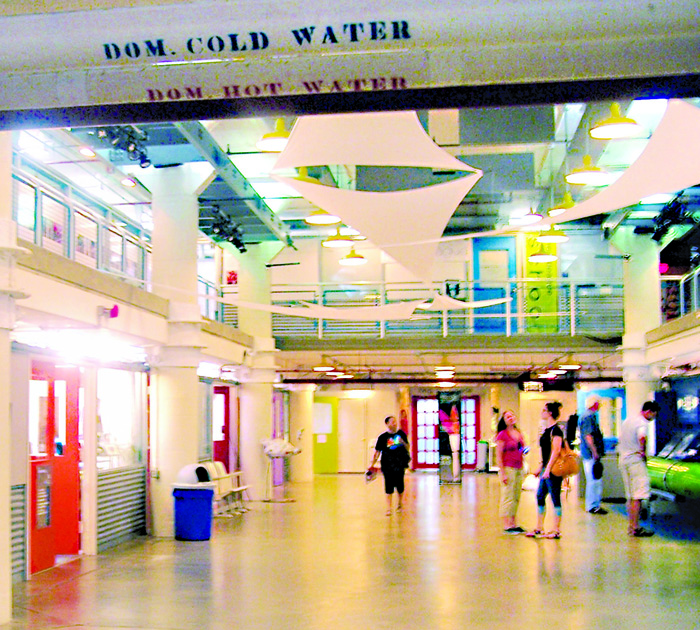
There are other possibilities, one of which was suggested to City Council by George Paxton, vice chairman of the Cultural Council. In a follow-up interview, he explained, “We see it becoming an art center, with a gallery and possibly a restaurant or other anchor tenant on the first floor and working art studios on the second floor with stairs and an elevator as well as an atrium view to the first floor. To create more leasable space on the first floor, we would move the generator outside and light it up like it was a work of art. It would become a major focal point in the area, tieing into the existing art district and make downtown Vero Beach a true destination.”
The idea originated when he and Cultural Council chairman, Barbara Hoffman, visited the Torpedo Factory Art Center in Alexandria, Virginia, similar in concept to what Paxton is suggesting. “The building was originally a torpedo factory during the First World War and it was renovated into this thriving art center. They even offer a book on how to create a similar venture in other markets, which Barbara and I purchased.”
Hoffman adds, “It would have 15,000-square feet of leasable space and we have even gone so far as to draw out preliminary plans. We estimate it will take about $2 million to build out and the money could come from private donors.
While the idea sounds exciting, the reality involves a number of formidable twists and turns. Paxton says, “The city would have to structure a $1 a year long term lease to make it doable. Croom would have to write off its investment so far, but could bid to become the contractor to build it out and make back a good part of his group’s investment. The city would still be responsible for cleanup once the generator is moved, but all past and future cleanup would be their responsibility under any circumstances.”
Then there is the question of who would manage the art center. The Cultural Council is not in a position to take on that kind of responsibility at this point. The Vero Beach Art Club has also been mentioned, but they are tied in with the Museum of Art for another 20-plus years in a very favorable arrangement, according to a source in the organization.
Terry Torres, president of Bird Realty says there are a number of other options for the building. “There is a lot of interest in the diesel plant from outsiders. The building could be anchored by a major tenant, like a Chart House, that would act as a draw. Its location next to the railroad tracks creates a noise factor that can be dealt with, and the fact it is not in the most walkable area of downtown can be overcome if a big name anchor comes in.”
But first things first. After the planned appraisal is carried out, decisions have to be made on Croom’s commitments, whether to lease the building or sell it outright, complete the build out and of course, find tenants. However it ends up, this historic building will hopefully continue to serve the citizens of Vero Beach in some capacity as it has for most of its 87 years.
 Indian River Guardian
I love art galleries, but a “Depot Club” with live entertainment – nice and noisy and exciting – along with food/beverage – might fit the location (not close to residential areas). Hate to see the building standing empty at any rate.
As someone who often visited the Torpedo Factory in Alexandria, Va., I was excited about the possibility of the old diesel plant fulfilling the same kind of community need. However, the Torpedo Factory is built on the waterffrront and not next to railroad tracks. Thus, the site is not as appealing to commercial operation especially fine dining. Also, the lack of parking would have to be addressed.
The COVB could use a remodeled facility as an revenue stream just as has the Torpedo Factory which has a ballroom that is often leased for special events. There is no large capacity facility for rent in Vero Beach now and the potential exists to be a location for the various really large fundraising venues that occur during snowbird season.
As things stand now though the COVB is facing major budget problems and there is no excuse to not seek legal recourse for the non-payment of the rent that was agreed to years ago. The past due rent issue needs to be addressed before any realistic planning for the facility can occur.
The renovation work could be done with grants that are available for the preservation of historical landmarks. What the COVB needs is a person with the vision and skill to take on the challenges. This is yet another example of why the COVB “leaders” made a major mistake by not agreeing to be a part of the Seven50 organization. Learning from other governments with comparable challenges would save time and money.
-Brewery-