
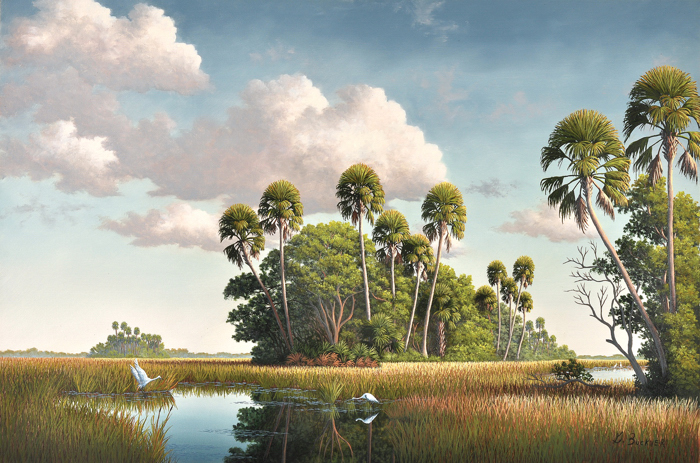
The Vero Beach Museum of Art is presenting a summer exhibition ALONG THE ROAD: Paintings of the Highwaymen, open through September 29 in the Holmes Gallery. The exhibition features 74 paintings including many of the original Highwaymen artists.
The Highwaymen exhibit and all the Museum’s exhibits will be free to the public Saturday, July 27 from 10 a.m to 4:30 p.m.
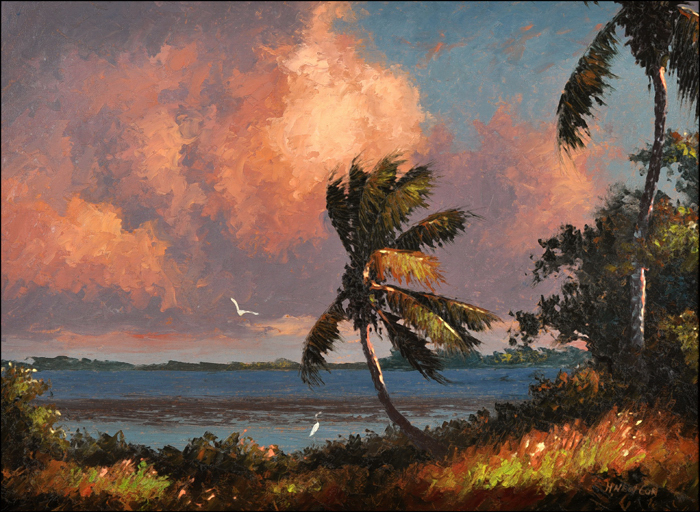
Since the 1960s, Floridians have enthusiastically embraced a legendary group of African American artists known as the Highwaymen. No longer seen as outsiders, these self-taught painters of colorful Florida landscapes captured a romantic vision of Florida that appeals to a broad and diverse audience. Through the imaginations of these visionaries, Florida became the paradise we all dream about.
During the late 1950s, through the 1960s and into the 1970s, the Highwaymen sold tens of thousands of their paintings along U.S. 1, often from the trunks of their cars. A typical Highwayman painting would have sold originally for around twenty-five dollars. Compared with the limited employment possibilities open to African Americans in rural Florida, selling a painting was easy money that paid off in self-esteem as well as dollars. Their tropical scenes of coconut and cabbage palms, Poinciana trees, old oaks, and back-country savannahs, often set along the Indian River or near the beach, met the expectations of the thousands of new residents attracted to Florida’s “Treasure Coast.” These paintings are eagerly sought by today’s collectors as a nostalgic product of boom-era Florida.
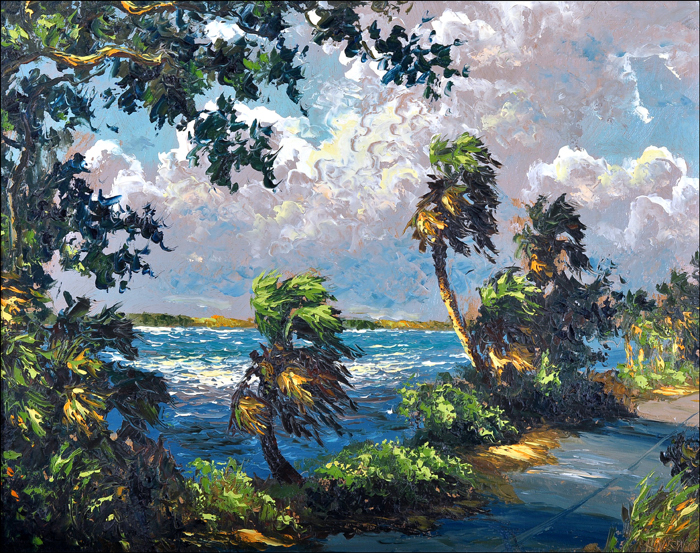
The earliest of the Highwaymen, Alfred Hair, met the prominent landscape painter A. E. “Bean” Backus while he was still in high school. Backus welcomed him into his studio and gave the aspiring painter a few lessons. “Alfred could paint as good as he wanted,” chief salesman and fellow Highwayman Al Black commented to art historian Gary Monroe. Another young painter, Harold Newton, also followed Backus’s example and attracted others to take up brush and paint. Of the 26 so-called “first-generation” Highwaymen, Livingston Roberts, Roy McLendon, and Willie Daniels were among the earliest to be inspired by the example of Hair and Newton. To maximize production, the early Highwaymen developed a unique, rapid painting style out of necessity, described by Monroe as “reducing their renditions to the barest essentials . . . result[ing] in fresh and distinctive imagery.”
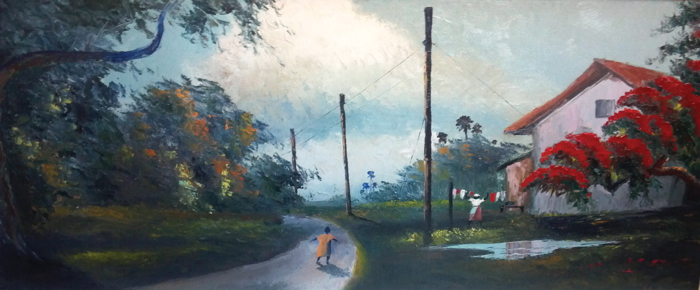
Their innovative approach to painting was no less creative than the path they found around the limitations imposed on them by racial segregation and the lingering prejudice found throughout the rural South.
Considered by many to be heroes of the Civil Rights Era, the Highwaymen created what William Faulkner called “something that did not exist before” from “the materials of the human spirit.” How timely it was that the Vero Beach Museum of Art organized its first exhibition of their work in 2003, a full year before the original 26 Highwaymen were inducted into the Florida ‘s State’s Artists Hall of Fame. Now, ten years later, these artists are being honored with a much larger exhibition centering on the work of the group’s pioneering early members.
 Indian River Guardian
Any idea when this exhibit is closing?
End of September.