
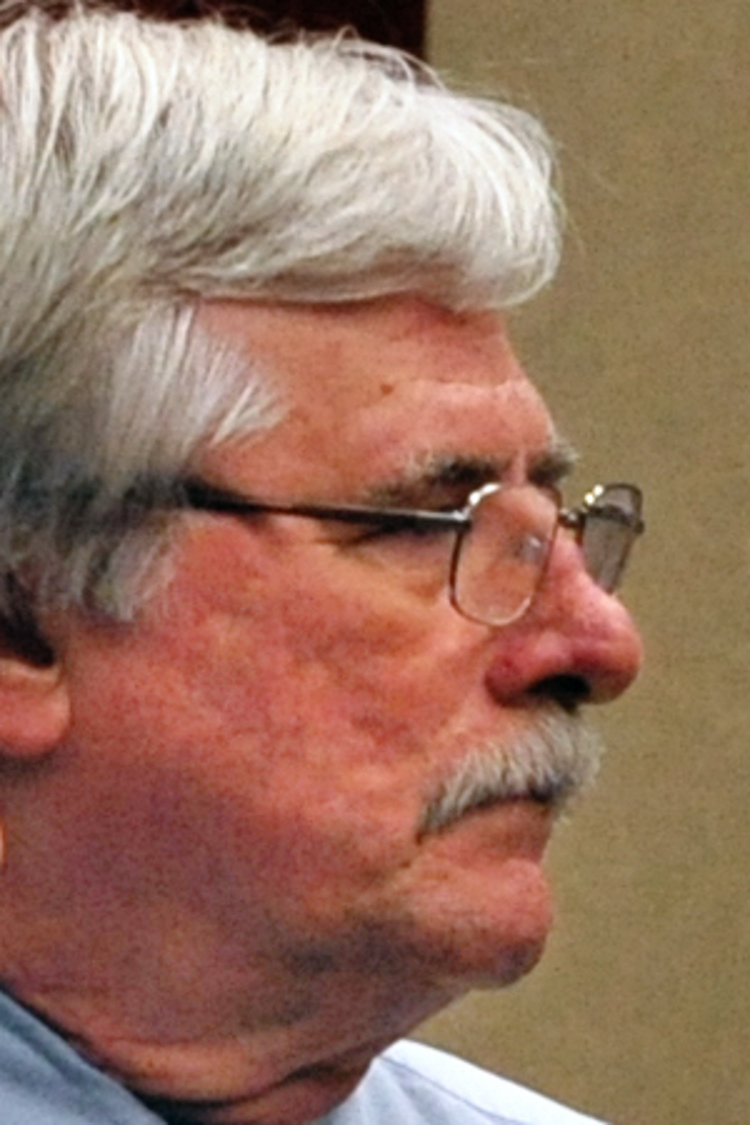
Editor’s Note: This profile on civic activist Charlie Wilson is the first is a series on local personalities influential in local politics. Wilson was sent an email on June 28 requesting an interview. Because we are committed to not quoting sources erroneously or out of context, we offered to provide Wilson with a recorded copy of the interview.
Wilson did not respond to the June 28 email. In subsequent correspondence, Wilson agreed to meet, but only if his comments would be held off the record. Further, he proposed to restrict the “interview” by limiting it to written answers he would provide to previously submitted questions. There is more to that story, but for another time.
The following three-part series is what we know and can report about Charlie Wilson based on stories appearing in newspapers and online, and from other people interviewed who know Wilson and are familiar with his political activities. We would have questioned Wilson about this information prior to publication, and hope to do so at a future time in an on-the-record interview to be held at a time convenient to both parties.
The second and third installments in this three-part series will be published August 2 and 3rd.
MILT THOMAS
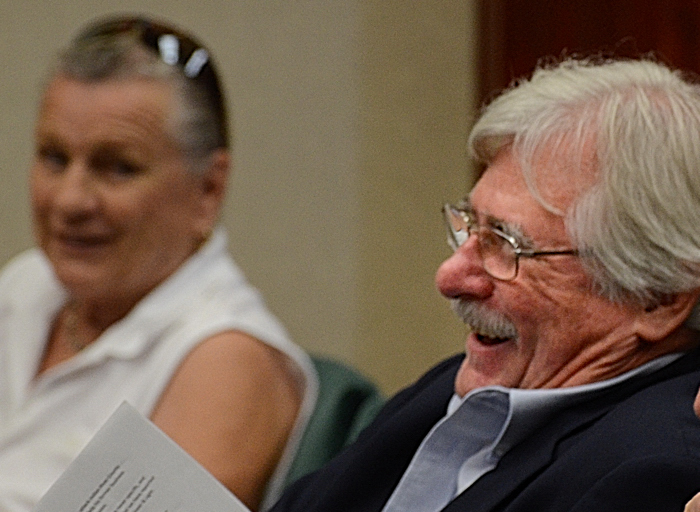
Charlie Wilson is a name that has become almost synonymous with Indian River County and Vero Beach politics. He has redefined the term “political activist” as the proponent or opponent of many different issues.
Wilson was born in Ft. Pierce on March 3, 1951. He graduated from Martin County High School and then Florida State University. He returned to the Treasure Coast in the 1970s and moved from North Hutchinson Island to Indian River County in 2001.
Back in 1984, Wilson ran the first campaign for Bobby Knowles, who was subsequently elected sheriff of St. Lucie County. Knowles campaign headquarters were in Wilson’s advertising agency office and after the election, Wilson became chairman of Knowles’ Citizens Advisory Council. More on this later.
In 1988 he ran for and lost a state house race and in 1992 ran for St. Lucie County tax collector, losing that race to Dorothy Conrad.
The same year, Wilson came under scrutiny regarding his advertising company’s contract with the St. Lucie County’s Tourist Development Council. He had handled advertising for them from 1988-1991 and results of a county audit suggested he had overcharged or received money for services not rendered. However, the auditors could find no evidence to prove he did it intentionally. Wilson claimed the charges against him were politically motivated because of his involvement with the St. Lucie County Taxpayer’s Association, where he had served as chairman.
Wilson served in a number of volunteer organizations in St. Lucie County besides the Taxpayer’s Association, including the Ft. Pierce Planning & Zoning Board, and as president of the New Horizons of the Treasure Coast board, among others.
After moving to Indian River County in 2001, Wilson provided advertising and public relations services for political and business clients through his company, Media Arts Group. He also worked for a while as news director of Treasure and Space Coast Broadcasting. At some point in his past, Wilson was also publisher of Mature Living Choices magazine and, according to information he provided in a candidate questionnaire, was a member of the American Medical Association.
Wilson quickly became active in Indian River County politics and in 2004 ran for a seat on the Hospital District Board of Trustees, losing to Dr. Hugh McCrystal. According to Larry Reisman’s TCPalm opinion column of October 16, 2009, “Charlie was the Brian Heady of the Indian River County Hospital District, complaining about the way things were done at the entity before running for a seat there.”
It would become a pattern for Wilson, acting as an outspoken critic of a government entity as he tried to gain an official voice, either through election or appointment. As a registered lobbyist in Indian River and St. Lucie Counties, he remained active in both communities.
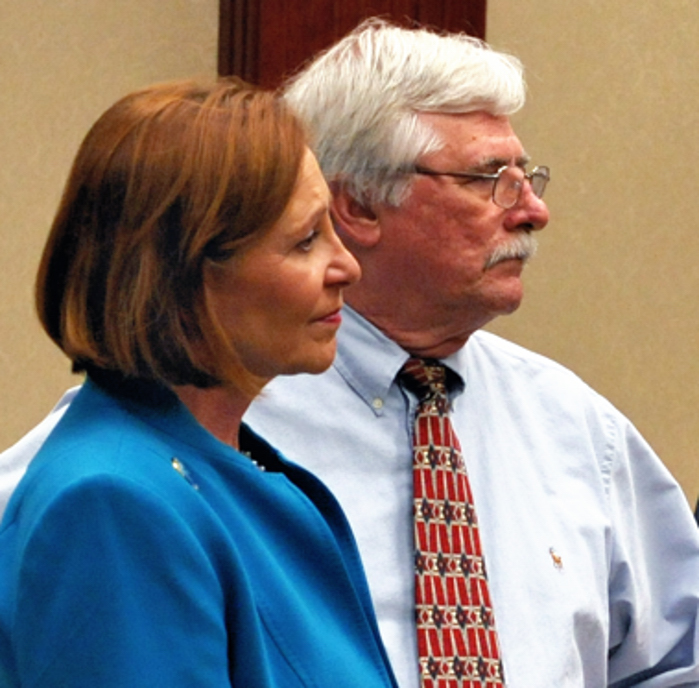
In 2006, he managed Robert Pegg’s successful campaign for circuit judge. In August of that year he applied for Indian River County’s emergency management position, but was not hired.
In 2007 during the Ft. Pierce mayoral election, in which he supported candidate Harold “Buzz” Smyth against incumbent, Bob Benton, and candidate Rick Reed, Wilson’s residency came into question. He wrote in the TCPalm comments section on December 17, 2007: “To answer the residency question which I have answered many times before, I was born in Ft. Pierce and lived in St. Lucie County for 30 years. I was hired by the St. Lucie Association to serve as spokesperson because I live out of town and immune from attack by City Hall. Our members were wary of retribution and for good reason. I served on the Ft. Pierce planning board and was a candidate for the State Legislature in the 80s. I still own property and represent my family’s interest in the City and County….”
Politics in Ft. Pierce has been truly a family affair for Wilson. A reader commented on myhometownnews.net in December 2007 apparently familiar with the family: “Let’s get the facts right on the St. Lucie Association that is condemning the city of Fort Pierce. It’s interesting that candidate Buzz Smith stepped down from the board of directors to run for mayor. It’s also interesting that the Board of Directors of the St. Lucie Association are his relatives. His mother is Jean Wilson, his uncle is Richard Wilson, his aunt is Linda Hudson, and the spokesperson is Charlie Wilson, his brother. By the way, Charlie Wilson is a resident of Indian River County. I’d say this is a family affair that is misleading St. Lucie County residents.”
Charlie Wilson is listed elsewhere as executive director of the St. Lucie Association. It is also interesting that Harold “Buzz” Smyth would later be hired as the city’s economic development liaison (see below).
In the above-mentioned campaign for Ft. Pierce mayor, Wilson wrote to the city clerk claiming that candidate Rick Reed was not a resident of Ft. Pierce. Bob Benton defeated both Smyth and Reed gaining reelection as mayor of Ft. Pierce. (Charlie Wilson’s aunt, Linda Hudson, is the current mayor.)
Two years later, Wilson would win election to the Vero Beach City Council, only to be removed because he did not establish residency requirements.
As to Smyth’s stint in economic development, a January 2011 opinion piece by Scripps columnist Anthony Westbury, was entitled “Ft. Pierce needs to get realistic about economic development..” In it, Westbury commented on Smyth’s appearance before the Ft. Pierce City Commission about his work as the city’s economic liaison consultant. “Smyth was summoned to account for his activities in the third quarter of the year. Unless he scores a passing grade, the city has the right to withhold payment for the previous quarter or even terminate the entire agreement.”
This parallels Wilson’s multi-year criticism of the Indian River County Chamber of Commerce for its handling of economic development.
Tomorrow: Charlie Wilson becomes more involved in Indian River County politics, making a run for a seat on the School Board, the Vero Beach City Council and the Indian River County Commission.
 Indian River Guardian
In what episode do we learn the address on his driver’s license, what district he votes in and where he lives, and if the three correspond to each other?
Good question, anthony. And why weren’t charges brought for at least false statement on an affidavit?