
MILT THOMAS
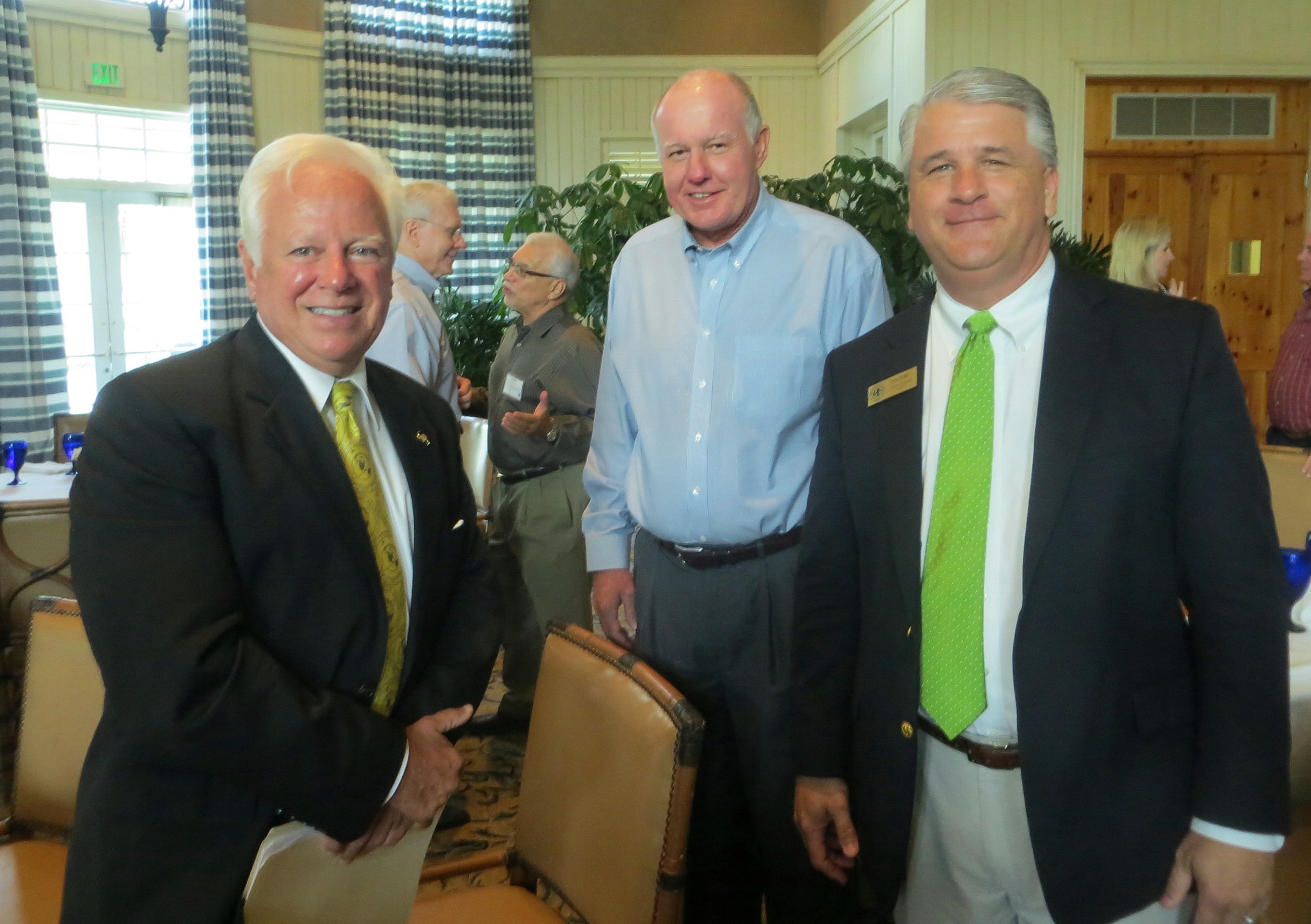
Dr. Anthony James Catanese, president and chief executive officer of the Florida Institute of Technology was guest speaker for a Chamber Economic Leadership Alliance luncheon at Quail Valley River Club last Friday, August 23.
The Economic Leadership Alliance is composed of private sector partners who invest in the Indian River County Chamber of Commerce economic development efforts. These funds are used exclusively for recruiting new business to our area and supporting our existing economic base.
The luncheon was also attended by about 50 people including Indian River County officials, Commissioners Peter O’Bryan and Tim Zorc and County Administrator Joe Baird. Dr. Ed Massey, president of Indian River State College was also in attendance.
Catanese spoke about his school’s activities and accomplishments. Florida Tech, as it is more commonly known, is a private university with its main campus in Melbourne. “Half our students are in graduate school,” said Catanese, “and we offer 29 PhD programs and 100 Master’s programs. We are the sixth largest private engineering college in the U.S.”
One of their satellite campuses is the Vero Beach Marine Lab at the Indian River County tracking station behind the 7-11 store on north A-1-A. “We own the four acres there and it is the only academic research lab actually on the ocean.”
Their research activities on that site include ocean engineering, lightning research (“In Brevard and Indian River County we have the highest number of lightning strikes in the entire world.”), and, according to Catanese, the next major cash crop in Florida, aquaculture. “We also study algae, which can be used to create ethanol. The advantage is that algae is not human food – even the Chinese don’t eat algae – whereas ethanol from corn and sugar affects food supplies and prices.”
Catanese said that the popular supplement, fish oil, comes from algae and what is left over after processing becomes fish food. “We are also looking at sea grass to study what is affecting it here in the Indian River Lagoon.”
 Indian River Guardian