

MARK SCHUMANN
Attorneys representing the Vero Beach City Council in its appeal of the Code Enforcement Board’s ruling in the case involving John and Tracy Carroll have now filed an initial 32 page brief with the Indian River County Circuit Court.
Because the CEB, in a 3-2 decision, sided with the Carroll’s and not with the City, the City Council is, in essence, asking the Court to reverse the order of its own Board. “The City Code is vague on the issue (of prohibiting transient rentals), and therefore there was no violation,” the Board ruled.

According to the City’s attorneys, who are with the Coral Gables law firm of Weiss Serota Helfman Pastoriza Cole and Boniske, at issue in the case is not whether the alleged Code violation occurred. In testimony before the CEB, John Carroll said, “I am the owner of 530 Camelia Lane, and I do admit to this alleged violation.”
Further, the City’s attorneys argued in their brief that the Carroll’s case cannot rest on the argument that the meaning of the Code is vague. In a memorandum to the Carrolls dated June 24, 2011, and in a Code violation warning issued June 25, 2013, City Planning Director Tim McGarry clarified his interpretation of City Code as not allowing for the operation of guest quarters and transient quarters in residential zones.
The crux of the City’s argument is that the Board exceeded its jurisdiction by refusing to accept Planning Director McGarry’s official interpretation of the Code. “Florida law provides that an administrative body, such as the Board, lacks jurisdiction to decide that an ordinance is vague and unenforceable – precisely what the Board did here,” the City’s attorneys wrote.
During the CEB’s Aug. 14 hearing of the Carroll’s case, City Attorney Wayne Coment also clarified the Board’s role and its jurisdiction, saying, “The Board’s determination in a case like this where you have a contested citations is strictly limited, and let me read from the code. ‘The fact finding determination of the Board for purposes of a contested code enforcement citation shall be limited – shall be as to whether or not the violation alleged did occur or exist, and if so whether the person or entity in the citation is responsible for the violation.’ That is it. That is all you are supposed to be looking at.”
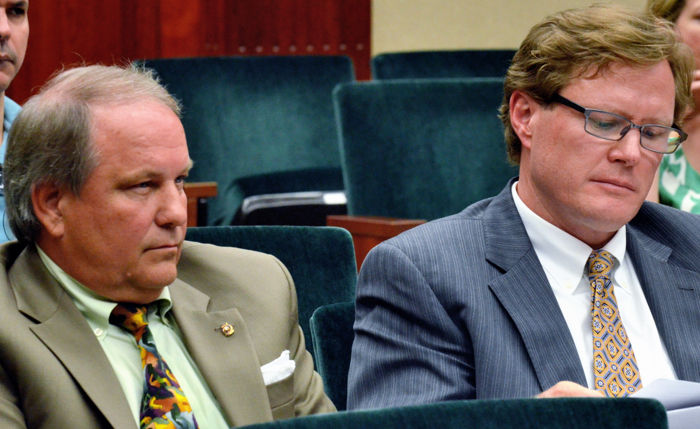
The City’s attorneys argue that the CEB should have accepted and followed McGarry’s “official interpretation” of the Code and only had jurisdiction to determine if the alleged violation occurred.
As additional grounds for reversing the CEB’s ruling in the Carroll case, the City’s attorneys argued in their brief that the Code cannot have been considered vague, given that through a memorandum from McGarry and in a Code violation warning, the Carrolls were given fair notice that their practice of renting their home for less than 30 days was in violation of City Code.
“These provisions furnished ‘a person or ordinary intelligence’ with sufficient information to understand that short-term rentals of single-family homes which lie within residential zoning districts are prohibited,” the City’s attorneys wrote.
While John Carroll urged the Board to disregard McGarry’s official interpretation of Code, the City’s attorneys cited Section 2-303(r)(3): “The (CEB) Board shall be bound by the interpretation of any duly authorized administrative official or city board concerning the codes within their respective jurisdictions or authority, and the final interpretations or decisions of the city council, as the case may be.”
The City’s attorneys were also critical of the Carrolls for not appealing McGarry’s interpretation of the Code either to the Planning and Zoning Board or to the City Council.
During the Aug. 14 CEB meeting, McGarry testified, “To my knowledge, they (the Carrolls) have made no effort to either try to change the code or to seek an appeal of my interpretation to the Planning and Zoning Board which reviews administrative decisions.”
Reiterating McGarry’s earlier testimony, the City’s attorneys wrote to the Court that the Carrolls failed to pursue either of two remedies available to them that would have allowed for public input.
Rather, the Carroll took their disagreement with McGarry before the CEB in a quasi-judicial hearing in which members of the public had no right to address the Board. “In exceeding its defined role as fact-finder, the Board effectively made a legislative determination in a forum that foreclosed the public’s right to be heard,” the City’s attorneys wrote.
 Indian River Guardian