
MILT THOMAS
It all began back in 1913, when present day Vero Beach was marshland, as original engineer, R.D. Carter described it, “From the river going west as far as the eye could see.”
He began digging a series of canals for the Indian River Farms Company and unearthed fossil remains of prehistoric animals and modern humans. Dr. Sellard, the Florida state geologist, invited archeologists from major institutions around the county, who decided the fossils were from the Ice Age, all but the human remains. The idea that humans occupied North America during the Ice Age was not accepted, especially in Florida. Although subsequently accepted by most archeologists as accurate, questions have lingered until the present day.
Vero Man, as the human bones were known, became world famous. Over the years, other human artifacts from that same era were discovered. But in 2009, the most exciting find was discovered by amateur fossil hunter, James Kennedy – a large, extinct animal bone with the carved image of a mastodon on its surface. It was the first artifact of its kind and age ever found in the Western Hemisphere.
In response, the Old Vero Ice Age Sites Committee (OVIASC) was organized by local residents in late 2009 to advance the knowledge of prehistoric human activity in our area. Fossils from the area are stored in the Florida Museum of Natural History in Gainesville, the largest museum of its kind in the Southeastern U.S.
OVIASC and scientists from the University of Florida developed a five year excavation plan and budget, convinced that important fossils were lying beneath the surface to increase knowledge about human history and life in this region of Florida. The Vero Man site is one of only two locations in the U.S. where fossilized human remains have been found alongside those of Ice Age mammals.
Funds were raised through private sources to enable work to begin and in early 2012, a team from Texas utilized ground penetrating radar to determine the best location to begin digging. The radar showed a large mass underground alongside the main canal where the original bones were unearthed. The location is behind Building B in the County Administration complex.
The academic partner in the Vero Man excavation is Mercyhurst University of Erie, Pennsylvania, which has a nationally recognized archeology department and will supervise the dig. The Mercyhurst Archaeological Institute Vero Man team is led by archeologist Andrew Hemmings. Randy Old is president of OVIASC. The site manager from OVIASC is Dann Jacobus. Volunteers include Doug White, who is a retired Florida state field agent on archeological sites, worked on the Mel Fisher Atocha salvage operation in the 80s. Rody Johnson, local author, who is writing a book about Vero Man, is also a volunteer and is in charge of security and fencing around the site.
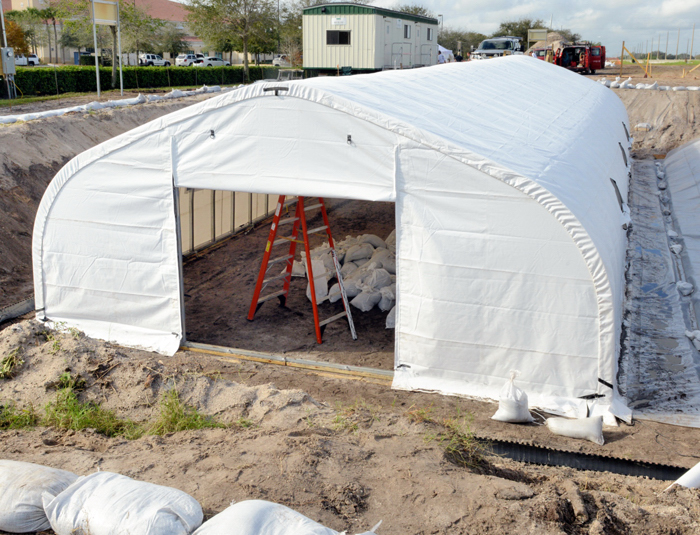
Work on the site began on January 6. According to Sandra Rawls, past president of OVIASC and currently in charge of volunteers, says, “David Gunter from the Indian River Water Management District, which has responsibility for the land on which the site is located, is supervising the excavation and his earth moving equipment has dug out a hole about seven feet deep, 60 feet by 24 feet. Then a Weather Port was erected to protect the site along with sump pumps to keep it as dry as possible. After that, weather permitting, the archeology team from Mercyhurst along with local volunteers will begin digging with shovels.”
The site will be worked from now until May or June, before the rainy season, then closed until next year at this time. According to Archeologist Andy Hemmings, “We hope to learn about early human occupation in the area, where those people came from, what was their diet and tools they used. Just like the debate about whether humans and ice age animals co-existed, there is a speculation about what the strata looked like and we hope to come up with answers to all those questions. During the ice age, Florida had the most tropical flora and fauna in the U.S. There were five now-extinct animals indigenous to this region.”
Future OVIASC plans include establishing a display or museum to show fossils and artifacts from the site as well as educate the public on this major archeological find right here in Vero Beach. A series of lectures has been ongoing, with noted speakers including Dennis Stanford, paleontologist at the Smithsonian Institution. For more information and to download a volunteer application, visit the website at http://www.oviasc.org.
 Indian River Guardian