
COMMENTARY
LUX ET VERITAS
High speed rail is hardly a new concept. In Europe during the 30s streamliners achieved speeds of over 125 mph, and in the UK the fastest steam engine reached 128 mph as well. However, by the end of the decade the ten fastest trains in the world were in the United States.
Following World War II, with highway construction subsidized and affordable air travel, the private sector railroads suffered a protracted decline. Constraining federal regulations, burdensome union contracts and restrictions imposed in1951 limiting speeds to 79mph or below cratered the lines heavily invested in public transport. The government mandated maintaining passenger service on hugely unprofitable routes Companies had a myopic perspective that they operated a railroad business rather than a transportation business.
The days when the 20th Century Limited and the Broadway Limited raced side by side from Chicago to New York were over; The Wabash Cannonball, Orange Blossom Special, Super Chief and City of New Orleans were all relegated to the dust bin of history.
The state operated Alaska Railroad developed a successful business strategy: tourism in the summer, freight in the winter. Speed is not paramount travelling through; an awesome landscape is. The extreme climate from first frost to thaw, enables plow bearing locomotives to negotiate the terrain where roads are often closed and if passable, perilous. Clearly, a business model not applicable to Florida.
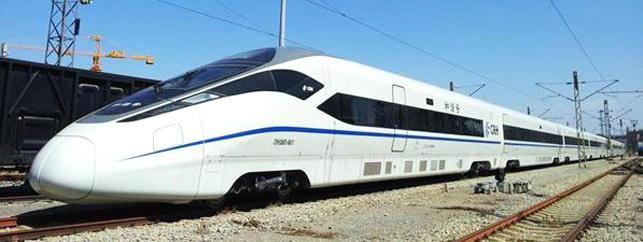
Some of us are not enthused with bullet trains rocketing at 110 mph – a rate of nearly a football field a second – through seven grade crossings in the city’s center. Further, when freight activity reaches pre recession levels, nearly sixty trains daily will transverse Vero Beach. Muting noise may be the least of concerns.
The start up costs for All Aboard Florida are staggering (originally estimated at $1 billion, now standing at $1.5 billion); equipment, signaling, staff, facilities, IT, customer service, upgrading/constructing tracks, new sidings, and rail beds. Municipalities, counties, and the State will have to insure the safety of the 138 road crossings along the route; reconfigure traffic patterns, signage, ongoing maintenance and noise containment. The five stations will have to be upgraded (or built) with appropriate access, amenities and parking. All Aboard Florida invests to earn a profit. There is no such benefit to Vero Beach and scores of other communities. West Palm, Sebastian and Vero Beach City Councils are currently petitioning the State for funding.
There is limited public transportation available into the stations along the Miami to Orlando route, contrasted to the Northeast corridor, which has an extensive infrastructure and connectivity to the high speed terminals. Buses, subways, local train lines and light rail converge into the stations from Washington D.C. to Boston which are conveniently located in the downtowns.
The cost of a ticket on the high speed New York City to Boston trip (approximately the same distance Miami to Orlando) is $160 and the market is tourists, business travelers and commuters. A major competitive advantage for Amtrak is the frequent problems with hazardous roads and flight delays due to winter storms, and snarled traffic around the major cities.
All Aboard Florida focuses on tourists attracting tourists who would otherwise drive themselves or ride busses. The time between Miami and Orlando about three hours fifteen minutes compared to a proposed “under three” by rail. Airlines may increase shuttle service and a rental car provides flexibility, a cost advantage and direct arrival to a traveler’s destination. A family could spend a day and evening in Vero, visit the Space Center then proceed to Disney World – and save money.
The recently formed Vero Beach High Speed Rail Commission needs to explain the rationale for the service, since the advantages and access for Vero Beach and Indian River County are nil, the municipal capital costs and ongoing maintenance expenses considerable. Providing increased safety and, noise abatement are economically draining. Raising taxes or accessing State funds is a multimillion dollar commitment of the public’s money.
Epilogue
One of the prevailing concepts of “sustainable growth” advocates is an integrated public transportation system. The troublesome aspect of All Aboard Florida is it is available to the few and an expense to the many. Not only are the communities shunted aside, the overwhelming majority of residents are excluded from ready access to the system..
Editor’s Note: Much like “Lexington,” an anonymous commentator for The Economist magazine, “Lux et Veritas” will be offering commentary for readers of InsideVero.com. “Lux et Veritas” will be addressing local politics, lagoon contamination, quality of education, Libertarian and Liberal excesses, media reporting and agendas, wealth disparity and more.
 Indian River Guardian
“The recently formed Vero Beach High Speed Rail Commission needs to explain the rationale for the service, since the advantages and access for Vero Beach and Indian River County are nil, the municipal capital costs and ongoing maintenance expenses considerable.”
The High Speed Rail Commission was not put together to explain why All Aboard Florida is doing what it’s doing.
The commission was put together, all be it a late start, to discover what if anything can be done to minimize the mainly negative affects our city will face.
If there is ever to be a stop in Vero Beach, it will be after an economic study, according to Mr. Rusty Roberts of All Aboard Florida; and that would most likely not occur for many years.
The tracks belong to private enterprise. Vero Beach many years ago requested crossings; the owners of the tracks do not require crossings. The one who requests pays.
What should have occurred was a regional MPO workshop to enable local citizens who are affected by the change to have input – but the tracks and the trains are private enterprise. How to reconcile the two…..
What we have been given to work with is how to live with the expensive negative impacts.
“One of the prevailing concepts of “sustainable growth” advocates is an integrated public transportation system. The troublesome aspect of All Aboard Florida is it is available to the few and an expense to the many.”
All Aboard Florida is not considered public transport – it is private enterprise – for profit.
Ken, you wrote, “All Aboard Florida is not public transport -it is private enterprise – for profit”. Of course. That should have been clear in my intent, when I wrote, “passenger transportation”, instead of “public transportation”.
The stark reality is there will be significant public entity expenditures implementing this project. As you acknowledged, the purpose of the Commission is to assess the consequences of the potential collateral damage and expense caused by – not evaluating the merits of – the scheme.
The “high speed” average for the route is about 80 mph (247 miles in three hours). Actual travel time will vary depending on length of the three station stops.