
ED TAYLOR
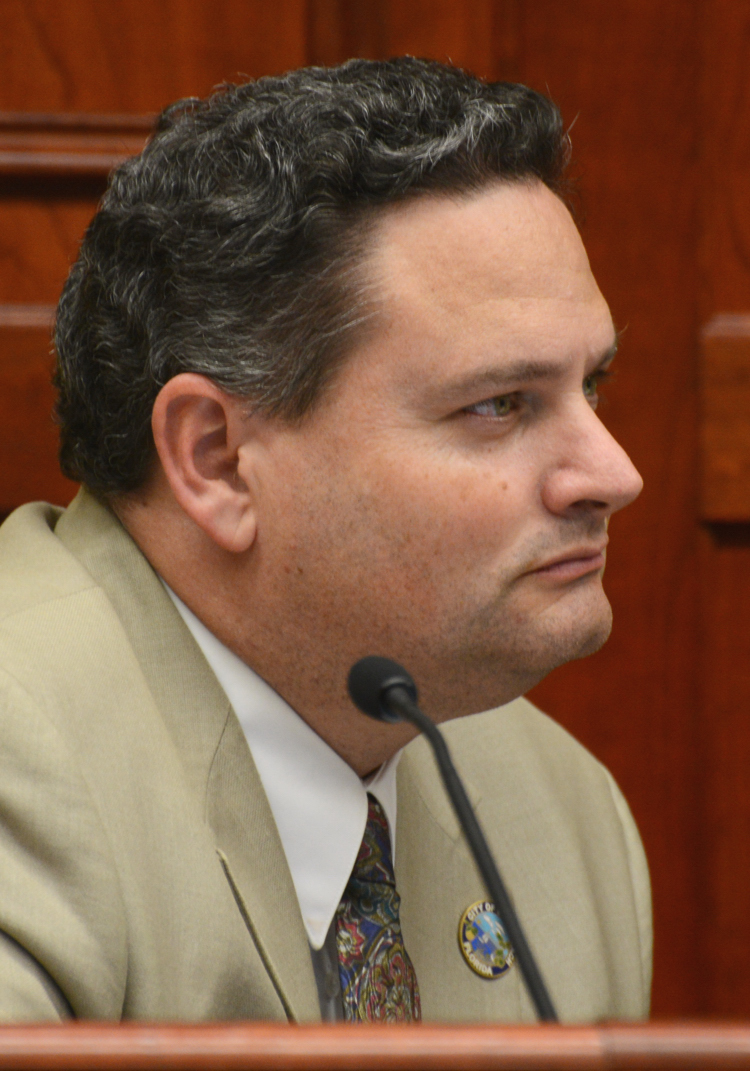
Vice Mayor Jay Kramer has approached the Vero Beach City Council seeking methods to pursue further rate reductions for city utilities customers while the sale of the system to Florida Power and Light (FPL) is pending. The sale, which was approved by the then existing council almost a year ago, cannot be concluded until previous contractual issues between the city and the Florida Municipal Power Agency (FMPA) and the Orlando Utilities Commission (OUC) are resolved. At present, there is no indication as to if and when these matters will be resolved.
The council recently approved a slight rate reduction of 1.1% at Kramer’s suggestion, which was the first rate reduction after a series of 5 rate increases. During a meeting prior to that vote, the vice mayor had requested a rate review while the city was still in the electric utility bill pending the completion of the sale but that measure was tabled by Mayor Richard Winger based upon information from FPL spokesperson Amy Brunjes who claimed that the sale would be completed in the “near future” and that the city contracts were on the agenda for the next FMPA meetings in January and February, which turned out to be untrue.
Kramer suggested that a change in the city’s debt status be reviewed by the utilities and financial council advisory committees to study alternative means of providing rate relief to city utility customers. He stated the possibility of refinancing the city capital debt, thereby changing the city’s debt status, as a potential method to find a viable means to reduce electric bills.
Councilmember Pilar Turner expressed concern about possible costs of refinancing which prompted Councilmember Amelia Graves to state that “we won’t know until we look” and asked to give Kramer’s suggestion a try.
A member of the audience, Mark Mucher, chose to address the council on the issue claiming that “we cannot borrow our way into prosperity” and added that it is time for the city to get out of the electric utility business “at any cost”. Mucher did not propose any specifics to expedite the negotiations between FPL and FMPA or OUC. Kramer responded to Mucher’s concern by stating that he was not requesting that the city go into any additional debt only that the two city advisory panels pursue methods of refinancing existing debt that could ultimately be of benefit to the city.
Mayor Winger told the council that he did not believe that Kramer’s recommendation would in any way conflict with the ongoing attempts to sell the city electric utility to FPL. “We are committed to get this sale done and I do not see how this proposal will contravene with the ongoing process in any way,” he said. “We all want to see this done sooner rather than later but we don’t know when this sale will conclude. This is going on and on. Our contract with FPL has a deadline of December 31, 2016 and our contract with OUC is through December 31, 2017. This is largely in the hands of FPL and FMPA and to some degree OUC.”
“Several meetings ago, Vice Mayor Kramer attempted to address this issue of pursuing electric rate reductions and it was not discussed with one reason being our request for a specific proposal for consideration,” the mayor said. “He has now provided a specific plan and we owe it to the ratepayer to consider Mr. Kramer’s proposal. Anything we can do to reduce rates, we ought to do.”
Mayor Winger made a motion to refer the matter to the utility and finance advisory committees which passed by a vote of 4 -1 with Craig Fletcher providing the only negative vote. Kramer’s recommendation will now be reviewed by the respective committees prior to any additional presentation to the city council.
 Indian River Guardian
Refinancing the city’s current debt sounds like basic common sense. There does not seem to be any negative in studying the issue.
Mark Mucher’s comments about a non-existent “borrowing our way into prosperity” proposal sounds like nothing more than he took good notes at the last Tea Party seminar on how to market their philosophy.
It would interesting if there could be a fact-based debate about the costs of the city as a ratepayer. Then city residents would have the knowledge that they need about the real costs of government.
The problem with attempting to forecast the impact of the sale on taxpayers and COVB budgets and operations is impossible, since the proceeds of the sale are unknown.Several options and alternatives were developed based on the 1/1/14 close date and an estimated @ $33M in cash (combination of the VBE reserves and $3M sales proceeds).
The cash available could then be applied to reducing other COVB debt, paying off unfunded pensions, short term contributions to the General Fund, payouts to staff laid off as a result of the sale, fund priority deferred Public Works projects and more.
All of the above does not address the actual utility rate reductions which remain uncertain pending the outcome of the FPL/FMPA negotiations; and shrouded in an illusive sale date.Applique the proposed legislation,lobbying, potential law suits. Thus, realistically accurate information for the public is, at this point in time, extremely speculative.
Jay Kramer has consistently focused on the Electric utility with the singular imperative of providing lower rates. His due diligence and extensive research, exploring myriad potential options have been summarily dismissed and ignored. As this transaction staggers to an uncertain, now stagnant and stumbling mismanaged conclusion his counsel should have been, and even now, seriously considered. The objective is lower rates, not being a captive to a single buyer with sale as the sole solution.