
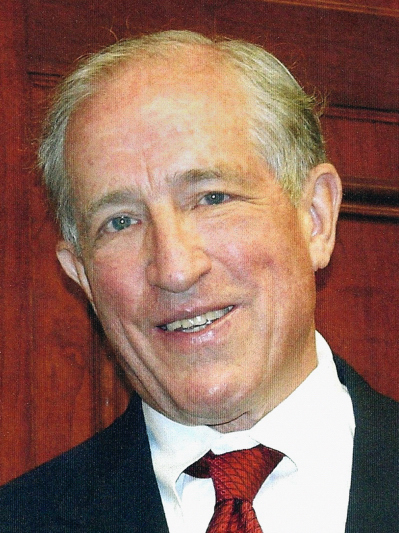
Editor’s Note: After lengthy and often spirited public comment at today’s city council meeting on Florida Power & Light’s proposal to assess a $26 million surcharge on the customers of Vero Electric, Vero Beach Mayor Richard Winger read the following prepared statement. While expressing concerns about the surcharge, Winger again reiterated his desire to conclude the sale with FPL this year, if at all possible. Winger went on to outline the ways he believes the city can lower rates on its own, if necessary. The mayor also raised the prospect that, should the sale to FPL fall through, the formation of a Utility Authority may be the best way to address the representation concerns of the out-of-city customers.
MAYOR RICHARD WINGER’S STATEMENT ON POWER SALE:
First, I have to say it is disappointing that the city will be left with just $3 million from the sale of an ongoing electric business and its capital assets valued at $190 million, while ratepayers, who have been burdened with significantly above market prices for electricity, are being asked to pay a $26 million surcharge.
The ultimate goal has always been to get Vero Beach’s power rates down; and the strategy to accomplish this objective has been to sell to FPL. Until recently, it was widely believed the sale could not be concluded until December 2016 or 2017. Now we are told by FPL that if ratepayers are assessed a $26 million surcharge, a sale could occur this December. In light of the significant rate differential between Vero Electric and FPL, we should carefully consider this option. Our next step should be to request that the Finance and Utilities Commissions thoroughly vet the FPL proposed surcharge.
At the same time, these two Commissions should identify and help us clearly understand what other significant costs and resulting sacrifices there will be.
While I hate to say it, the fact is the $26 million surcharge will not be the only additional cost the ratepayers will have to bear. There will be, for example, contingent liabilities to be covered. These contingent liabilities include the potential of any ground contamination under the plant, which will have to be remedied, and likely at significant cost. Where will that money come from? The only options are to assess a tax increase on city residents, or to pay cleanup costs and other contingent liabilities through an additional surcharge over and above the $26 million proposed by FPL.
Fairness remains a priority, and the only fair solution would be the assessment of an additional surcharge, because these obligations were incurred on behalf of all the customers of Vero Electric, whether in the City, in the Town of Indian River Shores, or in the unincorporated areas. We must remember the City expanded its electric utility beyond it borders, not because it wanted to, but because the City was the only power provider at the time in a position to serve developing areas south, north and west of the city limits. In fairness to the taxpayers of Vero Beach, the Finance and Utilities Commissions should assess these contingent liability expenses and other significant post sale costs, because this issue is critically important to the taxpayer in a city with ad valorem taxes of just $4 million a year.
It is time to be frank and confront reality. The current FPL contract has the city and its electric customers in limbo. Major issues of how to resolve the FMPA and OUC binding contracts remain unresolved after nearly three years of trying.[i] During this time, City Council has not acted to get rates down. We must work to conclude the sale this year, but we must at the same time pursue all available options for lowering rates.
FPL’s latest proposal IS a positive development, but only if the sale can be completed this year. Fortunately FPL, for its part, has clearly indicated a commitment to closing this year. It is promising that FPL may have a solution to the remaining issues to be worked through with the FMPA, but the Council MUST act now to lower rates while these negotiations continue. However, what we cannot do is get into more open ended agreements.
Even with the $26 million surcharge, a sale to FPL is a good long-term option, if in fact in can be achieved. Further, the freeing up of the City’s working capital is our only immediate means of paying off our underfunded pension liability. We must preserve this capital. Let’s be clear. If we agree to spend any of the electric reserve fund, we would be in the position of a homeowner who, after selling their house at a loss, is forced to leave behind their furniture.
Using the electric reserve money to shore up the City’s pension funds will save $3.7 million a year. If we do not bring the pension funds current, and if we also lose the 6 percent return on the utility investment (also known as the utility transfer), then City property taxes, currently at $4 million, will have to approximately double.
So, yes, the FPL surcharge proposal is costly, but it is the only FPLproposal on the table. I think we should encourage FPL to work out the remaining issues with the FMPA as quickly as possible, and in direct meetings between the two parties. And yes, I think we should seriously consider the ratepayer surcharge by referring FPL’s proposal to the Finance and Utilities Commissions for a prompt, yet thorough vetting.
Another point for the Finance and Utilities Commissions to consider is the fact that in the year since the FPL contract was signed, for the FMPA, OUC and FPL the deal gets better and better with each passing day. But the ratepayer’s situation is not improving, nor is the deal improving for the City and its taxpayers. If these protracted negotiations were allowed to drag on beyond January 1, 2015, the city and its ratepayers would get a progressively worse deal, while the big players would benefit from a progressively better deal. That is one reason why FPL President Mr. Eric Silagy’s January 1, 2015 date is so critical. A referendum should only be held, if that date is clearly achievable.
I am extremely disappointed with the prospect of a $26 million rate payer surcharge, largely because it means that for several years or more following the sale, the customers of Vero Electric will not enjoy FPL rates, which had been our promise. Yet, I believe we have to encourage FPL and the transactional lawyers to finish this transaction by speedily reaching agreement with the FMPA.
Once agreements are achieved, all necessary changes to the contract must be completed. Realistically, this must occur within 60 days, if there is to be any chance of concluding the FPL transaction this year. In past referendums, voters were asked to approve illusory concepts, rather than a fully negotiated contract. Given where we stand today, that approach was clearly ill advised, and must not be repeated. Again, the next step is for FPL, as the buyer, to sit down immediately with the FMPA and work out the remaining issues.
In the end, voters will need to make the final decision on whether the surcharges, and any other substantial changes to the sales contract between the City and FPL, are reasonable. Before this question can be placed before voters, though, we need a new contract to sign, and before that, the FPL/FMPA issues must be resolved.
Let me reiterate that the goal here is and always has been to get rates down, which is why we must act on our own to reduce rates now, even while FPL works to conclude its negotiations with the FMPA. Reading the letters exchanged last week between FMPA General Manager Nicholas Guarriello and FPL President Eric Silagy, it would seem as if the key players in this deal are like two speeding trains traveling in opposite directions. Realistically, one has to wonder if these two large organizations will ever resolve their differences. For three long years, the good people of Vero Beach have been waiting patiently at the train station, in hopes the Rate-Reduction Relief Train would stop in our fine city.
Unfortunately, it seems increasingly clear the FPL and FMPA locomotives are heading away from us, and in opposite directions. Rather than remain stranded at the station, we need to be prepared to look out for ourselves, even if that means taking a bus, so to speak, in the form of securing the rate reductions we know we can achieve on our own. Ultimately, if we have to leave the station in a bus, the journey to significant rate reductions will take longer, but we can and must be prepared to take care of ourselves.
Earlier, I spoke of simultaneously moving forward on two parallel paths, both of which support the potential sale by improving the terms of the deal for all parties, including FPL, while at the same time bringing more immediate rate relief. Everyone should be aware that we can take a number of steps to lower rates.
- First, though the reduction was slight, rates were cut 1.2 percent as of January 21. This was the first rate decrease in a number of years.
- While not yet approved, Vice Mayor Kramer’s proposal to return to the common practice of financing capital improvements, rather than paying for them out of cash flow, is a starting point.
- There are on-going efforts to reduce the clerical costs of billing and collection. Again, though this is a small step, every opportunity to achieve savings should be pursued.
- There is a renewed emphasis on staffing the Finance and Utilities Commission to equip them to vet these matters. More importantly, going forward, these two Commissions should initiate suggestions to reduce rates, even if that means forging new paths; much as the Finance Commission did a year ago in bringing forward the Gorry plan to fund the pensions. I have faith both of these Commissions will be proactive and critical to the rate reduction process.
With that said, there are a number of actions that could reduce rates significantly.
- Dealing with the annual $4.3 million cost of maintaining and fully staffing a power plant that sits idle more than 90 percent of the time. Rates could be reduced 5 percent by addressing this issue.
- To allow for the decommissioning of the power plant, we can acquire more transmission capacity into the city.
- The 20-year OUC contract must be re-evaluated, especially in light of the deal the OUC recently made with the City of Lake Worth. We are currently paying the OUC well above market price. This is not fair to our customers, and in the long run will not be beneficial to the OUC.
- For several years now our $100 million utility business has been without top professional management dedicated to the task of optimizing the operation of the system. As we did successfully with Water and Sewer, we should turn to experts to find inventive ways to cut costs and to manage the system more efficiently.
Yes, I think we can on our own take steps to reduce rates while the FPL negotiations continue. I do believe that, if we must fend for ourselves, within a few years we can get substantially closer to FPL rates.
If the worst happens and the FPL deal cannot be closed in the time period Mr. Silagy has laid out, then in my opinion we need to take another penultimate step, by providing fair representation of all the ratepayers in rate decisions. Fair representation can be accomplished by establishing a Utility Authority, with a board selected, not by City voters, but by all ratepayers, including those in Indian River Shores and in the unincorporated areas we serve.
A Utility Authority should consider bringing in a professional management company. If and when it becomes feasible to do so, the Authority would certainly be able to sell all, or part of the system, to FPL, or to any other buyer. Remember, our disadvantaged contracts with the FMPA and the OUC do actually end, someday.
Under this approach, the City would turn over its assets to a Utility Authority, and the city would be paid a fair return on its investment. Essentially, the City’s revenue would remain approximately the same as now. Of course, there are potential disadvantages of a Utility Authority.
- Without a sale to FPL, we cannot pay off the underfunded pension liability and we must rely on the 6 percent return on investment (the utility transfer) to help fund basic city services.
- The Authority, even with professional management, does not assure we can get rates as low as FPL.
But the resulting lower rates a Utility Authority could achieve would be attractive, and all the people would be represented. Further, if a Utility Authority should at some point decide it is in the best interest of ratepayers to look for another buyer, they could do so.
In summary, I think we should pursue the sale to FPL, with a firm closing date of no later than January 1, 2015; but if the FMPA and FPL trains do not come together, we will have our bus at the station and we will solve our rate problems on our own. We must remember that LOW RATES ARE THE GOAL.
The goal is NOT any particular solution, whether selling to FPL, or establishing an Authority. The goal everyone believes in and wants to see achieved is lower electrical costs. A system-wide Authority gives all ratepayers a vote and it is an alternative path we must pursue. We are not trapped if we will rely on ourselves, which is the American way.
So, let’s pursue these simultaneous roads to success, for in that way we will be fulfilling our responsibility to our rate payers, one way or another.
 Indian River Guardian
After all this time, it is quite difficult to remain patient and reasonably sure we aren’t being led into such deep water that sinking is the most obvious result. Still, I’m willing to keep the faith a little while longer, but am disappointed at this moment. I do hope the Council and Mr. O’Connor will bring the rate down because frankly today is all any of us has. Tomorrow is not guaranteed–no matter that, as my dear friend Annie always claims–“The sun will come out tomorrow….”