
ED TAYLOR
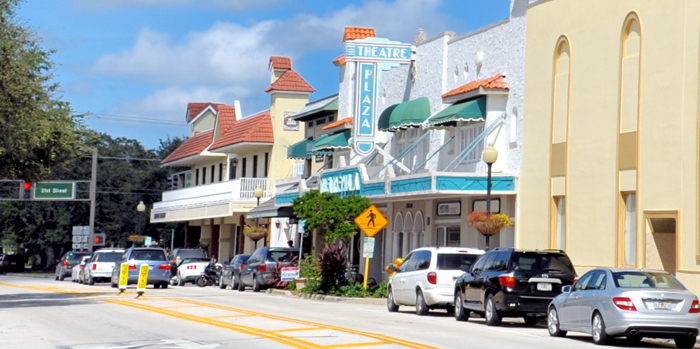
The Vero Beach City Council has approved the creation of an additional commission, the Historic Downtown Vero Beach Economic Development Zone Advisory Committee, established to evaluate and possibly propose improvements to the area based upon potential revenue from future city tax increases. According to the resolution passed by the council, future tax increases would go into a designated economic development trust fund created by the city’s finance department that would remain within the city treasury. Any proposed use of those funds would require approval of the city council for use within the designated area for the designated project.
The resolution was presented by City Planning and Development Director Tim McGarry who said that the proposed area within the historic downtown area comprised 276.32 acres or about four tenths of a square mile. According to McGarry this area represents approximately 9% of the city’s total taxable value. The newly created zone and any possible benefit would only apply to commercial properties within the area. McGarry reiterated that before any potential funds would be released, the proponent would be required to create an economic development plan along with a tax increment resolution to the city council for approval.
Peter Jones, the chairman of the ad hoc committee, told the council that he and his committee had been working toward this resolution for the past two years in an attempt to continue the revitalization of downtown Vero Beach. “Our goals are higher wage jobs and a diversification of the economy in the historic Vero area,” he said. “This is not another layer of government but a public – private partnership that we see as being in the best interests of the city’s economic well being.”
Jones said that he foresaw his efforts and the passage of the proposed resolution as “reinforcing downtown as a mixed use office, employment and government center as well as a unique cultural, arts, entertainment and residential enclave with shopping and dining districts that support the surrounding neighborhoods.”
Councilmember Pilar Turner objected to the creation of the new advisory panel as well as the designation of historic downtown Vero Beach as the city’s first economic development zone.
Turner said that in a town that is only 13 square miles, “I am concerned about creating a special tax district for less than one-half of a square mile.” McGarry told Turner that the council retained control over any proposed expenditure of any funds and it would be up to the proponent to create an economic development plan to present to the council.
“The council has plenty of leeway,” McGarry said.
While expressing her overall support of the historic downtown area, Turner added, “We start with the downtown . . . what’s to stop Ocean Drive, Miracle Mile from seeking the same type of benefit? There are so many layers of confusion for a city of 13 square miles. These are private property owners. We are giving a handout!”
McGarry once again stated that there were safeguards in place that gave only the city council the authority to disburse any funds toward any proposed project. If other areas of the city wished to create a similar type zone, they would have to go through the same procedures as the ad hoc committee leading up to the resolution before the council.
City Manager Jim O’Conner told the council that the city would continue to maintain control of the funds and the potential money would be retained in the city treasury until released by the council for a proposed use within the economic development zone. O’Conner added that the council would also be able to receive input from anyone who may oppose the release of the potential funds.
Councilmember Turner continued with her objections to the designations stating that the city was creating “another level of government”. Mayor Dick Winger made a motion to approve the resolution and it passed 4 – 1 with Turner casting the only negative vote.
In essence, any increase in city taxes on the designated commercial properties will be paid to the city and held in a trust fund until released by the city council for a specified project with the designated zone. The resolution became effective upon passage.
In a separate resolution the council created the the Historic Downtown Vero Beach Economic Development Zone Advisory Committee which will consist of five designated members along with two alternates. The membership will consist of property or business owners within the zone or their designated representatives. The resolution creating the advisory committee passed along the same lines as the previous vote.
 Indian River Guardian