
MILT THOMAS

The bottom line goal of public education is to prepare students for success in life. More to the point, taxpayers support the education system that hopefully produces future taxpayers, not dependence on taxpayer support because the system failed to educate them.
That may be an oversimplification, because many factors outside of school contribute to success or failure, beginning at home. So why, in the 21st century, would the Florida State Legislature enact new education standards based on race, which is how it was done in the early 20th century?
That is what happened when Florida was granted a waiver in 2011 from the federal No Child Left Behind law, according to Stephanie Langer, an attorney with the Southern Poverty Law Center. Langer spoke to a group of concerned parents and citizens on March 27 at the Gifford Youth Activities Center. “Ninety percent of Florida schools failed to attain the program’s goals as defined in the Bush era law, so in 2011, Florida was granted a waiver to come up with its own standards.”
The new standards, enacted into law in 2012, set goals for students to perform at grade level in reading and math by 2018. The problem is the formula they used to achieve this was based strictly on race: 90 percent of Asian-American students, 86 percent of white students, 81 percent of Hispanic and 74 percent of African-American were required to reach that goal of grade level performance.
According to Langer, “Based on that change, Florida went from a 90 percent failure rate to a 90 percent success rate. Nothing changed in the curriculum, teaching methods, school schedule, or anything else. These amazing results were achieved strictly by the stroke of a pen.”
While the new plan may have solved one problem for the state, it created another, much more serious problem. “Setting lower expectations for black students means their outcomes will be lower and ensure they will be less successful,” says Langer, adding, “If you expect 38% of Indian River County students to do less than the rest, how do you think that will affect their performance?”
A federal report based on the 2011-12 school year, gave graduation rates by race, showing 84 percent for white students versus 66 percent for black students. According to event organizer, education activist and Vero Beach resident, Dr. Jacqueline Warrior, if you add to that the rate of at-school arrests, expulsions and suspensions by race beginning as early as preschool, “If you put them out of school they are not in an environment with even the potential to learn.”
Many black students excel in school, go on to college and successful careers without ever being expelled or arrested. Those with behavioral problems in school often bring those problems to school with them – poverty, abuse, single parent households, etc. – so the school system cannot be held responsible. Or can it? If the system institutionalizes lower expectations, the chances are much greater students will not be equipped with the skills necessary to earn a decent living as adults. Education is a key factor in Gifford’s poverty, crime and unemployment statistics.
Concern about Gifford’s economic problems and the role of education attracted a multi-racial audience to the March 27 meeting. However, with the exception of one Indian River County School Board member, no other county or school officials were present.
Even more startling, is the fact that Indian River County is one of 16 Florida school districts still under a 1964 desegregation order.
The history of black education in Indian River County
Many African-Americans came to the area for jobs when Henry Flagler built his railroad in the late 1890’s. One of those workers, Willie Geoffrey, in 1901 used his wages to purchase 80 acres of land, some of which he donated for the first school in Gifford.
The Gifford school only reached sixth grade level until 1931, when it expanded to eighth grade. Black children were not allowed to attend white high schools in Vero Beach or Fellsmere, and few could afford to send kids to Fort Pierce.
John Broxton, who was born a slave before 1865, settled in the Wabasso area and after his kids reached sixth grade, he sent them to Daytona Beach, where they could complete high school. His daughter went on to earn a Master’s Degree.
He also saved money to buy a used car and began driving black students to Fort Pierce, where they could complete their high school education. In 1931, the Indian River County School Board agreed to pay a driver $10 a month to take the students there.
In 1938, Gifford had its own high school. Textbooks were outdated and often incomplete, left over from white schools, as well as furniture and equipment. In 1952, a new high school was built (now Gifford Middle School), but without a budget for equipment or supplies, so teachers went out into their community to raise money.
In 1954, the U.S. Supreme Court declared separate but equal unconstitutional, but it wasn’t until 1964, when local resident Joe Idlette, Jr. was unable to enroll his son in a white elementary school, that he went to court. A federal lawsuit was filed against the Indian River County School District ordering them to desegregate. The FBI warned Idlette at the time that a white hate group had targeted him for assassination, but he had many supporters in the white community. The schools were desegregated in 1969, but that order is still active. Idlette was elected to the School Board in 1974 and served four terms.
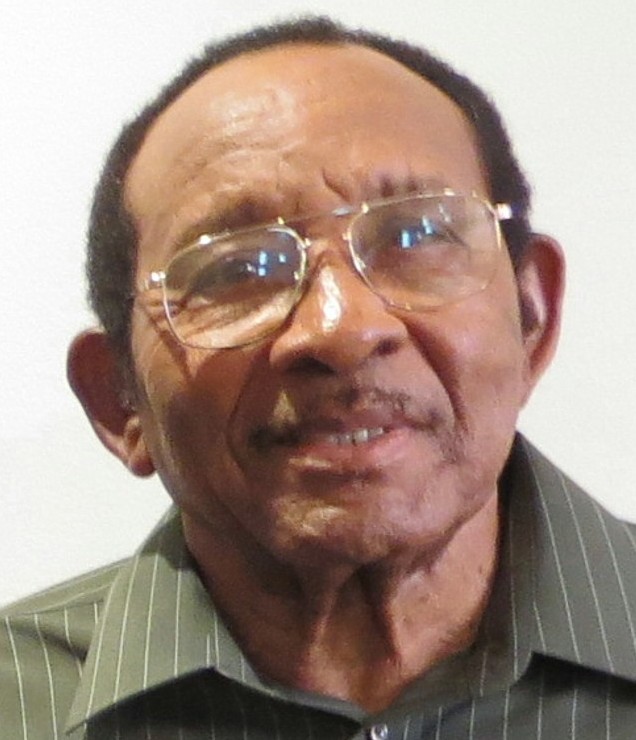
Participants at the March 28 meeting and similar meetings around the state, were asked to sign a petition urging Florida to reverse its race-based goals. The Southern Poverty Law Center and Legal Aid Society of Palm Beach County have filed a federal civil rights complaint regarding these new standards.
 Indian River Guardian
This is shocking. Is it me or does it seem we’re moving rapidly backward? Where would this county’s children be without people like Joe Idlette, Jr.? Every child is as precious as any gemstone – and we are obligated by all that is decent and right to see every child receives a good education. We’re missing the boat if we fail those kids.