
COMMENTARY
JAY KRAMER
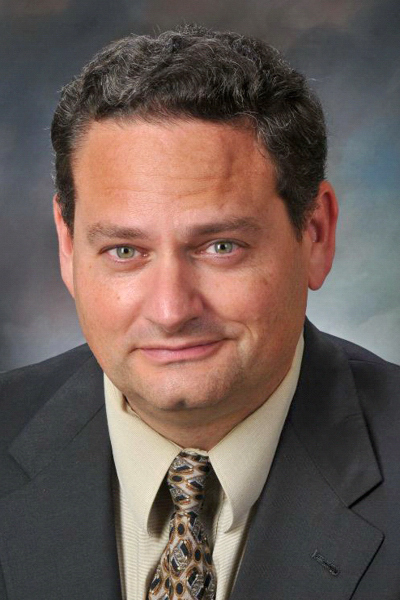
Editor’s Note: Jay Kramer is the Vice Mayor of the City of Vero Beach.
Today when we read the news it seems we scan the headlines and skim through stories looking for something to catch our eye. Perhaps a local tragedy, a story about our favorite sports team, a school controversy or maybe we just skip through to the comic section.
However, when we come across a story that negatively portrays a well-known political figure or influential organization we are compelled to read it, as if we are programmed to identify with the struggles of a Goliath and we, the readers, are the David.
Let’s face it, Goliath was a bully. And in the world of politics, a common strategy is to portray the public as Davids and the opposing party, candidate or point of view as a Goliath trying to do them wrong. That style is sometimes known as bully politics.
Bully politics is when an individual or group defines an issue as one that will hurt you or take something away from you. What they hope to do is manipulate you into anger and/or fear that you are being victimized, then the bullying begins.
Throughout history, politicians and propagandists have successfully used this strategy. One of the classic examples happened right before World War II known as the Gleiwitz incident. In brief, the Gestapo sent a group of their people disguised as Polish soldiers to a German radio station near Poland in order to capture the station and broadcast anti-German propaganda. This and several other incidents in the same operation were designed to show Poland as the aggressor that needed to be dealt with. It is clear the Poles were not the aggressors, but something had to show the Germans as victims in order to support taking action. Hitler said of the situation that “Its credibility does not matter; the victor will not be asked whether he told the truth.”
Fortunately in local politics we do not deal in such extreme measures. However the tactics used then are similar to some that we face today. Vero Beach has been the target of these tactics for the last several years. The staff, some elected officials and the consultants hired have all been targets of this bullying, but they are not the intended victims – you are. You, the voting public, must be made to feel angry and fear that this perceived threat is so dangerous, you must side with the bullies to survive it.
So who really benefits from this created anger and fear? Well, in politics I quickly learned two words that usually explain everything; those two Latin words are “que bono” or “who benefits.”
With every deal that comes to Vero Beach someone other than the citizens of Vero Beach benefits. Yet, the citizens end up with a degradation of services and higher taxes. Just look at all the issues that have been put before us recently – selling all our income-producing utilities (electric to FPL, water and sewer to the county), merging Vero Beach police with the county sheriff’s department, merging city recreation, solid waste, motor works with the county, outsourcing city services, dismissing our commissions and boards.
The FPL deal has never been about competition or lower rates as portrayed by the bully politicians, with ratepayers as the victims. It has always been about one company and its local supporters bullying the opposition and ultimately, the public, into believing we need to agree with them or else.
Through all of this, remember that bullies don’t work for the people – they simply work the people. The next time an issue comes up in the media and you find yourself becoming angry because you feel victimized, ask yourself “is this a real issue or is it something designed to liberate common sense from the public consciousness?”
I would challenge the reader to think about credibility and circumstance when looking at issues, and perhaps the phrase “que bono” may cause you to consider there may be more to the story then meets the eye. And don’t forget this – David did end up defeating Goliath.
 Indian River Guardian
As the old saying goes “follow the money”.
Professor, The words, “que bono” jumps out when I hear a certain county commissioner discussing Water Farming.
Great column Jay, Its nice to have a rational mind on the council !
Everything in this essay is correct. However, the more disturbing trend that I see on the horizon is that a small group can get what they want merely by the use of mob rule. This is what we have seen on full display in discussion of such things as Common Core and the Seven50 agenda. The fact that Common Core and Seventh50 are nothing more than basic common sense does not seem to be a factor is any of the “discussions.”
Big thank you, Jay, for speaking out, and, unlike some of the more vocal crowd, actually saying something that makes sense.
With this fine explanation, and all of the “smoke screens”, then why can’t the City lower our extra-ordinary Electric Rates, why must we in Indian River Shores pay the present electric rates and continue to be the “Little David” up against the Cities “Golieth Cash Cow”? Let us see what the City Council can now do for us with these rates! Remember, we are your neighbors and have always shared both political and patriotic thoughts.
Mark, My understanding is that the present contract expires in 2016. What would happen if the City decided that there is no way that the contract can be completed and stopped paying all the money they are now spending on a dying deal? Sometime we need to quit throwing money away. Seems like most sane people agree that the end has been reached..
Larry, there are other cities that have higher rates than Vero Beach. If it wasn’t for city electric most of the island would not have been developed early on. Please quit calling it a cash cow.
And you have to agree with Jay. Why don’t you ask the County Commission to forgo the money they get every month from you in the form of franchise fees?
Jeanetta White is failing to take into considerarion a cost/benefit analysis,The developers and residents who have paid for COVB services have seen their initial investment made decades ago provide substantially far in excess of the modest sums that were necessary to build the infrastructure,
The COVB residents enjoy their low property taxes precisely because they are subsidized by the non city rate payers,
City residents have lower taxes because, like many other cities that own municipal utilities, the profit from Vero Beach’s utility businesses help pay for city services. What you are missing, Pat, is that Vero Electric is a business, like any business. The utility clearly needs to lower its rates, and it can and willing time, though Vero Electric’s rates may never be as low as FPL. If the City’s rates are at or below the statewide average, then how the City uses the profit from its utility business is between Vero Beach taxpayers and their government.
When Pilar Turner, Craig Fletcher and Tracy Carroll were elected in November 2010, Vero Electric’s rate for 1000 KWH was 117.4. The statewide average for municipal utilities was 125.44, and 114.16 for investor owned utilities. By the time Tracy Carroll left office three years later, she and her two partners in the Troika had managed to drive Vero Beach’s rate up to 130.93, well above the statewide average of $118.69for municipal utilities. Carroll, Fletcher and Turner let rates rise, or drove them up, depending on who you see it, because higher Vero Electric rates served to bolster support for FPL’s proposed acquisition of the City’s electric system.
Dear Jeanette, I am not concerned with other cities, I care about what is happening in my neighborhood. When my neighbor across the street is paying a lot less for the same kilowatt hour than I am, and the amount is over $2000 per year, this makes me very angry. This has nothing to do with the County Commission, The VA problems, Obama Care or Rep. Cantor losing his seat to a Tea Party candidate. I have no ax to grind with Jay Kramer, he is not a “magician” but he is sincere and does the best that any can with the present issues and circumstances!