
City Administration proposing to invest just one-fourth of what is needed to maintain roads
Pace for installing storm water outfall filtration slowed
NEWS ANALYSIS
MARK SCHUMANN

According to Public Works Director Monty Falls, it would take an investment of $800,000 a year to resurface the City’s streets on a 15-year cycle, a goal for which many cities strive. Yet, City Manager Jim O’Connor presented the City Council with a proposed 2014/2015 budget calling for just $200,000 for road maintenance in each of the next five years.
“We are taking care of our worst roadways until our funding condition looks better,” Falls said yesterday during the first of four budget workshops being held this week by the City Council.
Falls explained that the money normally used for road maintenance comes from a 1 percent sales tax and from gas tax revenue shared by the state. A previous City Council pledged that revenue through 2025 in order to buy the Dodgertown golf course for $9.9 million in 2005. The annual loan payments are $697,000 through 2018, at which point they will drop to $660,000, with the last payment to be made October 2025.
“So, we are going to let the roads deteriorate until 2025, is that what I am hearing?,” Mayor Richard Winger asked.
The city bought the property with a self-imposed deed restriction limiting its use to a golf course or green space. For the city to sell the property for some other use it would need waivers from the county.
When City Manager Jim O’Connor learned about the deed restrictions in 2013, he reportedly said, “Oh my God, we bought $10 million worth of green space.”
Indian River County Commissioner Bob Solari was a City Council member in 2005 when the city bought the land.
Winger said he is not comfortable deferring $600,000 a year of road maintenance. Deferred maintenance, he argued, ultimately has to be paid for by someone at some point.
“Maybe we can’t do $600,000, but maybe we should be doing $400,000. Maybe we should find the extra $200,000, even if we have to find it in additional revenue…At least let’s find a way to make a step forward. People in this town expect good streets, and not just on the island, but in the city itself,” Winger said.
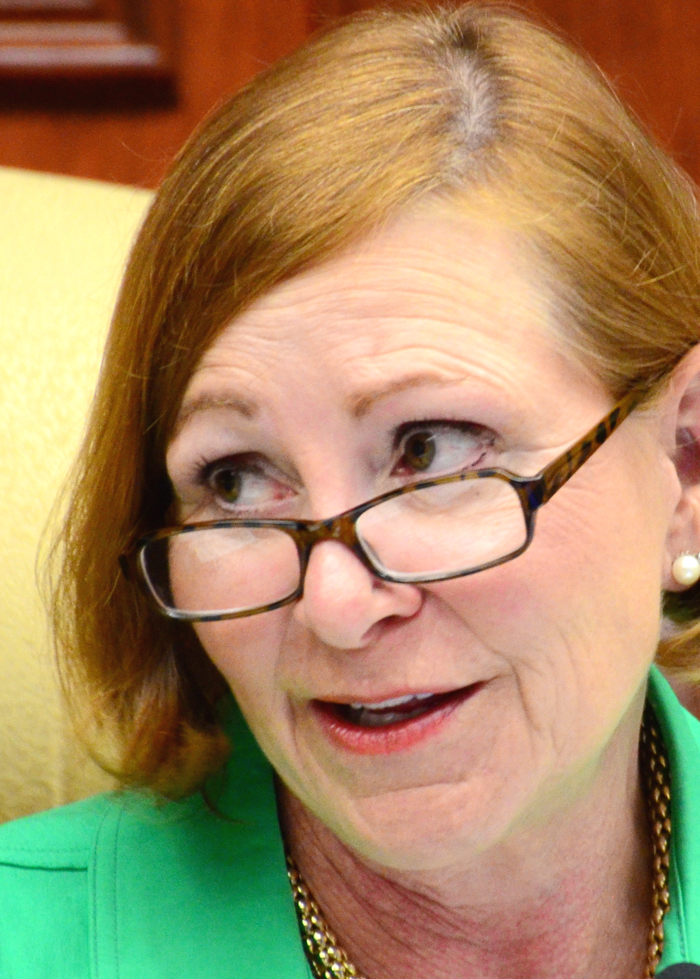
Councilwoman Pilar Turner objected to Winger’s proposal, insisting any increase in the road maintenance budget should come from reductions in other areas of the City’s budget.
Winger and Turner also differed over how much to spend installing filters in storm water outfalls. The City has been investing $150,00 a year on the on-going project, but is planning to divert $100,000 of that money next year to repair a failed culvert at 27th Avenue and the main relief canal.
“We have severe limitations on our capital funds,” Falls explained.
“Why are we severely restrained?,” Winger asked.
Turner stepped in, “Unless you are going to raise taxes…”
Winger said that in the interest in doing what can be done to project the Lagoon, the City should find a way to maintain its current pace of installing filtration at storm water outfalls. “That is the responsible thing for government to do, not to say we do not have the money.”
“The Lagoon is still dying, Mrs. Turner,” Winger added.
The fundamental disagreement between Turner and Winger is not over the importance of maintaining roads or of filtering more store water runoff. The staring point for most if not all of their budget debates is Turner’s commitment and determination not to raise taxes.
Of the nine cities benchmarked two years ago, Vero Beach, at $266 per year per resident in property tax revenue, raises less than half the average. Vero Beach also has the second lowest property tax rate, bested only by Marco Island, which has three times the property tax base. (See: City’s property tax revenue second lowest in benchmark study)
If Vero Beach is going to move away from its unhealthy dependency on $5.5 million in utility revenue, the time may have come to ask taxpayers to consider whether they are paying enough to support essential government services.
 Indian River Guardian
If and when Congress ever decides to the nation’s business, the first thing will be the Highway bill. This legislature could offer Federal dollars for street repairs on major roads.
We can’t depend on anyone or anything other than ourselves to provide the necessities of our community. We can’t count on anyone else really caring. It’s up to us, and increasing our taxes may be the best choice we have at the moment.
I know where we could have found $2,000,000 to repair roads in the last couple of years. Oh yeah, we spent that on attorneys trying to consummate and agreement with FPL that was never going to happen. Thank you Council woman Turner and Council man Fletcher for that brilliant agreement
Raising city taxes to help fund what is essential, and bearing some of the responsibility in saving the “still dying” lagoon as Ms. Turner puts it and keeping our roads safe are all good, viable reasons to do so (raise taxes ), so go with it. Most voters and taxpayers have said they want their services to remain and be maintained, so if it is what is needed, raise city taxes.