
MARK SCHUMANN

With the sale of Vero Electric stalled, if not dead, Mayor Richard Winger told his fellow City Council members yesterday he thinks it is time to consider establishing a utility authority.
“We have to plan for a future where this utility is retained with local ownership. One of the things we have to be concerned with is lowering rates as much as possible. The second thing is to protect the assets and the return on the assets. The third thing is how to govern this thing into the future. We should consider how we would have it governed by some sort of board or authority, rather than by city council,” Winger said.
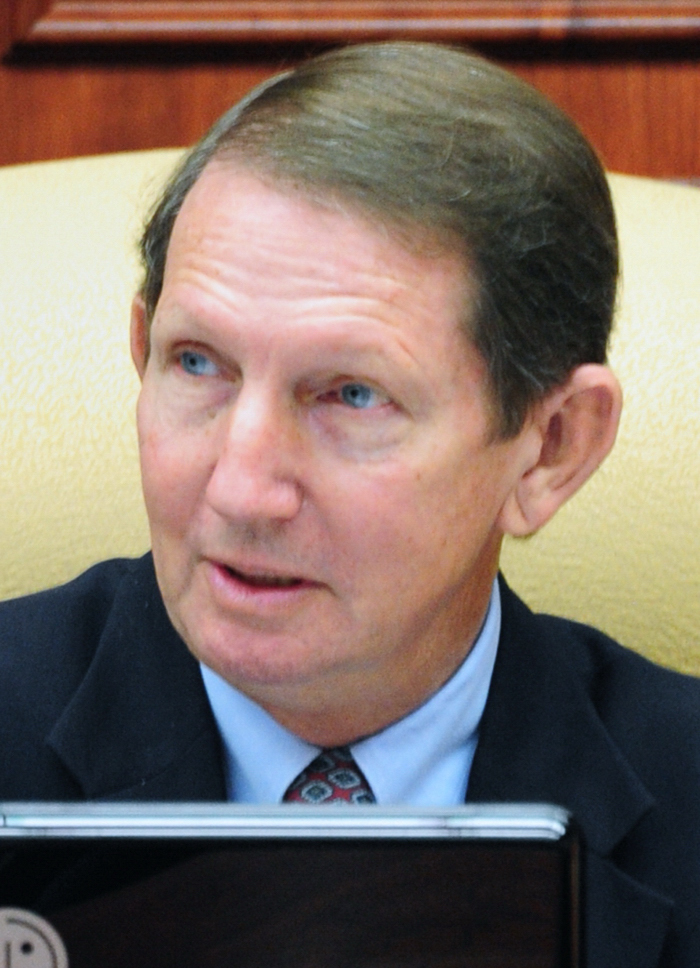
Winger’s suggestion drew sharp criticism from Craig Fletcher and Pilar Turner, the two council members who, along with Tracy Carroll, signed the purchase and sale agreement with FPL.
“I disagree completely. It’s not going to take it out of politics. It’s just going to be another political entity,” Fletcher countered. “You want to shift political responsibilities off of your shoulders and onto somebody else. You just want to shove it off to the side somewhere. We are elected to run this thing.”

Turner followed, “And it takes it out of local control. If you truly believe the utility is the property of city residents and of the City of Vero Beach, then it (the electric utility) should be under the control of the City.”
Before the 2009 city council election, when Brian Heady and Charlie Wilson were elected and immediately voted to open negotiations with Florida Power & Light, many utility activists, including Glenn Heran and Dr. Stephen Faherty pushed for the creation of a utility authority as a way of addressing what they consider “taxation without representation.”
Some 60 percent of the customers of Vero Electric are outside the city limits, and are unable to vote for the very city council members who now set policy and approve the budget for Vero Electric. A utility authority, as Winger and Jay Kramer explained, would give those customers a voice in how the system is run.
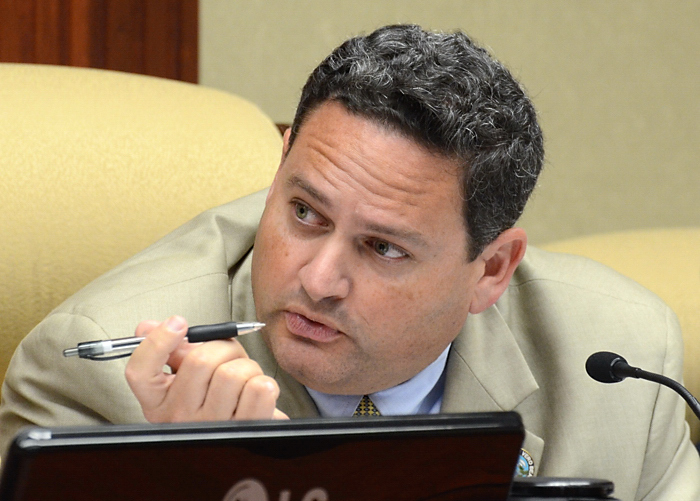
In the longest uninterrupted statement during the debate, Kramer said, “The point with a utility authority is you would take the politics out of it. I have said to a number of people, when it takes just $3,000 or $4,000 to buy a city council seat, then it’s just a matter of time before somebody decides to come in, pour a little bit of money in and then sell a multi-million dollar utility off to anybody who wants it. And, quite frankly, I think that’s what’s been happening the past three or four years.
“I would like to find a way to make sure that we have a system in place that either fairly sells it off, or fairly runs the thing. Quite frankly, if the city council can run the thing, they can run it into the ground and force a sale, or they can run it right. But the truth of the matter is, we don’t pay attention to the marked forces that are needed to run this utility correctly. We need to find a structure where it can be professionally run, and can be insulated from politics.”
Turner countered, “If the ratepayers don’t like how we are running the utility, we’re voted out of office, Mr. Kramer.”

“That’s not true,” Kramer replied, adding, “There are a lot of rate payers that are outside the city limits. The good thing about having a utility authority is that it is the ratepayers who will decide how to run the utility, and right now that’s broken. In a utility authority, the county can have three votes, and we would have two votes. They could run the system. We would still get our return, but they could run the system.”
City Manager Jim O’Connor suggested that in the system optimization study soon to be commission the consultants should be asked to consider and suggest alternative forms of governance.

Winger agreed, “I think what we do is look at alternatives, and they will come out in the public. And I think we should do what the public wants us to do. I am very concerned that the City’s asset be protected, but I am also concerned that all of the ratepayers have a voice in this thing, and there may be a way of doing that.”
After yesterday’s meeting, Amelia Graves said she, too, wants to see the consultants consider alternative forms of governance, explaining that she first wants to better understand the pros and cons of a utility authority.
 Indian River Guardian
What happened to the “smaller government” crowd?
The Vero City Council is looking more and more like the Federal government every day. They have hired consultants and put their findings in colored notebooks on a shelf. They have appealed for input from the public and taken none of the concerns under any real consideration, They have traveled at taxpayer expense to other geographic locations to discuss the experiences in that community. They have held elections and then ignored the will of the voters.
Like the Federal goveernment the ratepayers should be most concerned about the qualifications of the proposed utility authorities personnel. .
Lastly like the Federal government the City Council seem to be addressing the issue of creating another level of bureaurcracy with no consideration of the impact on an already small city budget. Where is the money going to come from to accommodate a utility authority?
There is no additional layer of Government, the utility service is simply being removed from the City of Vero Beach and made to stand on its own with Governance from the ratepayers. The Utility Authority is created from the City of Vero Beach Utility which reduces the size of the City Government. It will then be up to the ratepayers what kind of qualified people they want and if they want more or less bureaucracy.
How are the ratepayers going to be able to provide “governance?” Is the term ratepayers applicable to city residents or all those who use the COVB electrical services? What methodology will the ratepayers be able to determine “qualified” people when there is not much known about the mission of the separate utility service? What is the operating budget for acquiring these qualified people?
When I put on my old hat as a former personnel management specialist, I don’t see anything in the proposal that would provide the information needed to identify what the knowledge, skills and abilities of an unspecified number of people that would be required.
It is my opiniion based on the limited information provided to the public, that the City Council itself needs to do much more work in designating the goals and objectives of this proposal.
The ratepayers determine who sits on the board of the Utility Authority, the board does not have any other goal then to run the Utility unlike a City Council that represents only the taxpayers and can have goals incongruent with all the ratepayers. Keep in mind the term ratepayers applies to all the customers of the Utility not limited to the taxpayers only, it is designed to wholly represent all the users of the Utility. The issue of qualified, or professionalism refers to policy setting, the policy of the Council was to sell the Utility over the last several years, that policy prevented the hiring of a utility director for several years and directed management to focus on selling the utility and not work on quality of service and getting the rates down. I would wholeheartedly agree that there is limited information on this and there is much work that needs to be done, more then likely this will take several years and several Councils to do, the public will have ample opportunity to support or reject this.