
JANIE GOULD
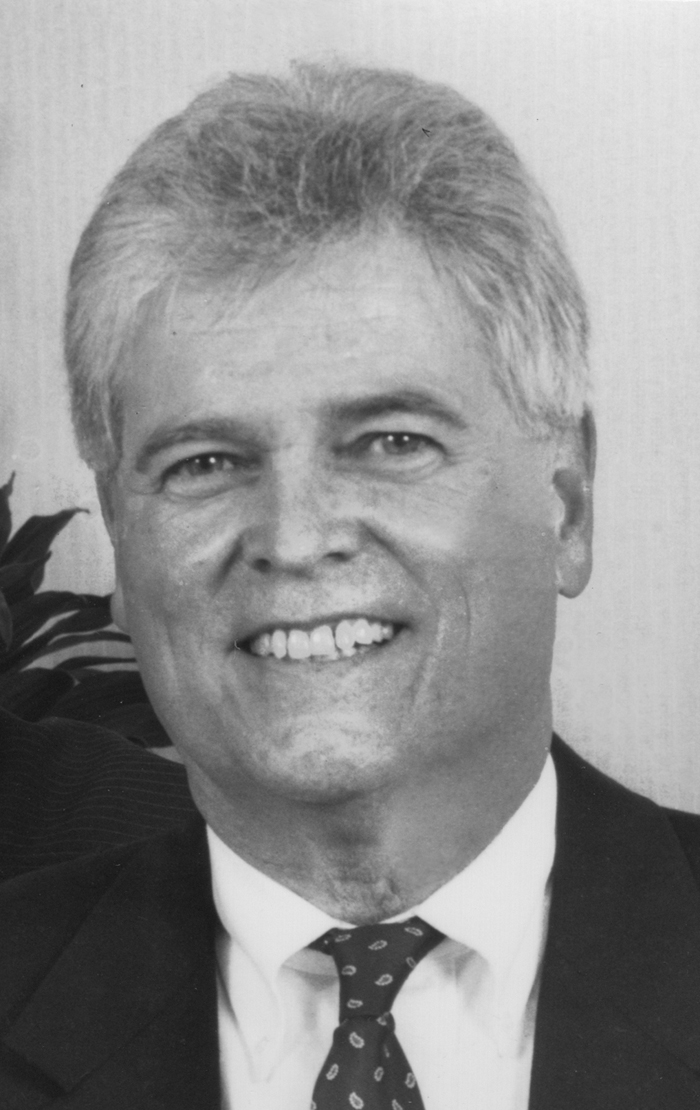
The Ken Burns documentary about the Roosevelt family that aired recently on PBS had special meaning for retired Vero Beach trust officer Ted Chenault, because of a place called Warm Springs.
FDR received treatment at the Warm Springs Foundation, a facility in Georgia that he started after he was crippled by polio in 1920, when he was 39. Thirty five years later, Chenault underwent treatment there too after polio paralyzed him from the waist down.
“My involvement with polio was very much like Roosevelt’s,” Chenault said. “I think mine was a little bit worse. I always greatly admired Roosevelt even before I had polio. I grew up as a kid during World War II, so we all felt like he saved the country.”
In 1954, Chenault was a 21-year-old university student, a swimmer on his college team and a tennis player who had spent much of the summer working on his game.
Chenault had returned to his Louisville, Ky., hometown for the summer after finishing his junior year at Washington & Lee University in Lexington, Va. One morning in August, he bought a new tennis racquet and made plans to hit balls with a friend over the weekend.
“It was Friday the 13th of August, and it was my mother’s birthday,” he said. “We had gone out to celebrate her birthday. One of my favorite foods was pork chops, and that’s what I ordered. But I didn’t eat them all.”
He said he felt like he might be coming down with the flu, so he went to bed as soon as everyone got home.
“It kind of went downhill from there,” he said.
Chenault didn’t feel up to playing tennis all weekend. His parents called the family’s doctor, who made a house call and diagnosed his illness as summer flu. He gave Chenault shots of penicillin. But a couple of nights later, when Chenault tried to walk to the bathroom in the middle of the night, his legs buckled. His brother caught him and kept him from falling to the floor.
“Both legs went out, and that was the last time I remember walking without help,” he recalled 60 years later.
This time the doctor told him he might have a “very light case of polio.”
“By Thursday, the doctor said, I really think you need to go to the hospital. You can rest better there, and he said, Ted, I want to put you in an iron lung for rest, but don’t worry about it. You can breathe on your own just fine!”
Chenault got choked up briefly when he articulated the term “iron lung,” the monstrous looking capsule that many polio patients had to endure. But then, his customary cheerfulness returned as he described his two weeks of confinement. He claims it wasn’t that bad.
“There were six of us in the room, so we could talk back and forth, and we could watch television,” he said.
Chenault remembers thinking he would recover from polio eventually, but instead he’s been unable to stand without braces and crutches since 1954. He also lost shoulder strength, and has to use both hands to hold a glass of water. The disease kills motor nerves but doesn’t affect sensory nerves. Most of its victims were young children, which is why it was known as infantile paralysis. The Salk vaccine came along in 1955 and virtually wiped polio out in the U.S.
“i remember mother asking the doctors why did I get to the age of 21 without getting polio,” Chenault said. “To this day they don’t know where polio comes from. They’ve cured it but they don’t know what caused it.”
Chenault underwent rehab in Louisville and was equipped with braces and crutches that he found to be confining and stiff. His parents sent him to Warm Springs.
“That was just a wonderful experience for me,” he said. “They threw those braces away and got new braces and crutches for me, which I used until about 20 years ago.”
Now Chenault gets around with a motorized wheelchair.
The devastating disease apparently didn’t make a dent in his good-natured disposition. He says he can’t remember ever being depressed about having polio. It also failed to keep him from completing his education. In the early 1950s, Washington & Lee University had “stairs and stairs and stairs” and no elevators, he said, so he enrolled instead at the University of Illinois, which was way ahead of its time in that regard.
“My parents found it was the only major school in the country that was completely wheelchair accessible, and it had a major rehab program,” Chenault said.
Chenault went on to earn a law degree at the University of Louisville. He practiced law with a Louisville firm but was concerned about having to hobble from his car to his office on an icy sidewalk. He and his wife, Marilyn, and their twin daughters Elizabeth and Susan, wound up moving to Orlando, where he got a job organizing a trust department for a new bank.
Later, at a trust school at the University of Florida, he met Vero Beach banker Angelo Sanchez, who had just organized a trust department for the Indian River Citrus Bank, at 14th Avenue and State Road 60. (The building is now the Vero Furniture Mart). In 1965, Chenault became Sanchez’ assistant. Later he headed the trust department, which was in a separate building connected to the bank by a tunnel beneath Road 60.
Of course, Chenault couldn’t navigate the flight of stairs that led to the tunnel.
“I sometimes had to walk across the street to go to the bank,” he said. “Once I had to take a little old lady over there. We got to the curb and she said, now, which one of us is helping who?”
He went on to organize the trust department for Beach Bank, which later was acquired by Northern Trust.
“We opened the trust department on April Fools Day in 1977,” he said with a laugh. “I never let the employees forget it!”
Chenault helped organize the local YMCA and served as its president. He was the first president of the Visiting Nurse Association, and also served as president of the Association for Retarded Citizens and the Exchange Club. His late wife, Marilyn, was an active community volunteer and a book reviewer for the Press Journal. Daughter Elizabeth runs a kindergarten in Atlanta, and Susan, following her father’s footsteps, is a lawyer who works as a trust officer at Northern Trust.
Chenault, now living in Indian River Estates, tools around town in his specially equipped van and is a familiar face at area restaurants and clubs. He dines regularly with buddies from his Exchange Club days and other old friends, always upbeat and usually telling a good story or two.
Incredibly, he manages to put a positive spin on his battle with polio. He was a member of ROTC in high school and college and was commissioned a second lieutenant in the Army when he graduated from college.
“When I got polio, I was out for two years before I could go back to school,” he said. ”Had I not had polio, I probably would have ended up in the Korean War, so I would have lost two years that way.”
 Indian River Guardian