
Indian River Shores puts lawsuit on hold through March 2
“Wednesday’s mediation session opened with representatives of the Shores insisting the issue is not electric rates but the “sovereignty” of the Town. In actuality, the Town of Indian River Shores is not sovereign, but is an incorporated municipality of the State of Florida. As such, the Town is subject to federal and state laws, including those laws intended to provide for a stable and reliable electric power grid.
“Just as every utility in Florida, public and private, opposes what the County seeks to do, they can be expected to urge the courts to uphold long-established utility law and to reject the Shores’ claim of ‘sovereignty.'”
NEWS ANALYSIS
MARK SCHUMANN (This story updated 12/18/14 8:00 a.m.)
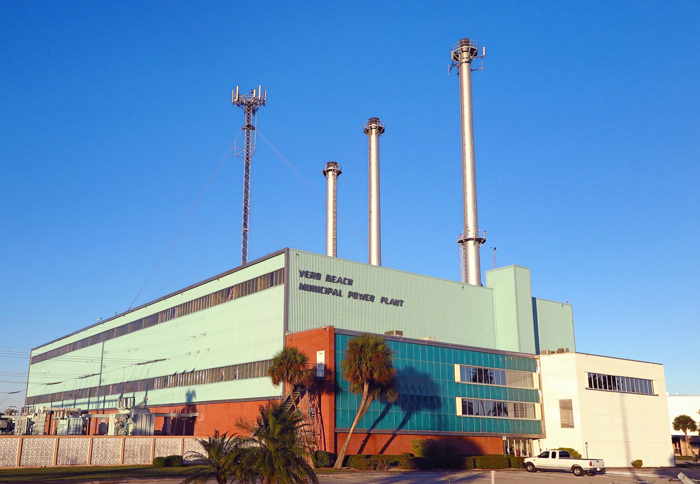
Having twice deferred its request for declaratory statements from the Florida Public Service Commission, the Indian River County Commission appears to be avoiding answers it may not like. Though the County Commission may be wavering in its pursuit of answers, the Vero Beach City Council voted 5-0 Wednesday to file its own request for a declaratory statement from the PSC.
The Council is seeking clarification from the PSC on what, if anything, should happen when the City’s franchise agreement with the County expires in 2017. The central issue is whether PSC service territory assignments are superior to or subordinate to franchise agreements.
If Vero Beach’s special counsel Schef Wright has a petition ready by Friday as planned, the PSC could have answers as early as March 3.
Essentially, the County is seeking PSC approval to force Vero Beach to surrender its out-of-city electric customers and utility infrastructure. With every utility in Florida, including Florida Power & Light, lined up against the County, one has to wonder if the members of the County Commissioners would prefer to rescind their questions.
Parallel to the County’s efforts, the Town of Indian River Shores filed a lawsuit against Vero Beach in July. Since that time, the Shores and Vero Beach have been in state-mandated mediation. If the PSC assumes jurisdiction over the City’s questions and upholds the primacy of service territory assignments, it would then be a wild and fantastical stretch to image state courts accepting the Town of Indian River Shores’ argument that it should be free to govern itself as a sovereign nationstate.
At issue are rates and questions about franchise agreements and service territory assignments from the PSC. Vero Beach’s municipal electric utility serves 34,000 customers. Sixty percent of them are located in unincorporated areas of Indian River County and in the Town of Indian River Shores. Eighty percent of the residents in the Shores is served by Vero Electric, the remainder by FPL. FPL also serves all other areas of Indian River County not served by Vero Electric, including Sebastian and Fellsmere. Currently, customers of Vero Electric are paying about 15 percent more per 1000 kilowatt hours than customers of FPL.
FPL has among the lowest rates in the state, while Vero Beach’s rate is within the statewide average for municipal utilities and is below the statewide average for investor-owned utilities. City officials are working with their largest supplier of wholesale power, the Orlando Utilities Commission, to renegotiate for a lower rate. Other options being considered to lower rates include decommissioning the power plant, which sits idle some 95 percent of the time. Looking for still more ways to reduce rates, the City is also seeking a consultant to help with a rate study and a system optimization study. Utility attorney Schef Wright said the rate differential between Vero Electric and FPL can be cut in half.
Though many other electric utilities across the state are charging rates higher than Vero Electric, Indian River Shores Mayor Brian Barefoot, in a guest column published in the Press Journal, described Vero Beach’s rates as “oppressive.” Barefoot insists the only rates acceptable to the Shores will be rates competitive with FPL.
Led by Barefoot, the Indian River Shores Town Council filed a lawsuit in July seeking to force Vero Beach to cease serving its electric customers within the Town and to remove its utility infrastructure when the franchise agreement between the Shores and City expires in 2016.
Representatives of the Shores, the County and Vero Beach met Wednesday in a mediation session that accomplished little more than to delay by two months the time when legal bills will really start mounting for the Shores, and for the customers of Vero Electric.
The Shores agreed to put off its circuit court lawsuit until March 2. In the mean time, representatives of the Town will seek proposals from prospective utility providers, including, presumably, FPL. In his report to the City Council, though, Wright underscored that the City does not agree with the Shores’ assertion that the Town is free to switch electric utility providers when the franchise agreement between the Town and Vero Beach expires.
Wednesday’s mediation session opened with representatives of the Shores insisting the issue is not rates but the “sovereignty” of the Town. In actuality, the Town of Indian River Shores is not sovereign, but it an incorporated municipality of the State of Florida. As such, the Town is subject to federal and state laws, including those laws intended to provide for a stable and reliable electric power grid.
Just as every utility in Florida, public and private, opposes what the County seeks to do, they can be expected to urge the courts to uphold long-established utility law and to reject the Shores’ claim of “sovereignty.”
Mediator Carols Alvarez, who described the two-month delay as an “options review period,” urged the parties to make every effort to avoid taking their differences to court. Alvarez explained that because the issues raised in the Shores’ lawsuit are complex and ground-breaking, the case will take years to work its way through the courts and will be exceedingly expensive for the Town and for the customers of Vero Electric.
 Indian River Guardian
I bet the tax payers in Indian River Shores loved the hearing today. On the right were the $500.00 per hour attorneys their city property taxes were paying for. On the left were the $500.00 per hour attorneys that their county property taxes were paying for. And in the center were the $500.00 per hour attorneys that their electric company was paying for out of their electric bill. $1,500.00 per hour to eventually loose, what a deal. Oh yeah toss in the rest of the beaucrats and let’s round it up to $3,000.00 per hour.
It’s time for Vero Beach to go on the attack.
I think it would be a good idea to see the Indian River Shores councilmen ,and the one who just resigned, to go to court ,be put on the witness stand and hear what they have to say about collusion and the Sunshine Law. Please “Shores” bring Vero to court.