
MILT THOMAS
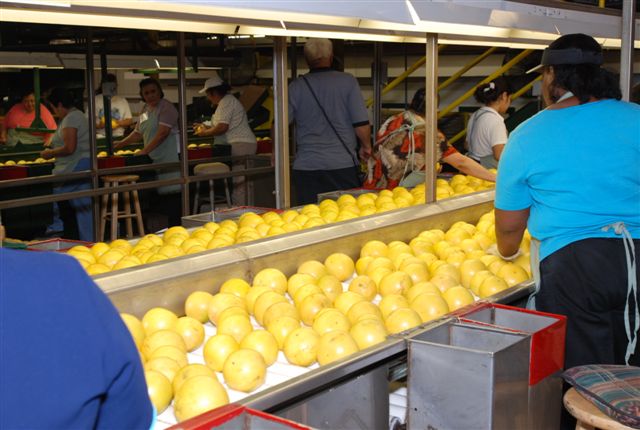
United Indian River Packers, Leroy Smith and Hogan & Sons are citrus packinghouses historically associated with Indian River County. They are also the latest to close their doors. Why? Packinghouses need fruit to pack and ship in order to stay in business and the availability of product is in a steady decline.
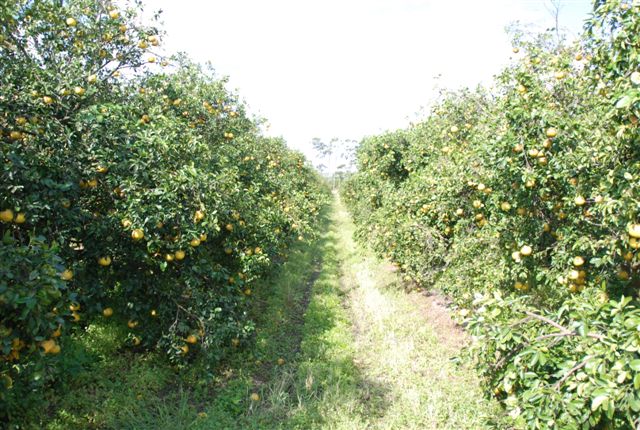
According to Doug Bournique, Executive Vice President of the Indian River Citrus League, “Back in 1998 there were 20 packinghouses in Indian River County, now there are about eight. At the industry’s height, our county had 66,000 acres of producing groves. Now there are a little over 31,000 acres.”
The human toll as a result of this decline means the loss of hundreds of jobs in an industry that contributes around 3,000 jobs to our economy. So what happened?
Bournique says there are three basic reasons for the decline in producing groves and shippable fruit. “First is the urbanization that has occurred east of I-95. What was once grove land is now homes and businesses. It’s the old story of supply and demand. As the population grows, land is worth more for development than agriculture.”
We can thank the County Commission for establishing land use regulations that prohibit serious development west of the interstate and help preserve that land for agriculture, one of the county’s most important sources of income.
The second reason stated by Bournique has to do with general economic conditions. But the third reason, the one that looms as the greatest threat to the industry as a whole, is disease.
Citrus canker has been around many years, with the most recent outbreak discovered in 1995. Canker is not harmful to humans, but causes leaves to drop and the damaged fruit is unsaleable. Carl Fetzer of Barnes Citrus is second generation in the business. “When canker first came it was quarantined in Florida. Every tree in a 1900-foot radius around an infected tree had to be burned, about 200 acres. The state was paying growers $6,000 an acre for the loss until they ran out of money. Then the hurricanes of 2004 really spread it around.”
Foreign markets are a major source of revenue for growers and Fetzer says, “Europe doesn’t want any fruit from a canker grove. If a USDA inspector comes here and finds one piece of canker fruit, you can’t ship any of it to Europe. Even if a container is shipped, if they find canker in the next batch, the ship is turned around.”
Canker can be controlled and a cure may be in sight, which is more than one can say about a more serious threat, citrus greening. Also known as Huanglongbing (HLB) or yellow dragon disease, it is distinguished by leaf yellowing, stunted tree growth and irregularly shaped fruit that is bitter in taste. According to Fetzer, “Once a tree is infected, there is no cure.”
The federal and state governments are pouring millions into finding a cure for greening, which could decimate the entire citrus industry in Florida. The problem is that researchers are concentrating on a long term cure that may never be necessary if nothing is done to control the disease short term.
One possible short term solution has been discovered over on Florida’s west coast by a grower, Maury Boyd of Orange Hammock Grove. “Scientists were saying push out the trees or watch them die because greening is contagious. The tipping point for greening is when ten percent of the trees are infected. At that point, removing trees is not effective. Our area is at 20-40 percent.”
What Boyd found is that at least some of the greening problem is not greening at all – it is lack of proper nutrition, specifically, not enough nitrogen. While this sounds like a preamble to the latest health food fad, the truth is that a lack of proper nourishment produces the same effect as citrus greening, leaf drop and stunted growth. According to Boyd, the 2004 and 2005 hurricanes brought the water table up and changed the pH of the soil which prevented roots from absorbing nutrients. The cure was to acidify the soil to re-establish the root system, while at the same time feeding the tree through its leaves. “The USDA scientists were off the mark.”
Boyd proceeded to act on his theory in spite of being pressured not to do so. He had aerial photos taken after three or so years that showed his trees were fine, while trees from other growers were being taken out. Boyd became a celebrity of sorts along with scientists at the IFAS research facility in southwest Florida, at least to other growers who saw hope they would still be in the citrus business. Fetzer’s firm, Barnes Citrus, began applying Boyd’s methods with excellent results and invited Boyd over to Vero. “We selected 20 growers and others to hear him speak over lunch at the Italian Grill,” says Fetzer. “Then Doug Bournique said he had 80 growers who wanted to hear Boyd. So we ended up with about 100 people.”
While the answer to citrus greening is still pending a long term solution, dealing with the pH issue may reduce the number of trees thought to be involved. However, a new threat has emerged, citrus black spot disease.
Black spot is a fungus that reduces fruit quantity and quality. Lesions on the leaves appear to be black spots and it is through the lesions that this disease spreads to other trees. No citrus varieties are resistant and it must be strictly controlled. According to Maury Boyd, “Black spot was discovered about six years ago in Immokalee but it hasn’t taken off yet. It can be treated with metals like copper and manganese.”
Doug Bournique adds that it is confined to the west coast at this point, “but bears close watching.”
Florida’s climate not only attracts people from the cold north, it also attracts animal and plant species from around the world as well as the diseases they carry with them. Canker is thought to come through Cuba, greening from China and black spot from, possibly, South Africa. Citrus trees themselves are not native to Florida, but we have grown to rely on the income and jobs they produce. The downside is that we must contend with the diseases that depend on them.
 Indian River Guardian