
MILT THOMAS
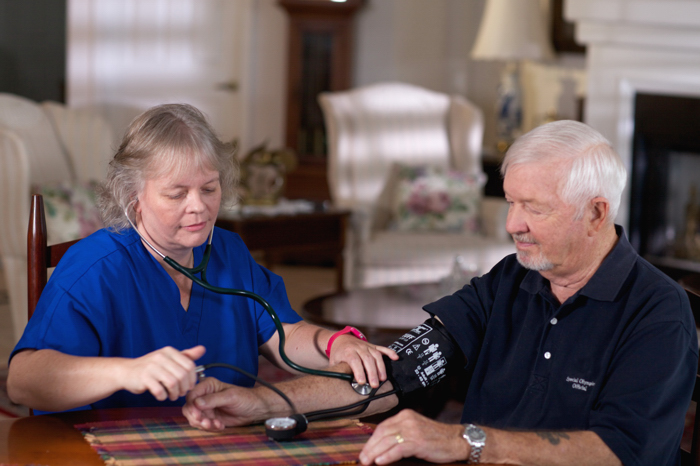
The Visiting Nurses Association has become such a vital part of the healthcare community that it is difficult to imagine a time when it didn’t exist. VNA is a national program begun in 1880 by Lillian Wald, a nurse in New York who saw the need for home healthcare. It would take another 95 years before VNA reached Indian River County.
Anne Marie McCrystal is a key figure to make that happen in 1975. She graduated from the University of Miami in Nursing and became familiar with the VNA there. After marrying then surgical intern, Hugh McCrystal, they eventually settled in Vero Beach. She says, “No home healthcare agency existed in Vero at the time. Marion Oechsner felt that with so many older people coming here and doctors having no time for house calls, I got together in 1974 with a group of community minded people including Pat Moore, Helen Bracken, Ted Chenault and Celeta Arden to explore starting a VNA.”
They went after certification from the state and licensing from Medicare and Medicaid. “We also needed a Registered Nurse once the funding was in place, so we hired Sue Schlitt. Pat Moore asked her to be director.”
With certification in process, they needed to go after funding in order to pay Sue Schlitt and get their startup VNA ready to go once approved. So McCrystal and Pat Moore approached Dan Richardson, philanthropist owner of Gracewood Fruit Company and his CFO, Rene Perez. “We asked them for $10,000 to open an office and hire Sue,” says McCrystal. “They gave it to us and then we went to Dale Sorensen, who was with Gulf and Western at the time, for another $10,000. Ed Schlitt gave us a one room office in the 2001 building. With startup funding, a director and several home health workers we had enough to start.”
The licensing process took a total of six months and in April 1975 the Indian River County VNA office opened to serve. “We began seeing patients that day, but had some resistance at first from the 30 physicians in town at that time because they weren’t used to seeing nurses go into homes and take care of their patients. But one physician, Dr. John Terry, convinced the others that it would be okay.”
In the first month of operation the VNA made 80 home visits. Within three years they would be exceeding 7,000 home visits a year to anyone asking for help, regardless of their ability to pay for it. The agency’s growth is reflected in the fact they have outgrown six offices in 11 years until 1987 when they moved into their current location on the Indian River Medical Center campus. According to McCrystal, “When the current hospital opened in 1978, they had planned a three story human services building but weren’t sure they would go through with it. Then in 1986, they went ahead partly because we needed more space. We originally occupied the first floor and now we have all three floors.”
Today, on the eve of their 40th anniversary, the VNA is an integral part of the county’s healthcare system, making over 40,000 home visits a year. VNA services have expanded to meet the needs of a growing – and aging – population with a full range of medical, therapeutic and educational services, all still provided with the promise of never turning anyone away. Those services include post-surgery and rehabilitation care, wound, heart, cancer and chronic disease care, patient education and monitoring, caregiver support, blood pressure and blood sugar clinics, low vision screenings, flu shots (Shoo the Flu program), a mobile health unit that delivers services to outlying communities, monitoring activities of patients in real time with Telehealth, and end-of-life care through Hospice.
Hospice came about back in the 1980s when VNA joined forces with Hospice of the Treasure Coast to provide palliative care for terminally ill patients. McCrystal says, “They were having problems with licensing, so we agreed to take the Indian River County portion of Hospice and handle all licensing issues.”
In 1986, VNA officially took over Indian River County Hospice. Mary Linn Hamilton is President and CEO of VNA. “We provide palliative, or comfort care with a scope of services including pain management, medication and supplies, hospice nurses and aides, grief support for family members including helping kids with bereavement in school or in bereavement camps, spiritual support, and of course, Hospice House.”
Hospice House opened in 2000 and according to McCrystal, the $5 million cost of construction was 100 percent funded through community donations. “Three years later the community funded another $5 million towards an endowment fund.”
Today, funding for Hospice House and for the VNA in general is primarily handled through the VNA/Hospice Foundation. Carol Kanerek is the chair. “The foundation provides 100% of patient costs not covered under other programs and keeps our agency alive. Hospice House is like any other house and needs constant improvement as we grow. We also receive grants from other foundations and operate two thrift stores to raise money for Hospice House.
“But we are not compensated for many services. Medications are offered free or at reduced prices based on need. Our mobile units are funded by the taxing district. The world of medicine is constantly changing and there are always more requirements. The foundation is here to meet those challenges.”
Home health is the largest part of the VNA’s business. As McCrystal points out, “Home health is especially necessary these days because hospitals only keep a recovering patient maybe three days and many people have chronic illnesses. About 75 percent of our patients either have COPD, diabetes or hypertension.
The thrift stores also help to raise awareness of VNA and its services. Michael Gardner is Vice President of Marketing & Communications. “People have no concept of home health until they need it so our thrift stores, community outreach and fundraising events help to spread the word.”
In spite of terrific community financial support, the non-profit VNA faces an uphill battle as costs escalate with needs. “Over the years,” says McCrystal, “VNAs nationally have struggled to continue their mission, which is to provide care to people regardless of their ability to pay for it because of decreased government reimbursement and what has happened in healthcare. We’ve lost Palm Beach County and Dade County in the 1980s. But we are fortunate in Indian River County because it is such a philanthropic community. I can say we have never refused a patient for inability to pay.
The VNA staff includes 100 nurses (RNs and LPNs), 40 physical, speech and occupational therapists, 150 certified home health aides and companions, 20 counselors and chaplains as well as 100 support staff. Gardner adds, “On top of that, our volunteers provide 50,000 hours a year of support.”
Maintaining a staff that large to fill the constantly growing needs in our community is no easy task, but according to Gardner, “We have won recognition as one of the Best Places to Work every year since 2009.”
This year Duke University will be conducting a community needs analysis of palliative care for the VNA. It can only result in the addition of even more quality services by an organization started by a few local volunteers looking out for their fellow current and future Indian River County residents.
 Indian River Guardian
Thank you for a terrific article that included some of the history of the VNA. There should be no doubt that the organization has proven itself to be a beneficial part of our community.