
PETER GORRY
OVERVIEW
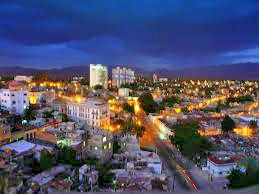 Cuba is an island Country in the Caribbean 90 miles south of Key West, Florida with 11.2 Million inhabitants; however; total population has been declining each year since 2006 and projected to continue in the next decade. It is approximately the same size as Hispaniola, an island which includes the nations of Haiti and the Dominican Republic with a combined population of 21 Million. The largest city in Cuba, Havana has 2.1 Million residents; currently there are 1.7 million Cuban Americans in the United States; 1.2 Million in Florida.
This country has the highest literacy rate in the in the Western Hemisphere, free education through college; Universal Health Care – doctors per population is the greatest in the world, five times greater than the global average and over double the ratio in the US.
Drug traffic is virtually nonexistent, violent crime, prostitution, as well as civil liberties, are curtailed by the Communist government while applying stringent controls on the economy. Poverty is problematical especially in rural areas, free speech and dissent are squelched, but compared to U.S. friendly counties in South and Central America, where high crime, starvation, limited health care, and rampant drug cartels abound, Cuban health care, subsidized – or free – housing and education provide a safety net for its populace.
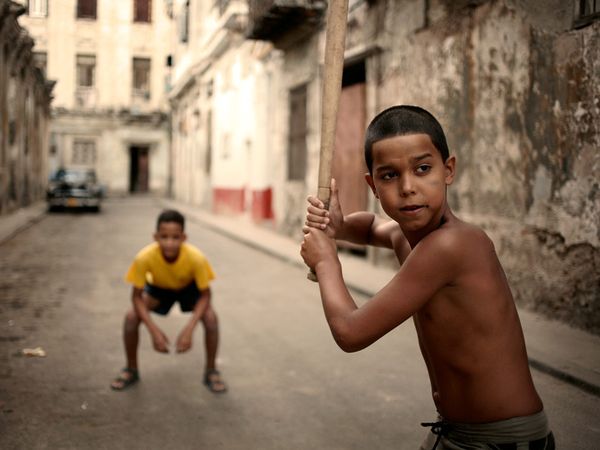 A proud and historic heritage of art culture and tradition is preserved honored and respected. Rain forests are not eviscerated or virgin land paved over, developed or compromised for rapacious corporate profits. Cuba is relatively homogenous in terms of race, ethnicity, language, climate and geography.
THE UNITED STATES PRESENCE
Since 1903, the Guantanamo Bay Naval Base has been leased from Cuba. It is the oldest American military installation on foreign soil and he only one where there is no diplomatic recognition. The base covers 45 square miles. (The City of Miami and Miami Beach cover 42 square miles.) The United States has fought wars with both Communist China and North Vietnam – and now has substantive trade, financial investments and diplomatic recognition with both. In 1961, the CIA planned, funded and trained a force which invaded Cuba – and was defeated in three days. The infamous Cuban Missile Crisis followed and only defused when the USSR backed away.
PREQUEL – 1952 – 1958 THE DEMISE OF DEMOCRACY
In early 1952, Fuigencio Batista in a military coup overthrew the government, eliminated the Constitution and established a dictatorship.
An informative analysis by Michael McGuigan (Doctoral Thesis “Batista Economic Policies 1952-1958” University of Miami 2012) explicitly describes the regime’s extent of corruption, control and complicity with organized crime. Batista and his entourage were the first to flee Cuba to the U.S. in early 1959 flying to Florida with hundreds of millions extracted from the country, their bounty safely stashed in off shore bank accounts. During those six years when Batista ruled, U.S. companies gained ownership of a substantial percentage of Cuba’s businesses, mineral rights and assets as U.S .organized crime controlled the hotels, casinos, drug trade and prostitution, a percentage of which was channeled to the Batista elite.
The Cuban economy was dependent on tourism, a limited cigar trade and a single export, sugar which was concentrated on vast plantations and mills controlled by a select few families. Cuba exported over 5 million tons of sugar to the U.S. (about 70% of total U.S. consumption). Without agricultural and manufacturing diversification, over 80 percent of food, imported merchandise and commerce was dominated by the US.
1959 – 2014 COMMUNIST CUBA: IN 75 YEARS, TWO PRESIDENTS IN HAVANA, ELEVEN PRESIDENTS IN THE UNITED STATES
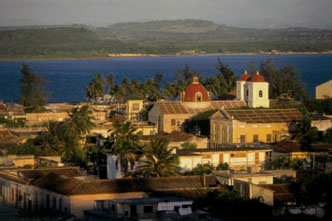 The Castro rebellion introduced Communism, confiscated property, repressed human rights, and imprisoned opposition. A repressive police state coming to power at the height of the Cold War, the result was sanctions, an embargo and severed diplomatic relationships with the United States.
The Cold War years lasted through 1982. Until the, Soviet Russia and its Eastern substantially subsidized the Cuban economy and military. The subsidies were eliminated entirely by the early 1990’s, with a withering impact on the island’s economy.
Fidel Castro turned over the Presidency to his brother Raul in 2006, who subsequently was elected to head the Communist Party in 2011. Since 2011, a limited easement of investment property, ownership and markets restrictions were enacted.
IMPACT ON FLORIDA
A stream of escaping immigrants fostered growth of “Little Havana” in Miami (34 percent of the City’s population is Cuban-American), with the emergence of an influential Republican voting constituency, staunchly anti-Castro, especially for older generations.
SEQUEL 2015
After months of negotiations in Canada and the Vatican, on Dec. 17, 2014, President Obama changed course regarding relationships with Cuba; specifically:
• Reestablishing diplomatic relations abandoned since 1961
• Facilitating an expansion of travel to Cuba
• Expanded sales and exports of certain goods and services to Cuba
• American citizens traveling from Cuba can import up to $400 in merchandise
• Efforts to increase Cuban’s access to communications
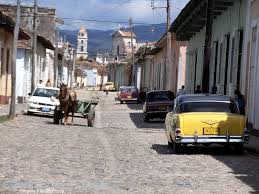 Only Congress can remove the embargo against Cuba. However, the impact of the policy realignment on the U.S. and particularly for Florida is growth of tourism, investment, commerce and migration/immigration. Should the embargo be lifted – and sugar imported at world prices – Big Sugar, particularly in Florida, could be significantly and adversely affected.
These initiatives may lead to a new paradigm engaging our two nations, beneficial to each country, and, hopefully improving the well being, lives and liberties of the Cuban people.
 Indian River Guardian
Thank you for the valuable history lesson.
Thank you
I purposely did not address the controversies, conditions and circumstances regarding the incarceration and treatment of prisoners at the Naval base which was activated in 2002 – and continues into 2015..Over 90% of those originally impounded, have been deported, released and a few have died.at the facility.as allegations of torture intensify. .
Not acknowledging any culpability over the last 6 decades, the Cuban state controlled media has pounced upon this issue., it seems to me neither the US nor Cuba is above reproach.and my point is how best to forge a more productive and reconciled future rather than ceaselessly focusing on the past.