
COMMENTARY
MILT THOMAS
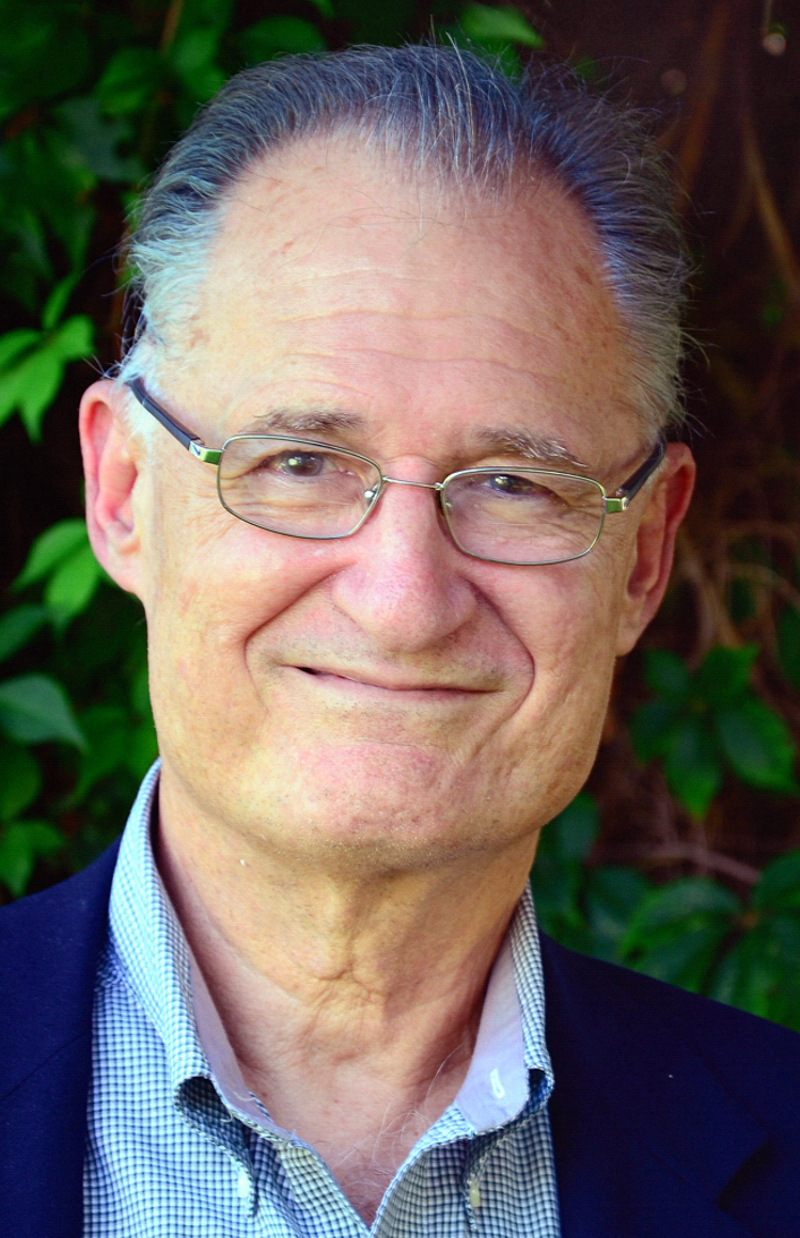
Last night I was witness to a discussion that shouldn’t even be happening in America today. I attended a meeting of the Indian River County School Board. The meeting room was packed, primarily with people representing two sides of an issue that demonstrates how American democracy has evolved with changing times while still maintaining the original intent and spirit of our Founding Fathers.
Unfortunately, the issue motivating the crowd had nothing to do with education. Had it been about issues facing education of our youth to prepare for what will be for them highly competitive and turbulent future, I would have been pleased to see such a turnout. Instead, the issue was, on the surface, about procedures for opening invocations at school board meetings. I say on the surface, because beneath the surface, the real issue was about whether or not to have invocations at all and who they should be directed toward.
The invocation to begin this meeting was just about the longest I have heard at an official government meeting, itself an advertisement promoting prayer in government meetings. Public input was next, one side or the other advocating its position, with half the audience applauding its advocate. One pro-prayer speaker relating how the pilgrims came over on the Mayflower, thanking God for their safe passage and establishing the colony. He didn’t mention that the pilgrims came here to escape religious persecution, which laid the groundwork for freedom of religion and free speech in the First Amendment of our Constitution. He probably could have advocated the other side on this issue as well.
Then came positions stated by some school board members, none more passionate than that of Claudia Jimenez. Based on the grumbling I heard in the back row of attendees, she had no right to quote the Bible regarding public prayer since her quotes were antithetical to the pro-prayer crowd. She also made the grievous error of referring to Jesus as a prophet and not the son of God. I thought one man was going to stroke out over that one. He must not have read the part where Jesus was a teacher and a Jew to his contemporaries. Jimenez was not against the invocation, incidentally, she just felt it should be non-denominational to include those Jews, Muslims, Buddhists, Hindus, Atheists, etc. who are taxpaying citizens of Indian River County but not Christian. As an alternative, a moment of silence for those who wish to thank their personal recipient of such praise. That seems to be more in line with recent Supreme Court decisions.
Board member Searcy commented that there was something missing in our society today and by implication, prayer would help to add back what we miss. Personally, I think what is missing is a dedication by all citizens, regardless of age, race or religious affiliation, to providing the quality of education necessary so our children will keep our country great in an increasingly competitive world.
By the way, after the school board passed the procedures for opening invocations by a 4-1 vote, most of the audience cleared out, half of them satisfied they had done their part to save America’s future and the other half worried about it.
See Also:
Washington Times: Divided Supreme Cours Oks prayer before public meetings
USA Today: Supreme Court upholds prayer at government meetings
Justice Anthony Kennedy wrote the majority opinion: “As a practice that has long endured, legislative prayer has become part of our heritage and tradition, part of our expressive idiom, similar to the Pledge of Allegiance, inaugural prayer, or the recitation of ‘God save the United States and this honorable court’ at the opening of this court’s sessions.”
Justice Elena Kagan wrote the principal dissent: “When the citizens of this country approach their government, they do so only as Americans, not as members of one faith or another,” Kagan said. “And that means that even in a partly legislative body, they should not confront government-sponsored worship that divides them along religious lines.”
 Indian River Guardian
This meeting was my first Board of Education meeting. I could not understand why so much time and effort was spent on the subject of invocations. One gentleman commented that the law firm under contract to the Board of Education will have been compensated something like a million dollars for the 3 years, ending in March, I believe. And here a special resolution has been legally-prepared in case (as I understand it) some group decides to sue the Board for having an invocation at the beginning of the meetings. As a solution, Ms. Jimenez stated the invocation – if actually for the benefit of the board members – could take place prior to the start of the meeting. The other four board members had already made up their minds so this went over their heads. Ms Jimenez quoted the Bible – just as others had done. She is a religious education professional–so it is hardly surprising she is acquainted with the Book. I am so pleased to know Claudia Jimenez is on our Board of Education, because I believe her priorities lie with the children’s schooling and not politics. Yes, that was the longest invocation I’ve ever heard. Too bad it wasn’t timed like all the other audience members’ comments were. It was an obvious ‘lesson’ in religious history, which I resented.
I agree with Cathy Katrovitz. The tenure of Claudia Jimenez on the School Board has been the role model that all those who represent us on governmental issues should emulate. She has never forced her personal beliefs on others. She consistently has demonstrated respectful discussion of even the more controversial issues.
The public school process has no stronger an advocate than Claudia. She and her husband have raised beautiful daughters who have excelled in the academic environment. Claudia merely wants all the children in the Indian River School system to have the same educational opportunities that her daughters have embraced.
Far too many people do not know American history. Our Founding Fathers gave us not only freedom of religion, they also gave us freedom from religion.
I am very proud to call Claudia my friend. I only hope to one day be as gracious as she is when faced with opposition.
It would seem that you missed some interesting news elements. An ACLU attorney who doesn’t seem to know the difference between the Constitution of the United States and a letter that Thomas Jefferson wrote to the Danbury Conneticut Baptists assuring them that the government was not going to interfere with them. And a school board member who appeared to want to squash free speech by defining what a person can say and what they should not in addition to misrepresenting a Supreme Court ruling. And lastly an entire group of people who got up and walked out as soon as they did not get what they apparently had come for despite a young mans plea at the beginning of the meeting for those who had come for the one issue to have enough concern for the schools and the students that they would stay for the entire meeting.
This reminds me of the embarrassment caused by two former members of COVB Council and their insulting behavior and statements to a secular humanists’ presentation. Most folks who spout about the “Founders” religious beliefs or their positions on religion in the public sphere are woefully uninformed. Thomas Jefferson, a Unitarian, and Benjamin Franklin, a Quaker, both disdained public displays of religion. James Madison wrote “Religion and Government will exist in greater purity, the less they are mixed together.” The school board would be better served using the opening minutes of their meeting for some lessons in history and civics.
We continue to go backwards here, as the majority our new Board, is focused on who financed their elections, not on who they should be representing. The children are our focus here, as they are our future. It should not be used to fund retirements, it should be used to teach our children the difference between right and wrong.
History should have taught them that Church and State must be separated and all religions need to be respected, not just the ones that are personal to the Board Members. Personal beliefs should be taught at home and we as a whole should not have to conform to the beliefs of others.
Invocations need to be removed from all Board meetings and School based events.How about just the “Pledge of Allegiance” and or a “Moment of Silence” for our Fallen to our great country..
Randy Heimler
I remember one of my seminary professors cautioning that when the Bible is taken literally but not seriously it can be used as a weapon in all forms of combat. Literal interpretation, after all, is still interpretation.
For example, one might take literally the biblical claim that the world was created in seven days – exactly 168 hours. It is quite another level of faith, though, to take seriously the role we have been assigned as “caretakers” of God’s garden. What is more important, to know how long it took God to create the world, or to figure out how much longer it will be before we will have destroyed that over which we are to be faithful stewards?
Certain members of the Indian River County School Board can make all the pious pronouncements they want about seeking God’s guidance in their deliberations, but if the are not respectful of each other, if they let their egos rule the day, then they will be little more than noisy gongs and clanging symbols.
“What you are stands over you the while, and thunders so that I cannot hear what you say to the contrary.” – Ralph Waldo Emerson
Wow, Milt, I couldn’t be any more disappointed in your editorial because it certainly did not represent what transpired at Tuesday night’s school board meeting. Apparently, you and I attended different meetings.
In an effort to set the record straight, here is what really happened…
During the citizen input portion, a representative of the ACLU mistakenly claimed that the doctrine of “separation of church and state” is enshrined in our nation’s Constitution. This, of course, is blatantly untrue because that phrase and that concept does not appear anywhere in the U.S. Constitution… or in the Bill of Rights, for that matter. The phrase was first used by President Thomas Jefferson in a letter to the Danbury Baptists in which he assured them that such a wall of separation existed in order to protect churches from governmental interference… not the other way around. Either the ACLU representative is ignorant of U.S. history and our founding documents or she purposely misrepresented them both in order to forward her argument.
The same goes for board member Claudia Jimenez. Claiming that the U.S. Supreme Court’s ruling in Greece vs. Galloway outlawed – in her words, “exclusionary prayers” – she either knowingly or unknowingly misrepresented the high court’s decision. What the Supreme Court said – and I am quoting from the court’s own blog – is that “the town’s practice of opening its town board meetings with a prayer offered by members of the clergy does NOT violate the Establishment Clause (i.e. the First Amendment) when the practice is consistent with the tradition long followed by Congress and state legislatures, the town does not discriminate against minority faiths in determining who may offer a prayer, and the prayer does not coerce participation with non-adherents”. NOWHERE does the Supreme Court ruling say that prayers must be all-inclusive. As long as the list of those invited to offer an invocation is open to all area clergy and is not limited to any one faith group or denomination, those who are invited are permitted to pray as they feel led.
But Ms. Jimenez didn’t stop there with her subterfuge. She quoted Matthew 6:1 and 6:5-6… and then proceeded to both misinterpret and misapply those passages. Ms. Jimenez, in those verses Jesus is not outlawing public prayer. Quite on the contrary, since Christ prayed both publicly and privately throughout His earthly ministry. (See Matthew 6:9-13; Matthew 11:25-26; Matthew 14:19; Matthew 15:36; Matthew 19:13-15; Matthew 26:26; et al) In the verses you so conveniently misappropriated, Jesus is addressing our heart attitude and motivation for praying.
As Paul Harvey used to say, that is the “rest of the story” that you chose not to report, Milt.
Reverend Dale, You accused School Board member Claudia Jimenez of “subterfuge.” Could it be that she is simply interpreting the scriptural passages in question differently from you?
Matthew 6:1 – “Beware of practicing your righteousness before other people in order to be seen by them; otherwise you have no reward with your Father who is in heaven.”
Matthew 6:5-6 – “When you pray, you are not to be like the hypocrites; for they love to stand and pray in the synagogues and on the street corners so that they may be seen by men. Truly I say to you, they have their reward in full. But you, when you pray, go into your inner room, close your door and pray to your Father who is in secret, and your Father who sees what is done in secret will reward you.”
Given the context, Mrs. Jimenez’s interpretation of those passages does not seem at all unreasonable – debatable, but not unreasonable. You may well understand the import of Jesus’ message differently from Mrs. Jimenez, but to accuse her of “subterfuge,” simply because you disagree with her, is harsh and unbecoming of someone of your calling. I notice that you are a “risk taker for Christ.” Do you sometimes risk tolerance?
Though I am not at all bothered or offended by sectarian invocations, I have found it possible, on literally hundreds of occasions, to offer inclusive, ecumenical prayers to open all manner of meetings. The larger issue, though, is not whether the invocations to be offered at the opening of School Board meetings are inclusive. (I would even argue that we benefit, indeed learn and grow from hearing persons of different faiths stand in and speak their truth.) The larger question is whether, going forward, the School Board will be intentional about inviting representatives of all faiths to open Board meetings in humility, gratitude and reverence.
Mark, with all due respect, Ms. Jimenez’s decision to cherry pick two verses about prayer to try to prove her point without also considering the dozens and dozens of other passages where Jesus taught about – or engaged in – public prayer was disingenuous at best. As for tolerance, my friend, I have a 30-year track record of ministering to prisoners, their families and their victims… enough said.
Bob, just a quick comment on your citing Thomas Jefferson and Benjamin Franklin as examples of Founding Fathers who “distained public displays of religion”. If you were at the school board meeting, you heard Pastor Greg Sempsrott describe Franklin’s call for the delegates at the Constitutional Convention to pray and seek God’s wisdom instead of disbanding when they had hit an impasse. As for Jefferson, I was privileged to be given a behind-the-scenes tour of the U.S. Capitol on two occasions when I was a candidate for the U.S. House of Representatives. On both occasions, the tour guide informed us that during Jefferson’s tenure as president, the largest church in the United States met weekly – drum roll, please – in the Capitol rotunda and President Jefferson was a regular attendee at the services.
Didn’t Thomas Jefferson also publish a version of the Bible in which all references to Christ’s divinity were removed or altered? Just sayin’…
Many of our founding fathers had a strong reliance upon God and their prayers are recorded as proof. Does that mean that everyone should now be forced to believe in God like so many of our founders? I don’t think so. But neither should we be forced to stop praying in public just because others disagree.
Ben Franklin said, “In this situation of this Assembly, groping as it were in the dark to find political truth [writing the Constitution], and scarce able to distinguish it when presented to us, how has it happened that we have not hitherto once thought of humbly applying to the Father of Lights to illuminate our understanding? In the beginning of the contest with Great Britain, when we were sensible of danger, we had daily prayer in this room for the Divine protection. Our prayers were heard, and they were graciously answered. All of us who were engaged in the struggle must have observed frequent instances of a superintending Providence in our favor. . . . And have we now forgotten that powerful Friend? Or do we imagine we no longer need His assistance? I have lived a long time, and the longer I live, the more convincing proofs I see of this truth – that God governs in the affairs of men.”
Ben Franklin and many others seemed to think prayer to God played a vital role in shaping our nation’s history. I for one, agree. What we cannot do is ignore this challenge from our early father, or worse, hide it from our history because we don’t agree.
Each of us is entitled to our own opinion but none of us is entitled to our own facts.
Jon, the fact that Jefferson published a redacted Bible under the title, The Life and Morals of Jesus of Nazareth, has nothing to do with Bob Swift’s allegation that he (Jefferson) “disdained the public display of religion”. As a matter of fact, it fortifies my argument that – although he was probably a deist and clearly not an evangelical Christian – he still saw nothing wrong with an evangelical congregation holding church services in the Capitol rotunda and supported such services with his presence and offerings.
Well, the reason I mentioned it was to illustrate that, no, the founders and framers were not all Christians and did indeed want a clear separation of church and state. It’s true that the phrase “separation of church and state” does not appear in the Constitution. Guess what also is not in that governing document? A single mention of God.
I’m sure you will agree that the founders were exceedingly intelligent men. Brilliant, many of them. If they didn’t want a clear wall of separation why do you suppose they left mention of God out of the Constitution? This deliberate omission is every bit as telling. If you read follow-up letters, speeches and other dissertations by the founders their intent for separation is extremely clear.
I am a Christian, but personally I don’t see any rational reason why a nondenominational invocation shouldn’t be offered. It’s wrong to frame this as an issue of “religious freedom.” We are all still free to worship, or not, as we see fit. But the government is all of us, and shouldn’t promote the appearance of favoring one religious belief over others.
Dale, you wrote:
“Mark, with all due respect, Ms. Jimenez’s decision to cherry pick two verses about prayer to try to prove her point without also considering the dozens and dozens of other passages where Jesus taught about – or engaged in – public prayer was disingenuous at best. As for tolerance, my friend, I have a 30-year track record of ministering to prisoners, their families and their victims… enough said.”
If what you are saying is that faithful interpretation of the scriptures requires some knowledge of the original language, the historical context, consideration of the whole of scripture, awareness of the individual passage’s context within the the larger canonical body, as well as a call upon the Holy Spirit for guidance and illumination, then I agree.
It seems to me that in placing emphasis on the passages in which Jesus engages in public prayer, without also giving weight to his admonition to be cautious of public displays of piety, is to do exactly what you are accusing Mrs. Jimenez of doing.
The fact that you have engaged in prison ministry for 30 years, or any other avenue of ministry, though admirable, is not all that needs to be said. Whether to practice tolerance, openness, consideration, acceptance, and respect is a choice we must make anew every day. Again, for me, it is not an issue about whether to open School Board meetings with prayer, but about whether, over time, the Board is intentional about being inclusive.
Jon, you make some good points, but most historians would agree that the Founding Fathers intention was for there not to be an official state denomination. In England – and several of the colonies – if you were not a member of the Anglican Church you could not hold public office. The framers never intended for us to move away from our Judeo-Christian heritage.
Mark, I never said to exclude the verses that Ms. Jimenez quoted. Quite on the contrary, I said that it was disingenuous not to consider ALL of Christ’s teachings and personal conduct concerning prayer and only then should we draw some conclusions based on the preponderance of the Scripture passages. To choose two or three isolated verses to support her position as Ms. Jimenez did, is not intellectually, academically or theologically honest.
Finally, regarding the invocation itself, I agree that the list of invitees should be inclusive of all qualified clergy in the county, but to require them to offer inclusive or non-sectarian prayers is a definite infringement of their First Amendment right of free speech.
Dale, I agree on both points. I also believe our own faiths can be broadened and deepened by hearing from others who speak authentically of their own experience of God, and that includes hearing them pray as they choose. Finally, the Constitution protects the free expression OF religion. It affords no guarantee of freedom FROM religion, only from a particular state-sponsored religion. For the School Board to invite persons of different faiths to open its meetings with an invocation does not amount to state-sponsored religion. Rather, it is the state promoting the free expression of religion.
Dale, again — if, as you suggest, the framers “didn’t want us to move away from our Judeo-Christian heritage,” why isn’t that included in the Constitution?
There are parts of our heritage that we were better off moving away from — such as the practice of buying, owning and selling other human beings. I say this not to compare slavery to prayer at government meetings, but to illustrate that our country has changed, and now people of all faiths, and no faith, call America home. They should be made to feel excluded from their government because they pray differently, or not at all.
SHOULDN’T be made to feel…
Mark, I think you and I are now in agreement. Thanks for the healthy exchange.
Jon, no one is asking for those of different faith groups to be excluded from government because they pray differently. In fact, I think I’ve been pretty consistent throughout this discussion in saying that the invitee list should be inclusive of all qualified clergy in the county, but that no one should dictate to those ministers, rabbis, etc. how they should pray.
Who is dictating how they should pray? Now you’re debating semantics. It’s not practical to represent all religions in the invocation, so the reasonable answer is to represent none.
Jon, final comment… requiring a clergy member to offer a non-sectarian prayer is not only insulting to them, but also a violation of their First Amendment right to free speech. Let each qualified clergy member pray as they feel led and leave it at that.
It is not a “requirement,” it’s an invitation.
Jon, one more time… the invitation should be open to all qualified clergy in the county and they have the option of accepting or declining that invitation. The requirement I am referring to is the one that some people are trying to impose on these invited clergy members to ensure that they offer an all-inclusive, non-sectarian prayer. That is insulting to them and a violation of their First Amendment right to free speech.
Sorry, but it’s simply not a violation of free speech. You are not being forced to accept the invitation to speak. Don’t like the conditions? Decline the invitation.
The Second Amendment has limitations. One famous example is that you can’t shout “Fire!” in a crowded theater. You can’t threaten the life of a public official. You can’t slander your neighbor.
Similarly, there have to be limits on speaking at government meetings. How would you like to have a Satanist offer the invocation prayer? An atheist? After all, it’s their government, too. If you feel you have the right to pray as you see fit at government meetings, shouldn’t they also have that right?
I would have liked Rabbi Bernholtz to have been part of this conversation. Someone should clue him in.
Mark and Dale I appreciate the healthy exchange of thoughts between you in this thread. Respectful debate is always good and you both have modeled that. Mr Pine respectfully I would invite you to view the school board meeting if you weren’t there, or have not seen it in its entirety. I believe if you have we could have a healthy discussion as well over some of the points you have raised. As the one who opened the meeting with prayer that evening, and then having that prayer become a center point of one board members comments, I believe I can make the case that some would have the government break the establishment clause in order to creat their own form of acceptable prayer. Would we dictate for the Muslim to not mention the name of Allah or the Bhuddist to refrain from quoting Bhudda? They might argue that if you do that then it would not only be offensive to them but that it would no longer be prayer. Milt I am pretty sure I did not break the record for length of prayer. I have heard some pretty long ones- some from a former hospital chaplain at the meetings. And honestly I was not advertising in my prayer but expressing my heartfelt gratitude for the freedoms in our nation.
Jon, I assume you meant the First Amendment, which covers freedom of speech, religion and assembly. The Second Amendment concerns the right to bear arms.
The Resolution was very clear, according to Claudia, that the Invocation is to be said before the gavel starts the meeting. There must be a good reason for that provision, as that clearly separates the actual meeting and the Invocation. A lot of money for legal fees and Board time went into this for quite awhile. Dale Simchick has been working on this, since they had a legal inquiry from a certain religious group. The Board is taking this very seriously and I truly hope that they are able to make decisions that benefit our children, no matter what denomination is giving the Invocation, or even if there was not one.
I appreciate the passion from all the sides, and I agree with Bea, that Rabbi Bernholtz’s view would be very welcome here.
Randy Heimler
Interesting, 31 comments about a School Board meeting and not a single mention of the actual education of our students. No wonder our schools are in such a mess. Can we get back to actually worrying about our children’s education? Constant banter about the first 5 minutes of our meetings isn’t doing anything to help our children become more productive members of society, it’s simply helping the supposed adults prop themselves up on their soapbox. This is sickening.
5th comment down, which is mine, says that the children should be our focus, not all of the Invocation issues.
I am and always will be, focused on our children, as they are our future. Now I have to figure out a way to get elected onto the School Board either in 2016 or 2018.
Randy Heimler
Actually, you’re right Randy. I apologize. Skimming through the hundreds of paragraphs narcissistically written, I missed the one in which you mention the actual education of our children. However, be careful when you mention 2016 or 2018. The seat for the district you live in is up in 2018. I’d hate to see you fall in the same trap your opponent, Shawn Frost, has.
I have a good friend who was a principal. Once he told me, “I’ve been to 19 meetings this month and not one time have we mentioned kids!”