
Resolution sounds much like the thinking of local utility activists
COMMENTARY
“To think of it another way, asking the FMPA to set aside its contractual obligations simply because FPL has, though significant investment, persuaded a majority of Vero Beach voters to support the sale of their municipal utility, would be like asking Piper Aircraft to build its planes without wings to comply with a voter initiative calling for a repeal of the law of gravity.”
MARK SCHUMANN

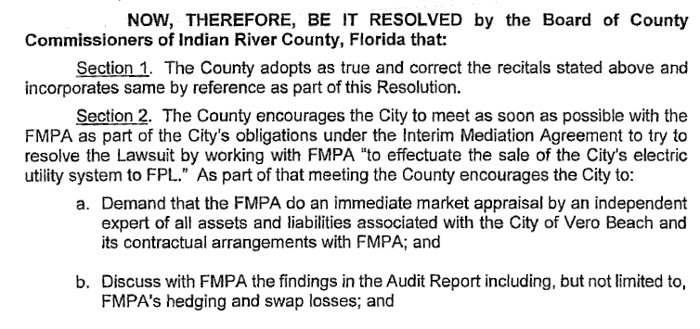
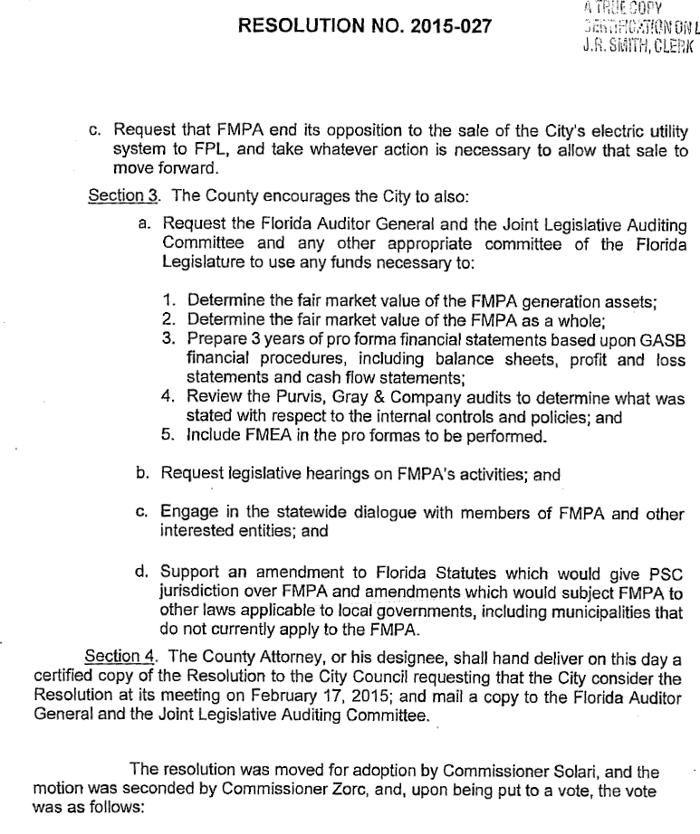
Indian River County Attorney Dylan Reingold this week delivered the Vero Beach City Council a resolution that essentially calls on the City to join the County in a statewide fight against the Florida Municipal Power Agency. Council members listened politely as Reingold read the County Commission’s whereases and therefores, but the County’s resolution did not gain any traction at City Hall.
County leaders, who seem to be relying heavily on advice from local utility activists, steadfastly refuse to accept that the legal and economic obstacles to the sale of Vero Electric to Florida Power & Light simply cannot be solved through political maneuvering in Tallahassee.

The centerpiece of the County’s resolution calls on the City to demand the FMPA “end its opposition to the sale of the City’s electric utility to FPL.”
Six additional requests in the resolution all focus on bringing enough political pressure to bear on FMPA leaders to persuade or coerce them to “end their opposition to the sale.”
In truth, FMPA officials have not opposed the sale of Vero Electric to FPL so much as they have consistently maintained they are not in a position to allow Vero Beach to withdraw from its contractual obligations to the FMPA and, more importantly, to the joint action agency’s bondholders.
To hear them tell it, FMPA leaders believe they are no freer to set aside their contractual obligations to bondholders than a skydiver is free, without consequence, to jump without a parachute. To think of it another way, asking the FMPA to set aside its contractual obligations simply because FPL has, though significant investment, persuaded a majority of Vero Beach voters to support the sale of their municipal utility, would be like asking Piper Aircraft to build its planes without wings to comply with a voter initiative calling for a repeal of the law of gravity. This simply makes no sense, and yet the County Commission persists in what is becoming an increasingly expensive legal, legislative and public relations assault on the FMPA.
The County Commission is joined in its irrational thinking by some in the local press. The Scripps Press Journal’s new utility expert, Larry Reisman, recently called for a breakup of the FMPA. Reisman offer no explanation of how a divestiture of the FMPA assets and a satisfaction of its debts could be accomplished. All Reisman seems to know is what he had been hearing from County Commissioner Bob Solari, who appears to be taking his cues from utility activist and FPL political operative Glen Heran. (Heran has run to political campaigns largely funded by FPL.)

To ensure satisfaction of their bonds, FMPA’s bondholders have a legal right to encumber the utility revenues of the agency’s member cities. So how does Reisman envision breaking up the FMPA? Given an oversupply of generating capacity that is likely to continue into the foreseeable future, it is not like other utilities are in line to buy the FMPA’s power plants.
As nonsensical as the idea may be, even if it were possible to bust up the FMPA, each of the join action agency’s member cities, including Vero Beach, would have to issue debt to buy their fractional share of the FMPA’s generating capacity. When the dust settled, each city would still be left needing to hire someone to operate the plants and schedule and coordinate transmission of power.
It is time for County leaders and the local press to stop drinking Glen Hearn’s poisoned Kool Aid and to finally square their thinking with reality. The only practical path forward is for the County Commission and the Indian River Shores Town Council to support the Vero Beach City Council in working within the FMPA to improve its governance and management. As Councilman Randy Old said this week, these are business problems that need business solutions. The County’s high-paid attorneys, lobbyists and public relations truth-twisters will accomplish nothing, absolutely nothing, toward lowering rates for the 34,000 customers of Vero Electric.
 Indian River Guardian
This whole resolution is nothing more than political posturing by the county and Heran. A “face saving” device after getting no where with the PSC. Press Journal Larry is too close to Solari and friends to be objective. The number stated that can get Vero out of the electric business is $350,000,000. It just cannot be done.