
NEWS ANALYSIS
“Further, when the dust settles and the cash is gone, the city will still be left with a property tax rate too low to sustain the level of services city residents say they need and that the current council says its wants to provide.”
MARK SCHUMANN
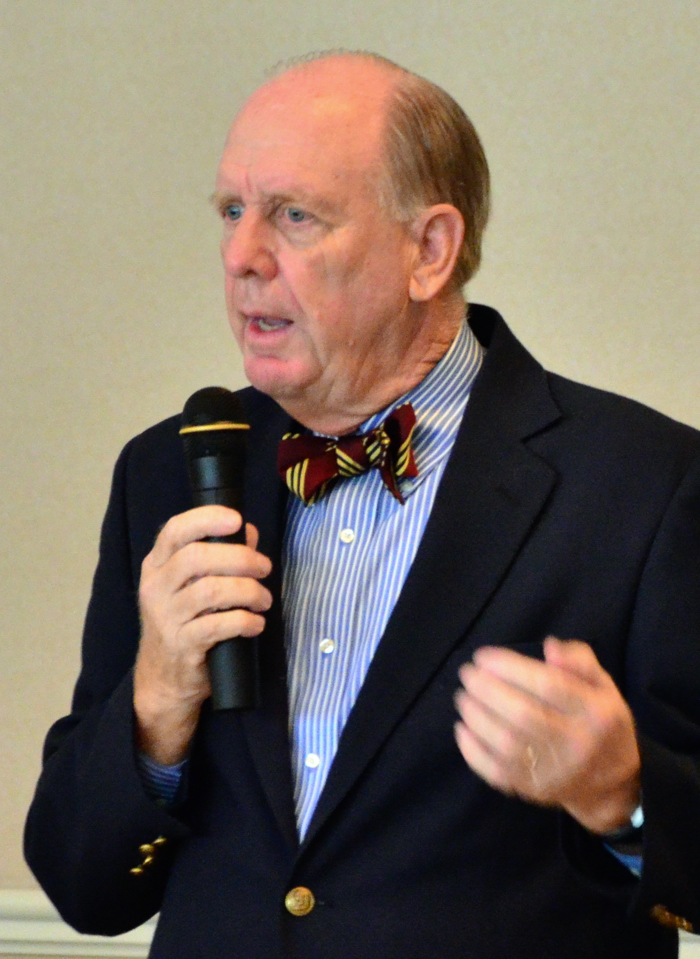
Surprisingly, when the Vero Beach City Council meets Thursday afternoon to consider an operating budget and a tax rate for the coming year, the central issue to be resolved will not be how much to spend providing municipal services.
With the exception of Pilar Turner, the Council appears to be in general agreement that it is time to begin restoring some of the cuts in services imposed by Turner, Tracy Carroll and Craig Fletcher as they prepared for the sale of Vero Electric to Florida Power & Light.
At the time, at least in the minds of Turner, Carroll and Fletcher, the sale of the city’s electric utility, and the resulting loss of some $5.5 million to the general fund, seemed immanent. Closing the deal now appears to be all but impossible.
Where the remaining four members of the council differ is not on how much to spend, but on how to pay for the services they propose to deliver.
At the request of Randy Old, who brings to the Council a background in banking, the city’s finance team offered a five-year projection on revenue and expenses. Looking at a horizon farther out than 12 months revealed that, at the current tax rate, the city’s sources of revenue are not likely to keep pace with expenses.
With a stable population and little growth and development within the city limits, Vero Beach cannot count on increasing property tax revenues, at least not at the current tax rate. The city’s tax rate is among the lowest in the state and below that of neighboring cities.
To pay for projected spending without drawing on reserves, Old proposed a property tax increase of up to 30 percent, which would still leave Vero Beach in the bottom 25th percentile among Florida cities. In other words, out of some 400 Florida cities, 300 hundred of them would have property tax rates higher than Vero Beach, even allowing for the proposed tax increase. Because the city’s portion of property tax bills is just 10 percent of the total, the net effect of raising city taxes 30 percent would be an overall property tax increase of 3 percent.
At the time Old made his proposal, Mayor Richard Winger and Councilwoman Amelia Graves seemed to agree it is time to establish a tax rate that will cover the cost of services the city’s residents say they want and need. Vice Mayor Jay Kramer, who is challenging Bob Solari for his seat on the County Commission, said he wants to keep the tax rate where it is now.
Since July’s preliminary budget workshops, city leaders and their advisors, chiefly the Finance Commission, have been discussing whether to put off raising taxes and instead to draw on reserves to help fund the coming year’s expenses.
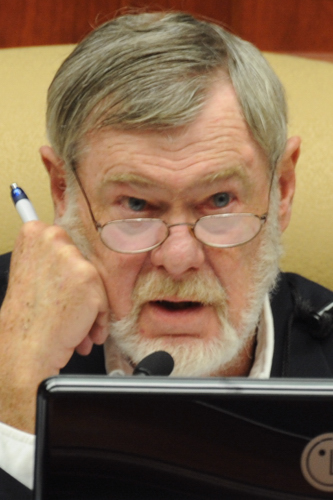
Headed by chairman Peter Gorry, the Finance Commission recommended drawing on general fund reserves. Gorry and his fellow commissioners believe the city’s general fund reserves are now excessive. More to the point, they say it is time for the city to establish a policy on how much to hold in reserves and on how reserves will be used.
Old agrees it is time to set a policy on reserves, but he contends cash reserves should not be used to pay for operating expenses, since that practice amounts to deficit spending. The former banker argues that drawing on reserves to pay for recurring expenses depletes a valuable asset, namely cash, but does nothing to strengthen the city’s financial position.
If the city’s general fund reserves are to be reduced, Old said he would prefer to employ the money to do things like paying off general fund debt, negotiate buy-outs with retirees on health insurance benefits, or in other ways improve the city’s cash flow and balance sheet.
According to Old, drawing on reserves to avoid raising taxes will be seen by financial analysts as poor fiscal policy. Old believes the end result of deficit spending will be a weakened credit rating for the city, as well as depleted cash reserves.
Further, when the dust settles and the cash is gone, the city will still be left with a property tax rate too low to sustain the level of services city residents say they want and that the current council says its wants to provide.
Offering a counterargument to Old, Gorry contends the city’s reserves are now well beyond what is prudent. He believes that at least some of the money should be returned to tax payers. Gorry wrote, “Conceptually, such surpluses should be, proportionately returned to taxpayers, either in lower rates or future years revenue to the GF (General Fund).”
It’s a debatable point, and an issue over which intelligent persons of good intention can disagree.
Gorry also wrote, “The bottom line is that the surpluses occur since services/operations budged are not delivered.”
In an email to Mayor Richard Winger in which he was addressing Gorry’s observations, City Manager Jim O’Connor wrote, “Just as a side note we work very hard to deliver the services as presented in the annual budget while at the same time trying to ensure financial policies are followed and appropriate reserves are maintained to ensure the City’s financial position.”
They say it is impossible to arrive somewhere exactly on time. You are either a little early, or a little late. In the same way, it is nearly impossible to spend to the penny what is called for is a general fund budget of more than $20 million dollars.
What would be better, to slightly underspend budgeted expense, or to run in the red? Further, if the city’s administration is to be chided for ending the year with reserves, the unfortunate and unintended result will almost surely be the encouragement of a practice of spending money crazily at year’s end. “Spend it or lose it.”
Across town, the Indian River County Commission has built general fund reserves that are, as a percentage of annual expenses, even grater than the city’s. Whatever else might be said about County Administrator Joe Baird, he practices fiscal responsibility, unlike many politicians who claim to be fiscal conservatives, but who would prefer to draw on cash reserves rather than level with voters about the tax rates required to pay for needed and desired services.
The City Council’s special call meeting on the 2015/2016 budget is scheduled for Thursday, September 3 at 5:15 pm at City Hall.
 Indian River Guardian
LOOK, THE CUSTOMERS OF THE ELECTRIC COMPANY ARE ALREADY NUMB FROM PAYING THE HIGH COSTS, INSTEAD OF LOWERING THE ELECTRICITY RATES, RAISE THEM ANOTHER 40%, THEN THE RESIDENTS CAN CONTINUE TO ENJOY VERO’S LOW TAX RATES. THIS IS A SOLUTION SINCE THE GRID IS MORE STABLE THAN THE CITY COUNCIL!
Larry, you are becoming quite sarcastic. Worse still, there is no meaningful, certainly no helpful, or debatable point to your comment. Is your keyboard stock on ALL CAPS?
I agree with Councilman Olds, we need to raise the taxes a bit. You can’t keep the same tax rate year after year. Vero Beach is starting to show the cuts that were made.