

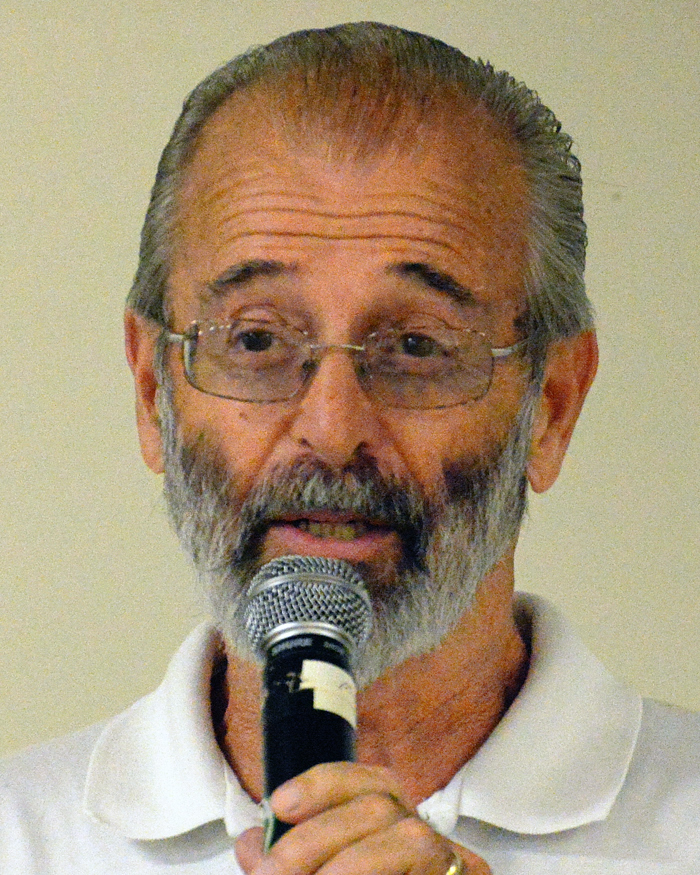
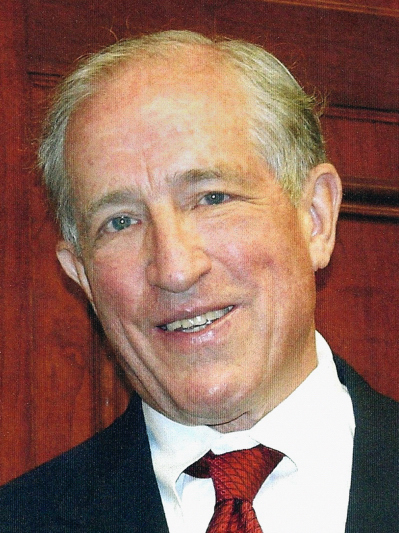
Editor’s note: All five candidates vying for two seats on the Vero Beach City Council were invited to submit guest commentary and to respond to a list of questions submitted by InsideVero.com. Incumbents, Mayor Richard Winger, Councilwoman Amelia Graves and challenger Brian Heady, have accepted our invitation to submit guest commentary and to respond to questions. Guest commentary from the candidates will be posted as it is received. The candidate Q&A will be posted early next week. (Challengers Harry Howle and Laura Moss were also invited to participate, but declined to respond to multiple invitations.)
1. Vero Beach City Council passed a 17 percent tax increase in its share of property taxes, which is about $35 per year on a $150,000 home. Do you think the current budget is too large? If so, what would you cut and by how much?
Amelia Graves: The current budget is not too large. We’ve had low taxes that should have incrementally increased over the last few years by deferring maintenance. We had cut to a point of inefficiency in our ability to deliver services. This $35 pays for two new police officers, two full time lifeguards, two employees in finance and IT to make the City run more efficiently, a much needed 3% raise for our employees and shifted the City’s pension liability away from a defined benefit to a defined contribution plan and allows us to be on of the only municipalities to transition to a private sector-like 401(k) program.
Brian Heady: Yes too high, and I would cut the budget by 20%.
Richard Winger: No. We worked on this Budget for 3 days of workshop and all five members had the chance to make cuts, and in many cases did. I see nothing left to cut and maintain services. A $21,000,000+ Budget is really tough to fit all the services and infrastructure into. People expect full-service from their City and that costs money. City Taxes are I believe 327 from the top of the 411 Florida Cities and many of those lower than the City are places like Orchid that need provide more limited services. In other words, taxes remain low.
2. Do you support the forming of a storm water utility to raise money to pay for maintenance and improvements to the City’s storm water infrastructure? If not, would you amend the budget to allow provide for storm water infrastructure expenditures through the general fund?
Amelia Graves: I support the concept of a storm-water utility to raise money to pay for storm-water infrastructure. However, the voters should have the ultimate say in this by referendum. If the voters determine that they do not want this utility, we can reprioritize our budget next year and once we have a strong reserve policy in place can look addressing storm water failures through those cash reserves.
Brian Heady: No.
Richard Winger: I completely support a Storm Water Utility and I have walked to at least 850 homes and have found no one that does not support a small charge to save the Lagoon. There is simply no place to cut to the General Fund this needed expense.
3. Do you support the amendment to the City’s contract with the Orlando utilities authority?
Amelia Graves: I do. Ultimately we’re in a bad contract through 2029 and we have an opportunity to not only shorten that bad contract by six years, ending in 2023, but save $120 million dollars over the next eight years. The bottom line is, rates need to come down. This is one way to make that happen.
Brian Heady: No.
Richard Winger: Yes:
1. It shortens the term from 14 to 8 years meaning we can bid out six years sooner and therefore be on market.. This is major.
2. It allows us to close the power plant and save approximately $4.0 million a year. That savings will eventually show up in bills.
3. It allows us to level rates for the next eight years . It avoid pending big increases in 2017-23
4. It gives us an immediately small reduction in the bills, to add to the 6.7% reductions in the last two years.
5. Over the eight years $750,000 a month is removed from the City’s cost of power acquisition, although most of this will be utilized in 2017-2023 and only a modest amount in 2016.
4. Do you support continued vigorous defense of the City against lawsuits by Indian River Shores and the County?
Amelia Graves: Yes. The City Council is required to defend the City of Vero Beach and its residents. That being said I believe it is very unfortunate we have found ourselves in this situation.
Brian Heady: No.
Richard Winger: Yes. There is no choice. To lose means high power rates for the remaining customers.
5. What is your position on Florida Power & Light’s s offer to buy Vero Electric’s Indian River Shores customer base for $13 million?
Amelia Graves: I was hopeful that FPL would make an offer for the Shores customers that would allow us to sell their portion to them, but it’s been calculated that $13 million is nowhere near the worth of that customer base. At the end of the day no one wants to be holding onto debt or liabilities. If an offer can be constructed that releases Indian River Shores without adversely impacting other ratepayers I would support it.
Brian Heady: Sell to FPL for $18 million.
Richard Winger: We have these stranded costs that must be defeased:
· The FMA take it or pay on 3 contracts. This is about half the problem. This power is significantly over market, and if it had to be absorbed by the remaining customers for the next many years their rates would need go up significantly.
· The OUC obligation which is closer to market with the Revision, but which may not remain so if wholesale power costs in Florida continue to decline. ·The system debt of approximately $38 million. ·The system unfunded pensions of approximately $11 million.
·The Transfer. On 10% of the customers this is about $500,000 a year. ·Perhaps most significantly the contingent liabilities, which include our share of any failure at St Lucie #2 and any ground contamination under the power plant.
· We cannot simply downsize 10%. Some functions would become relatively larger and we could not reduce them 10%.
In other words, the City has significant strand obligations that need be funded or rates for the remaining customers have to go up materially.
6. The sale of Vero Electric to FPL has not occurred for a variety of reasons, the most significant one being financial responsible for the City’s share of FMPA bondholder obligations. How do you see resolving that issue?
Amelia Graves: The best way to resolve this issue is for our state legislature to take action and deem our contracts with the FMPA unfair. The issue has been taken up for the past seven years and has gained no traction. If there is a resolution for our FMPA contracts it is at a state level.
Brian Heady: The most significant reason is we do not have three council members who want to see it sold.
Richard Winger: There is no known resolution of the FMPA obligations. I have discussed this many times with FPL, and recently in August and they, like us, have found no potential solution. The problem includes both the bondholders and the actual FMPA contracts. They are related issues, but each an issue in its own right. These agreements have passed Florida legal review, whether we like it or not. There are two possible solutions:
1. Next-Era Energy buying FMPA and paying off the approximately $2 billion of bonds and acquiring the FMPA assets and customers.
2. Legislative action by the Florida Legislature. This seems highly improbable.
7. Are you in favor of a recent proposal to seek Florida Public Service Commission review and approval of Vero Electric’s rates?
Amelia Graves: Yes, if that helps to resolve the tension. There is a cost involved and it requires another level of bureaucracy, but I would not be opposed to the PSC reviewing our electric rates.
Brian Heady: No.
Richard Winger: Yes, but it was declined by Indian River Shores.
8. If elected, will you support enforcement of the City’s ban on short-term rentals and why? Do you think City Code regarding transient rentals is specific enough to be enforced?
Amelia Graves: Yes and Yes. I’ve been an advocate for stopping short-term rentals since I ran in 2013 and remain so today. The thing to remember about our code is it is written in specific legislative language that is drafted by lawyers. So while it may seem onerous to a layman we have experts in our planning and legal department who can definitely clarify the issue for anyone who has a question.
Brian Heady: We need to enforce the law, but Florida law overrules Vero law.
Richard Winger: Yes and Yes. I am well known as an advocate for family neighborhoods and having rented rooms be from our many hotels.
9. What is your opinion about consolidating City and County water and sewer services?
Amelia Graves: My opinion is NO! The City of Vero Beach has a very efficient water and sewer department. All of the City’s water and sewer employees are DEP certified as well as have B and C certificates in water and have B and C certificates in sewer, meaning they’re all double-certified. Also, Vero Beach’s lift-station pumps get rebuilt when they fail, while the County simply purchases new ones at 7-10 times the cost. It would be foolish for the City to consolidate into the County’s water and sewer service, when ours is so much more efficient. It would also make water more costly for all our residents.
Brian Heady: Don’t do it.
Richard Winger: A very poor idea:
1. The County (in 2010-11) talked about $26,000,000 in acquisition costs for something that was appraised at $101,000,000. Clearly the County won’t pay City Residents the full value of their investment.
2. City Water is higher quality and compatible with other jurisdictions, but not the County’s water, as a more advanced treatment is used by the City.
3. The City is putting in two more reverse osmosis units and rebuilding the first. City water is going to improve yet again.
4. The City is using funding from the Utility optimization to install the step-system infrastructure to proactively remove septic tanks. The county has no such program.The Lagoon must be considered.
5. The City will have installed by early next year the Bio-mass system to take sewerage solids and convert them to agricultural mulch instead of building waste mountains by going to landfill.
6. The City employs a deep injection well to dispose of the brine from the reverse osmosis above.
7. When the City has a shortage of reuse water, the Main Relief Canal water is accessed and that water then does not reach the Lagoon.
8. The City uses its deep injection well to remove any excess reclaim water high in nitrogen and other elements from the surface of the Earth, while the County depends on marshes and ponds that can overflow in a hurricane.
Clearly the City is well ahead of the County Environmentally. The County has a vast expanse to cover and its system could use the economic uplift from a very profitable City system, but that is no reason to penalize the Lagoon, the Environment, or the Citizens of Vero Beach.
10. What is your opinion about annexations into the City, perhaps South Barrier Island, for example?
Amelia Graves: The City of Vero Beach welcomes any neighborhood that wants to annex into our City limits. I can promise that you will receive top-notch service from top notch people.
Brian Heady: Join the party.
Richard Winger: Annexation has to begin with those being annexed, not the City. But the City would welcome all, or part, of the South Barrier Island. The Citizens would then get:
1. Twice weekly garbage collection.
2. Garbage collection from in front of the garage if requested.
3. Superior police reaction time.
4. Superior policing as far as potential life savings.
5. Protection from less than 30 day rental.
6. Be able to apply for street lighting.
7. Be able to vote and share in decisions.
11. Assuming the “big blue” electric facility is closed, what do you see as best uses for that property?
Amelia Graves: Current estimates are that it will cost over $4 million to tear down our power plant and there are still many unknowns about what we’ll find once it’s gone. This is a conversation we need to have together as a City about long range planning. Ultimately, this is public land and the public should determine its use.
Brian Heady: Don’t count on Big Blue going anyplace any time soon.
Richard Winger: The basic answer to this is that is for the public to decide. However, the property is in the Charter and is restricted to recreational/park without a referendum. The City is planning a Visioning for the Water Front. Lastly, the plant closing frees up 12 acres behind the plant quickly, probably early 2016. However, no decision has made regarding the building itself, because of the potential site pollution, $4,000,000 demolition expense, and because the switchgear (brains) of the utility are housed in the building and would be expensive to replace/remove.
12. Should the City continue to take part in the regional Indian River Lagoon Council? Why or why not?
Amelia Graves: Yes, I strongly supported our joining of the Lagoon Council and still do. This gives us more local control and prioritizes our ability to get funding for lagoon projects. The St. John’s Water Management District has a broad responsibilities, this council explicitly focuses on our section of the lagoon.
Brian Heady: The City should stop dumbing wastewater into the lagoon.
Richard Winger: The City has already decided to share a seat with Sebastian and Fellsmere and that has been achieved. We were correct in doing so because: 1. Our request for a share of the money for Lagoon projects will now be heard and hopefully we will receive funding assistance to aid the Lagoon. Projects are now being vetted for submission. 2. We are committed to Save the Lagoon and need our voice heard.
 Indian River Guardian