
Justices press County’s attorney with challenging questions
MARK SCHUMANN
The Florida Supreme Court today received oral arguments in the Board of Indian River County Commissioner’s appeal of a ruling by the Florida Service Commission. In an order issued in February, the PSC denied the County Commission’s assertion that it, and not the PSC, has the authority to determine which electric service provider will serve within Indian River County. At the same time, the PSC affirmed Vero Beach’s existing service territory.
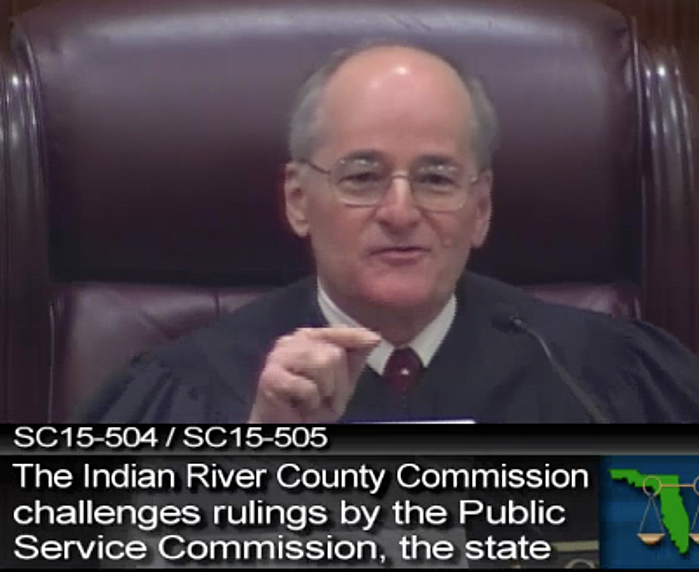
Apparently basing its story on input from Indian River County Commission Tim Zorc, who was in Tallahassee for the hearing today, the island weekly reported that the County received a sympathetic hearing from the justices. A viewing of the Court’s 55 minute hearing of oral arguments, reveals otherwise.
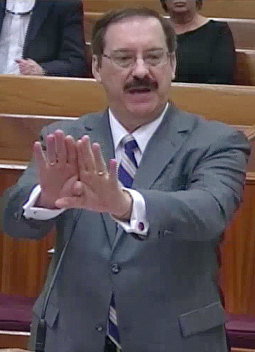
Three justices remained silent, while four others, Justices Peggy Quince, R. Fred Lewis, Rickey Polston and Charles Canady pressed the County’s special counsel, Floyd Self, with challenging questions suggesting they were skeptical of his arguments.
An exchange between Justice Charles Canady and Self near the end of today’s hearing revealed the depth of skepticism he and the other justices have for the County’s claims.
Justice Canady: Is it your position that the local government’s franchise authority determines what utility can provide service in a particular area?
Mr. Self: Yes.
Justice Canady: If that’s the case, and I thought that was your fundamental point, if that’s the case, why does the Public Service Commission have the authority to settle territorial disputes? Because if the premise for your argument is accurate, it seems to me the local government would be where they would have to go. And whatever the local government had decided in terms of granting a franchise would settle the matter and that would be it. You wouldn’t need the PSC, because we know this. We’ve got local government everywhere. Right?
Mr. Self: Yes.
Justice Canady: Everywhere there is a local government. Either it is going to be a county or a city. If your premise is true, it seems to render this whole elaborate statutory scheme unnecessary.
At another point in the hearing, Justice Barbara Pariente said to Self, “They (the PSC) disagree with you. I think several of us also disagree.”
All four justices who questioned Self made the point that the County is free to negotiate a franchise agreement with Florida Power & Light and then take the resulting territory dispute to the PSC for resolution. The justices also made a point of the fact that FPL actually sided with Vero Beach in the PSC case.
The Court’s ruling on the County’s appeal is expected within six months.
Video of today’s Supreme Court Hearing: Board of County Commissioners of Indian River County v. Art Graham
 Indian River Guardian
I read the story in the PJ a few minutes ago. It might as well have been written about another subject in another place.
How nice it is to read the accurate story from a factual NEWS source. Thank you Inside Vero.