
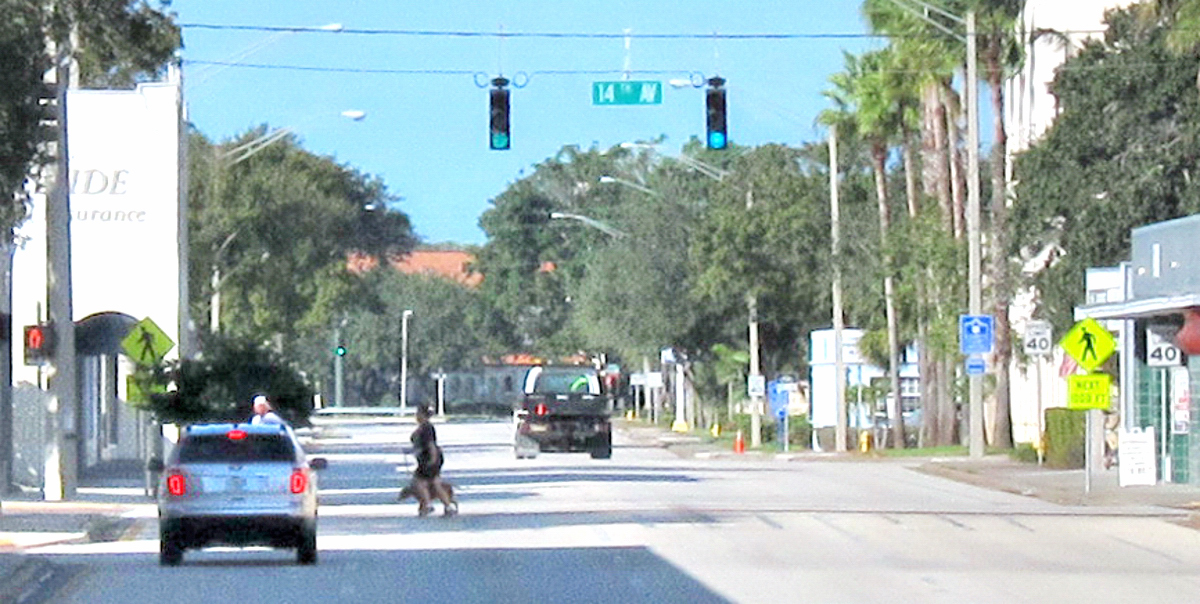
VERO BEACH – After hearing from members of the public for more than two hours Tuesday evening, the Vero Beach City Council voted 4-1 to accept a “Twin Pairs” traffic calming study conduced by Kimley-Horn & Associates. Describing the study as “fatally flawed,” Mayor Craig Fletcher cast the lone dissenting vote.
When implemented, the plan would reduce the number of lanes of traffic through downtown from four west bound and three east bound to two lanes in each direction. The proposal, which only addresses the section of the roadway between the railroad tracks and 20th Avenue, also calls for parallel parking on both sides of the west-bound segment. On the east-bound section, parallel parking would be available on just one side of the road.
Many downtown business and property owners, residents, as well as supporters of revitalizing the area addressed the Council, urging adoption of the plan, which could cost up to $1 million to implement. According to Brain Good of Kimely-Horn, if the city waits until the state department of transportation resurfaces the Twin Pairs in six to seven years, seventy-five to eighty percent of the cost could be paid for by the state.
In addition to making the downtown area more pedestrian friendly, the traffic calming measures are intended to reduce the number and the severity of accidents. From 2009 to 2011, ninety-eight accidents were reported on the Twin Pairs between the railroad tracks and 20th Avenue.
At least one opponents of the plan argued that it is a part of an Agenda 21 effort to discourage driving and encourage people to walk or use bicycles. Others opposed to the plan said they thought it would create traffic bottlenecks during evacuations, that it would be too costly, or that it is simply unnecessary.
According to the Kimley-Horn study, however, reducing the number of lanes would increase the average drive time through the downtown area by only 30 seconds. In additional to not “bottling up” traffic during regular rush hours, the revised Twin Pairs would be able to provide for timely evacuation of the city, according to Good.
Fletcher chose not to elaborate on his objections to the study, simply saying that in his opinion it was “fatally flawed.”
Councilwoman Pilar Turner stressed that before supporting actual implementation of the traffic calming measures she would want to see a cost-benefit analysis. Turner said she might also prefer to support a test of the plan before committing to permanent changes.
Council member Tracy Carroll, an outspoken proponent of revising the Twin Pairs, was joined by Jay Kramer and Richard Winger in giving the Kimley-Horn study unconditional support.
 Indian River Guardian