
VBHS graduate, Dan Green, sees Afghanistan from the inside
Editor’s Note: This story was first posted Jan. 15. Green, along with William F. Mullen III, has since co-authored a book titled “Fallujah Redux: The Anbar Awakening and the Struggle with Al-Qaeda.” The book is to be released Sept. 15.
MILT THOMAS
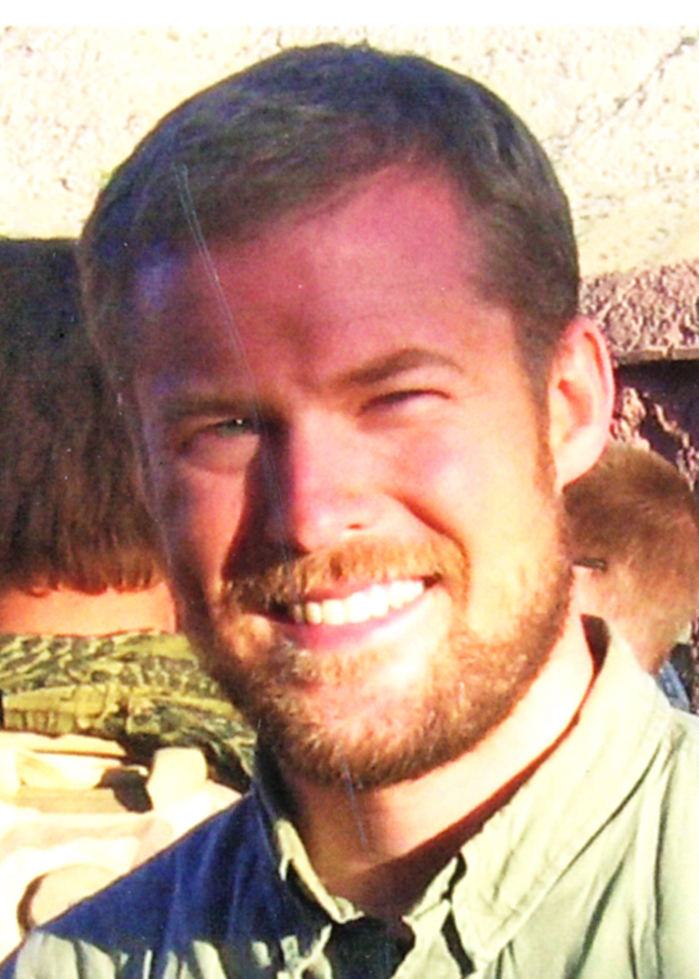
When Dan Green graduated from Vero Beach High School in 1994, everyone knew he had a bright future. He was, after all, president of the Student Council, one of the top five seniors in his class and male Student of the Year. Green also spent six months as an exchange student in New Zealand. His father worked for Harris Corporation and his mother was a Vero Beach high school Spanish teacher. “I grew up in a household that was open to other cultures,” says Green.
He then attended American University in Washington, D.C., graduating with three majors, then back to Florida where he took an unpaid position with the Jeb Bush for Governor campaign as the Central Florida Youth Director. After that stint, he went to FSU for a Master’s Degree in International Affairs, then returned to D.C. doing research for the Republican National Committee. “It was my first paid political job at $9 an hour.”
Among his other political jobs, he worked in Broward County on the Get Out the Vote campaign and participated in the infamous Florida recount of 2000. Then he served on George W. Bush’s Inaugural Committee as Director of Archives until getting an appointment at the Pentagon, where his life changed.
“I was working in the pentagon on 9-11 when the plane hit. I was sitting at my desk watching events unfold at the World Trade Center in New York on my computer, when I felt a concussion. At first we thought it was a car bomb and the building was evacuated.”
He had begun his PhD program in Political Science at George Washington University and took a job at the State Department. “We thought the war in Afghanistan was over. They were looking for volunteers for the Afghan Provincial Reconstruction Team, so I went.”
Green relished the opportunity. “I started immediately working with local tribes, met tribal leaders, attended tribal meetings, not to root out al Qaeda insurgents, but to help the local population improve their lives and defend against al Qaeda influence. I interviewed people to find out who were the major tribes, how do they make money, settlement patterns of the different tribes, marriage practices. I formed relationships with key tribal leaders. “
“We tend to buy into the narrative that they hate us, but that’s not true. It isn’t in their nature to be like the Taliban. Our mission was not to see how many Afghans we could kill, but how many did we recruit for the local police force, how many businesses did the locals start on their own. It was all about creating a community reaction to the al Qaeda threat.”
Green wrote a book about his experiences, The Valley’s Edge: A Year with the Pashtuns in the Heartland of the Taliban (Potomac Books 2012). The Pashtuns are the largest ethnic group in Afghanistan. He is currently employed by a nonpartisan Washington think tank, the Washington Institute for Near East Policy working on several more books.
“Last year I went back to see how much had changed. At the height of the war, we would engage 300 Taliban in a fight. Today, their numbers have dwindled to the point they only launch individual attacks – suicide bombings, shooting a policeman. They lost their support in the community, not only in the province I worked in, but in many provinces around the country.”
Green is convinced this is the only way to deal with an insurgency. Since then he has gone to Yemen, traveling out from the capitol into areas most back home would consider dangerous. “The difference here is that al Qaeda leaders are Yemeni, not foreigners as they were in the other countries. They have learned that you can’t apply strict sharia law until you solve their problems – food, clean water, things we take for granted. Basically they don’t want sharia law, but if al Qaeda takes care of their basic needs, then who are they going to follow?”
As Green says, “We need to get out of the manhunting business and focus more on local governments, training. In other words, we need to be out where the enemy is, working with the people. Is it dangerous work? Yes. But if we don’t deal with the problem in Yemen, we can deal with them after an airplane hits us.”
 Indian River Guardian
I have done that mission in Afghanistan with the kunar prt. we built what we thought was needed, roads,schools etc. no water grids(dug wells) and electric. I was part of a force pro team